 Les bocaux à plat Broths & sauces Cutlets panés The proteins Pain au levain The starches Petits pois The produce
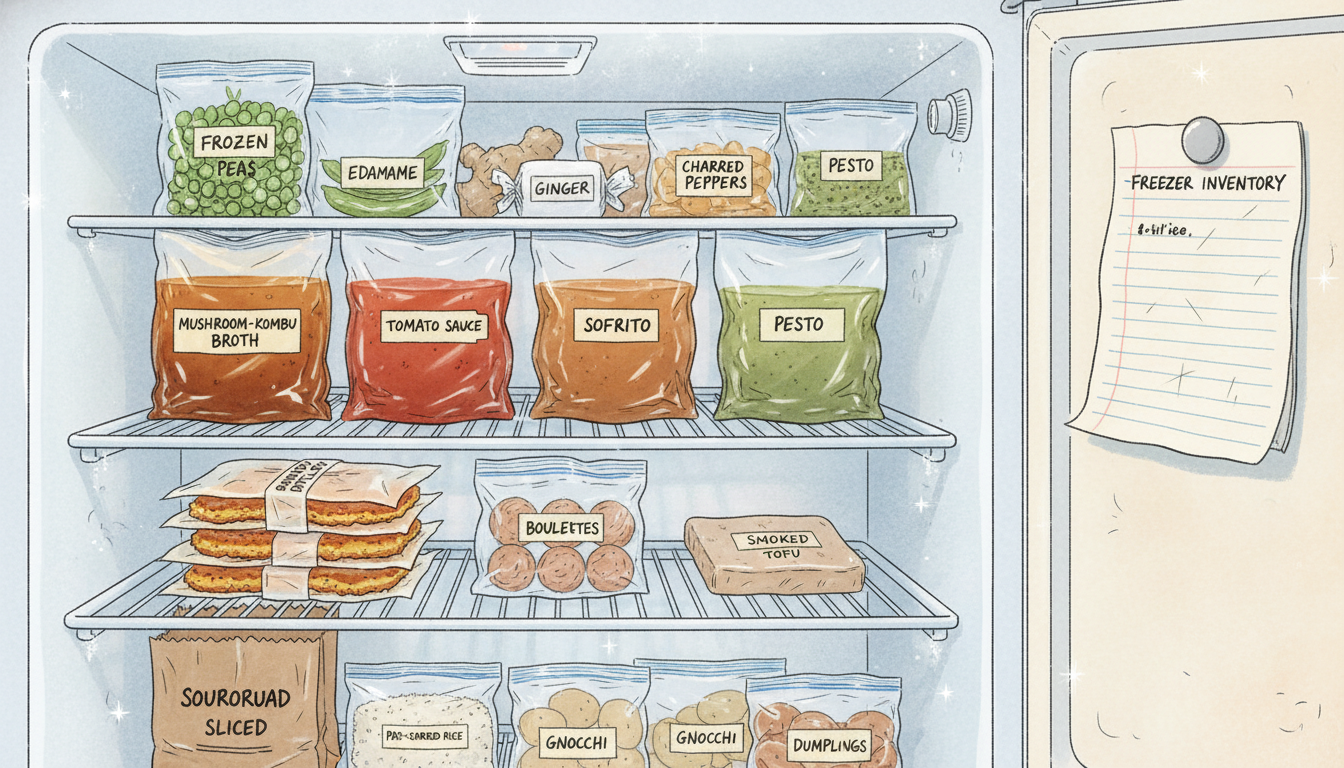
 The freezer is the third pillar — after the pantry and the fridge — of a kitchen that doesn’t need a grocery run. Sixteen items. Sealed in flat freezer bags or quart jars. Each one labeled with a date in Sharpie on masking tape stuck to the lid. The discipline is the same as the pantry: write a list, pin it to the freezer door, rotate first-in-first-out.
The freezer reduces a Tuesday dinner from “I need to start cooking now” to “I need to pull two things at 5 p.m.” If you set the freezer up the way a restaurant prep cook would — labels, rotation, flat-frozen bags stacked vertically like books on a shelf — you bought yourself a year of fast weeknights for the price of one Saturday afternoon.
The broths and the sauces
- Mushroom-kombu broth, 4 × 1-quart freezer bags, flat-frozen — see the Mushroom-Kombu Broth prep. One Saturday’s batch fills the freezer with three months of risotto, onion soup, ramen, and bourguignon base.
- Tomato sauce, 4 × 500 mL jars — the master Tomato Sauce. The base under three weekly Italian dinners.
- Sofrito, 4 × 250 mL jars — see Sofrito. One jar starts four paellas.
- Pesto, 3 × 250 mL jars — see The Pesto, In Jars. With a thin layer of olive oil on top to keep the basil green through the freeze.
- Vegan demi-glace cubes, in a sealed bag — see the technique. A single cube into any pan sauce is the difference between mediocre and restaurant.
The proteins
- Raw boulettes, on parchment then bagged — see Frozen Boulettes. Pull 8 to 10 from the bag, drop into simmering sauce, 12 minutes — pasta dinner.
- Pre-breaded cutlets, layered on parchment — see Frozen Breaded Cutlets. Fry from frozen at 350°F, 90 seconds first side, 60 seconds second. Restaurant-grade Milanesa on a Tuesday.
- Smoked tofu, in 4-oz portions — the kind you slice cold onto sandwiches or pan-fry. Buy a 14-oz block, slice into quarters, freeze each in plastic wrap. Thaws in 90 minutes on the counter.
- Cooked beans, in 1-cup portions in freezer bags — chickpeas, white beans, lentils. Cook in big batches once a month, freeze flat in 1-cup portions. Frozen cooked beans are identical to canned at half the cost and no aluminum aftertaste.
The starches
- Bread, sliced, in freezer bags — your homemade no-knead bread sliced when fully cool, frozen sliced. Toaster-direct from frozen. Two minutes to a slice that tastes like the day you baked.
- Par-cooked rice, in 1-cup portions — cook a batch of jasmine or basmati, undercook by 3 minutes, cool fast, freeze in 1-cup portions. Reheats in the microwave with a splash of water in 90 seconds. Identical to fresh.
- Hand-pulled or store-bought dumplings, in a bag — for the Tuesdays where dinner is dumplings + the lomein sauce + a fast pickle. Steam from frozen.
- Gnocchi, in a bag — homemade or good store-bought. Boil from frozen, 90 seconds longer than fresh. Pair with the tomato sauce or sofrito.
The produce
- Charred peppers, peeled and bagged — Sundays in pepper season, char 6 peppers under the broiler, slip the skins, freeze flat. Adds depth to anything year-round.
- Edamame, in pods — for snacking and salads. Boil from frozen 5 minutes. The single fastest protein on this list.
- Peas, frozen petit pois — yes, store-bought. Best frozen peas are better than most fresh peas. Into risotto, into pasta, into a green soup.
- Ginger root, peeled and frozen whole — grates from frozen on a microplane far cleaner than fresh. Lasts 6 months. The single biggest lifestyle change I made in this kitchen in 2024.
What’s not in the freezer
Pre-made supermarket meals in any form. Frozen pizza. Frozen vegan burgers (you’re better off pulling boulettes). Anything with cream sauce that froze (it’ll break on thaw). Salad greens. Soft tofu (texture goes spongy). Cooked pasta with sauce (the noodles get gummy).
The freezer is for raw things that will be cooked, and cooked broths and sauces that don’t have dairy or eggs in them. Everything else goes in the fridge or gets cooked the day-of.
How to organize it
Three zones:
- Top shelf / door: small things you reach for daily — peas, ginger, frozen herbs, edamame.
- Middle shelf: flat-frozen bags of broth, sauce, beans — stacked vertically like books.
- Bottom shelf: bigger items — bread bags, boulettes on parchment then bagged, breaded cutlets.
Label everything with a Sharpie on masking tape on the lid or the bag — never on the bag itself, the writing fades through condensation. Date everything. Rotate FIFO.
The Saturday morning audit
Once a month, before you make the broth or the tomato sauce, spend ten minutes auditing the freezer. Anything past 3 months on the date label that you haven’t pulled — use it this week or throw it. Anything you’re running low on — write it on next Saturday’s prep list. The freezer is a working space, not a graveyard. The point is to use what’s in it.
Cook fast on a Tuesday because you did this on a Sunday.
Questions, honestly answered
FAQ
QWhat should I always have in my freezer to cook quickly?
Sixteen items, grouped: broths and sauces (mushroom-kombu broth in quart bags, tomato sauce, sofrito, lomein sauce — all flat-frozen in bags), proteins (raw boulettes on parchment, pre-breaded cutlets, frozen smoked tofu, cooked beans), starches (homemade bread frozen sliced, par-cooked rice, dumplings, gnocchi, hand-pulled noodles), produce (pre-charred peppers, edamame, peas, ginger root). With these, the pantry, and the fridge, a weeknight dinner is fifteen minutes.
QHow long does each thing actually keep?
Broths and sauces: 3 to 6 months. Raw boulettes: 3 months. Breaded cutlets: 3 months. Bread sliced: 2 months. Cooked beans: 3 months. Smoked tofu: 6 months. Anything past the date is still safe but loses brightness — label every bag with a Sharpie and rotate first-in-first-out.
QDoesn't freezing ruin the texture of cooked things?
Most cooked things, yes. The trick is freezing the things that freeze WELL and using the freezer for things you'd be unhappy buying frozen at the store. Broths freeze identical. Sauces freeze identical. Raw boulettes freeze identical. Cooked beans freeze with minor texture loss. Bread frozen sliced is identical to fresh. The items NOT on this list are the ones that don't freeze well — salads, leafy greens, soft cheeses, anything fried that should stay crispy.