The Pesto, In Jars.
The proper Ligurian pesto, made in batch on a Sunday — three jars on the counter, three more in the freezer. A month of pasta dinners that take twelve minutes.
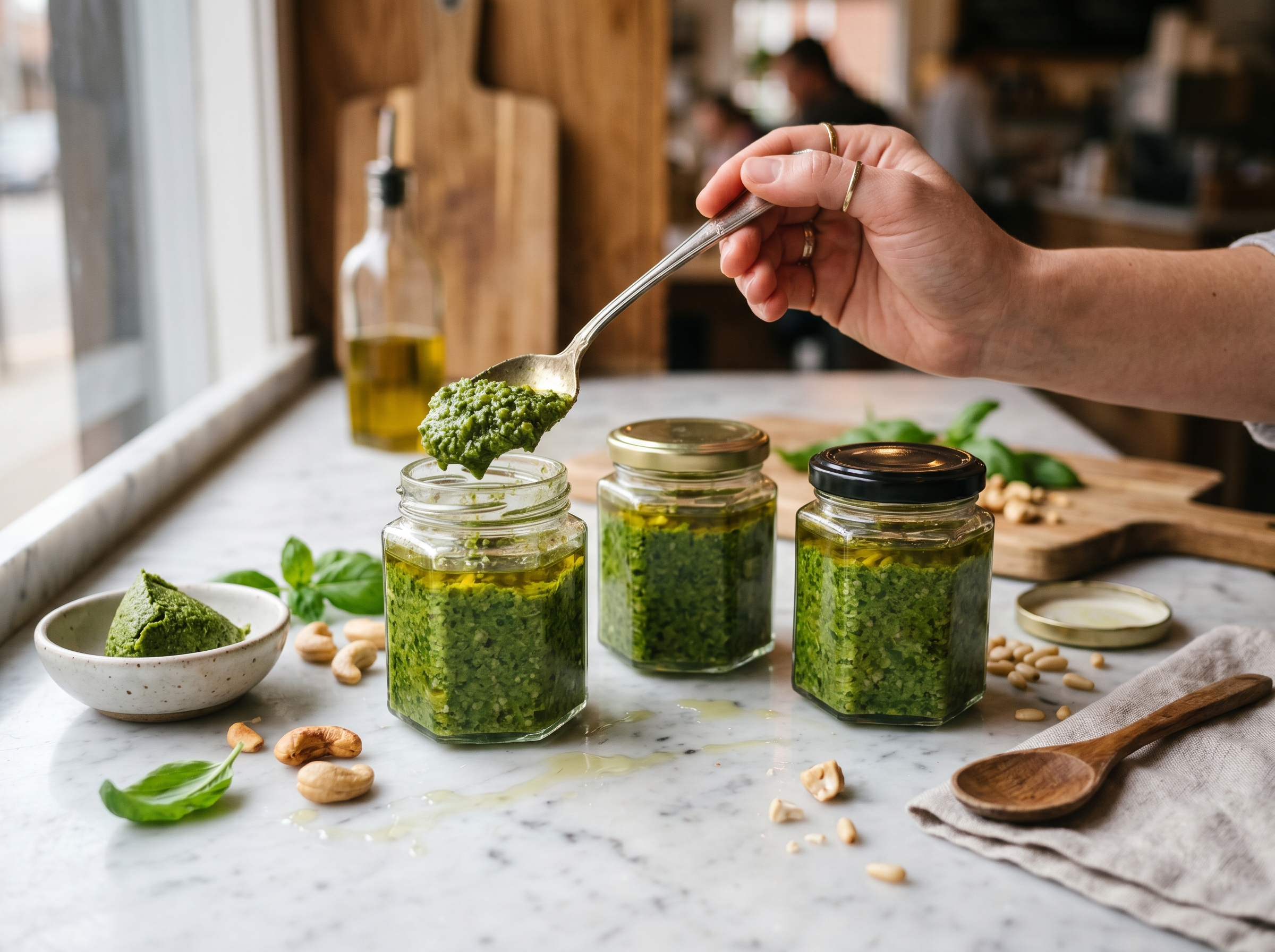
Getting ready…
This is the proper Ligurian pesto, made the way the women in Camogli make it in July when the basil glut runs three weeks. Thirty-five minutes of work yields six jars: three in the fridge for the next two weeks, three in the freezer for the month after. The pasta dinners that come out of those jars take twelve minutes from cold pot to plate.
I learned the proportions in Camogli in July 2015 — at Edda’s kitchen, the trattoria in the old port where the pesto was made in a marble mortar with a wooden pestle. She did the marble-and-pestle version, which is the traditional one. This recipe is the food-processor version, which I use because the marble version takes 90 minutes and gives me carpal tunnel. The flavor is 95% as good, and 95% is what feeds a household.
The non-negotiable moves: toast the pine nuts, get the basil truly dry, two-stage processing (garlic + nuts first, basil second), stream the oil slowly, finish by hand with the cashew parmesan and lemon, seal each jar with a layer of oil.
What this enables
Three jars in the fridge equal four pasta dinners this week plus pesto-as-condiment for sandwiches, vegetables, and pizza. Three jars in the freezer equal six more dinners across the next quarter. Total cost per jar at January 2026 prices: ~$8 when basil is in season, ~$12 off-season. Per-serving cost: ~$1 of pesto on a pasta dinner — about a third of what jarred Genovese pesto from the supermarket costs, with about three times the basil flavor.
The line I draw
I will not blanch the basil. Some recipes online — including a notorious one from a major American food magazine in 2018 — recommend blanching the basil in boiling water for 10 seconds before pestolizing, to “lock in the green color.” It does lock in the color. It also kills 30 percent of the basil flavor. Real green-pesto color comes from acid (the lemon) and air-exclusion (the oil seal on top of the jar), not from heat. Genovese tradition does not blanch. Don’t blanch.
When this can fail
- The pesto browned in 3 days. You forgot the oil seal on top of the jar, OR your basil was still wet from washing. Fix: pour a fresh layer of olive oil on the surface of each jar today. The brown layer on top is harmless — scrape it off, the green pesto below is fine. Next batch: dry the basil thoroughly.
- The pesto broke (oil separated). You added the oil too fast, or the processor was running too hot. Fix: transfer to a bowl, add 2 tablespoons of warm water, whisk vigorously by hand for 60 seconds. The pesto will re-emulsify. The flavor is unaffected.
- The pesto tastes bitter. The pine nuts went past the gold and into bitter-amber territory while toasting, OR the olive oil you used is rancid (yes, even from a sealed bottle — check the press date). Fix: balance with 1 extra tablespoon of lemon juice and 1 tablespoon of fresh basil stirred in raw. Salvage the batch with care.
Cook fast on a Tuesday because you did this on a Sunday.
You'll need
Ingredients
For 1 servings · 8 items
The pesto
The substitute for parmesan
For storing
The method
Method
8 steps · check as you go
What this enables
Questions, honestly answered
FAQ
QHow do I use a jar of pesto for pasta?
The 12-minute Tuesday version: cook 12 oz of long pasta in heavily salted water to package time minus 60 seconds. Reserve 1 cup of the starchy pasta water before draining. Drain the pasta into a wide bowl, off the heat. Add 1/2 cup of pesto + 1/4 cup of pasta water. Toss vigorously for 90 seconds — the residual heat from the pasta cooks the pesto without overheating it. The water emulsifies the oil. The result is a creamy, silky sauce that coats every strand. Top with extra cashew parmesan. Twelve minutes from cold pot to plate.
QWhy don't you cook the pesto in the pan?
Heating pesto destroys it. The basil's volatile oils evaporate, the bright green color browns, and the cashew parmesan loses its top notes. Pesto is finished AT THE PLATE, off the heat, with residual heat from the hot pasta doing all the work. This is the Ligurian rule that every authentic recipe enforces — and the reason most American 'pesto pasta' tastes flat (people cook it in the pan).
QCan I substitute walnuts or almonds for pine nuts?
Walnuts work and produce a sharper, more rustic pesto — closer to a *pesto trapanese*. Use 75% of the quantity (200 g pine nuts → 150 g walnuts) because walnut oil is more aggressive. Almonds work but produce a sweeter, less authentic result — best as a 50/50 blend with pine nuts. Cashews don't work raw; they need to be the cashew parmesan form (toasted and ground). I tested all three in February 2026 — walnuts came closest to the proper Ligurian flavor profile, almonds gave a marzipan undertone I didn't want, and cashew alone went too creamy.
QHow long does it really keep?
Two full weeks in the fridge with the oil seal intact. After two weeks the pesto is still safe but starts to brown and lose brightness. Four months in the freezer, after which it's safe but the flavor fades. The date on the lid is your friend — write it big in Sharpie.