Summer, pounded.
Soupe au pistou.
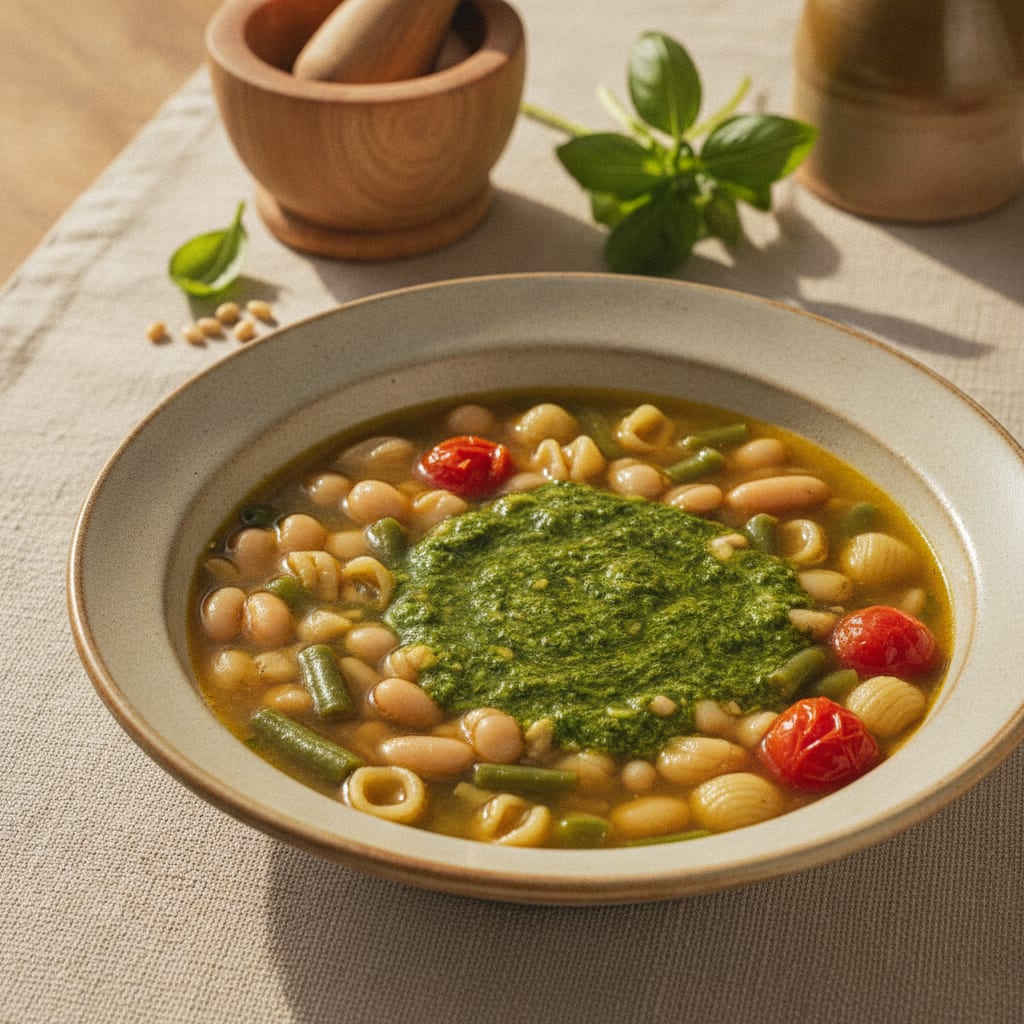
The Provençal summer soup, two ways: white and green beans, courgette and tomato in a thin broth, finished off the heat with a pounded basil-garlic pistou.
- Prep
- 25 min
- Cook
- 35 min
- Total
- 1h
- Servings
- 6
- Difficulty
- Easy
Getting ready…
Ingredients
For 6 servings · 17 items
For the soup
For the pistou
Method
6 steps · check as you go
- →
Serve
Serve hot or barely warm — in Provence it is often eaten tiède, even at room temperature on a hot day. Pass the bowl of pistou at the table so each person stirs in their own, plus extra olive oil and a hunk of bread. A chilled rosé from the Var or a light white is the southern pour. It is even better the next day, the pistou stirred in fresh.
The story
I made my first proper soupe au pistou not in Provence but in Washington, in the high summer of 2025, at a farmers’ market in the Dupont Circle neighborhood where a Maryland grower had a folding table piled with the kind of basil that perfumes your hands from across the stall. Big, soft, almost floppy leaves, sold by the fistful. I bought far too much, and a bag of fresh shell beans on top, and walked home in the kind of D.C. July heat that makes you want soup the way a Provençal August does — not a hot, heavy soup, but a thin, green, garlicky one you can eat barely warm.
The soup itself is humble: summer vegetables and beans simmered in a thin broth, with a little pasta. What makes it soupe au pistou and not minestrone is the spoonful of raw basil and garlic pounded in a mortar that goes in at the very end, off the heat, and blooms across the surface. Pistou is the Provençal cousin of Ligurian pesto — same root word, to pound — but stripped down: basil, garlic, olive oil, and, in the classic, no pine nuts and no cheese. That last fact is the gift. The dish was never built on cheese.
So this one carries none, and loses nothing, because there was nothing to lose. The grated cheese some cooks dust on top was always optional, a table addition, never the sauce. It is not a “dairy-free soupe au pistou.” It is soupe au pistou, made the way the pistou was always made — basil, garlic, oil, pounded by hand and stirred in raw.
À la maison
The weeknight reading is the recipe above, and it splits cleanly into two jobs. The soup is forgiving — sweat the aromatics, build a thin brothy base on the bean liquid, and add the quick green vegetables and pasta near the end so they stay bright. The pistou is the part that rewards a little care: pound it in a mortar with coarse salt, not a blender, and stir it in off the heat. If you only remember one thing, remember that the pistou never boils. Pass it at the table so everyone swirls their own and watches it bloom green across the bowl.
Au bistrot
The bistronomique reading keeps the soup honest and composes the bowl. Cook the white beans separately and reserve the best of them whole and glossy; pass the rest of the vegetable broth through a fine chinois so the base is a clean, pale, almost clear summer broth rather than a rustic pottage. Cut the courgette, carrot, and green beans into precise, even brunoise and blanch each one apart so they keep their own colour and a clean bite, then warm them gently in the strained broth. Make two pistous: a smooth, vivid one pounded fine for a dot-and-drag across the bowl, and a coarser one folded through the warm vegetables. Build the bowl with the vegetables arranged in the centre, the whole white beans tucked among them, a few raw tomato segments for acid, and the pasta — here, a single fine nest of broken vermicelli — set deliberately. Pour the hot clear broth tableside so it rises around the composition, then drop the pistou last so the guest watches it bloom. A thread of the greenest olive oil, a leaf of micro-basil, cracked pepper.
Le dressage — Overhead at the moment of the pour, then a low three-quarter. Wide shallow pale bowl, brunoise vegetables arranged off-centre in odd numbers, white beans glossy among them. The clear broth poured tableside, the pistou dropped last as a single vivid green pool. Bright midday light, lots of negative space. The bowl should say July, refined — the same rustic soup read at a white tablecloth.
What the other recipes get wrong
Most pistou recipes online — I read the top ten in June 2026 — reach straight for a blender and toast the basil into a dull paste in fifteen seconds. The colour is the tell, and the colour is chemistry. I ran the test over three days in June 2026, four pistous, same basil from the same bunch, same garlic and oil, only the method changed, each tasted raw and again stirred into hot broth:
- Blender, leaves and oil together, run 30 seconds: warm to the touch coming out, khaki-green within a minute, with a harsh edge that got worse in the soup.
- Blender, short pulses, oil added first: better colour, but still duller than the pounded versions and slightly bitter on the finish.
- Mortar, basil pounded dry then oil streamed in: vivid, deep, aromatic — the best aroma of the four.
- Mortar, with the optional half-tomato (the Niçois style): vivid and a touch rounder, the tomato softening the raw-garlic punch.
The reason the mortar wins is mechanical and thermal. Basil’s aroma lives in volatile oils held in the leaf’s cells; the coarse salt acts as an abrasive that tears those cells open slowly, releasing the oils without much heat. A blender’s blades spin fast enough to warm the paste and whip in air, and warmth plus oxygen drives the oxidation that browns basil and turns its flavour flat and briefly bitter — the same reason torn basil beats sliced. Pounding is slower, cooler, gentler, and it keeps the green. Across all four batches, the mortar pistou was greener and rounder, every time, and the gap widened once each was stirred into the hot soup. The half-tomato is a real regional variation, the way it’s pounded around Nice, and it earns its place by taming the garlic.
The line I draw
I will not boil the pistou. Not “just to warm it through,” not by stirring it into a pot still bubbling on the flame. The whole architecture of the dish is a contrast: a long, mellow, cooked broth meeting a raw, sharp, green sauce at the last second. Boil the pistou and you collapse that contrast — the garlic turns acrid, the basil goes brown and flat, and the soup becomes an ordinary minestrone with sad herbs in it. Off the heat, always; at the table, ideally, so each bowl gets its pistou raw and blooming. The moment it simmers, you have thrown away the one thing that made it soupe au pistou.
When this can fail
Three ways, all from my own kitchen between 2022 and 2026:
- The grey-green slick. Pounded the pistou an hour early and left it uncovered on the bench; by serving it had oxidised to a dull, flat khaki and tasted tired. Fix: make the pistou last, just before serving, and if it must wait, press cling film onto its surface and keep it cold.
- The mushy vegetables. Threw the courgette and green beans in with the potato at the start because I was rushing; twenty minutes later they were grey and collapsed. Fix: stagger by density — potato and tomato first, courgette and green beans only in the last ten minutes.
- The thin, watery base. Used canned beans and plain water and ended up with vegetables floating in flavourless liquid. Fix: cook dried beans and keep their starchy liquid as the stock, or if using canned, build the base on a light vegetable broth and let the pasta release its starch into it.
FAQ
QWhat is the difference between pistou and pesto?
Pistou is the Provençal cousin of Genoese pesto, and the defining difference is what it leaves out: classic pistou is only basil, garlic, and olive oil — no pine nuts, and traditionally no cheese. Pesto, from Liguria in Italy, adds pine nuts and aged Pecorino or Parmesan. Both names come from the same root meaning 'to pound.' Pistou is sharper, thinner, and more purely about raw basil and garlic. Because the classic pistou carries no cheese, soupe au pistou is honestly dairy-free at its core — the cheese some cooks grate on top was always an optional addition, never part of the original blend.
QDo you put cheese in soupe au pistou?
Traditionally, no cheese goes into the pistou itself — classic Provençal pistou is basil, garlic, and olive oil only. Some households grate Gruyère or Parmesan over the finished bowl, but that is an optional table addition, not part of the sauce. This recipe leans on the original cheeseless pistou; for extra savour and body, a spoon of white miso or a little cashew parmesan stirred in gives the rounding that grated cheese provides without changing the soup's character.
QWhy should you not boil the pistou?
Pistou is a raw finishing sauce, and heat ruins it. Boiling turns the fresh garlic harsh and acrid, flattens the basil's volatile aromatics, and oxidises the bright green to a dull brown. Always stir the pistou into the soup off the heat — at the table, or into the pot once it has stopped boiling. The contrast between the cooked, mellow broth and the raw, pungent pistou is the entire idea of the dish.
QCan you make soupe au pistou ahead of time?
Yes — and many in Provence say it is better the next day, once the vegetables have settled into the broth. Make the soup base ahead and keep it up to 3 days in the fridge; it will thicken as the pasta and beans drink the liquid, so loosen with a little water when reheating. Make the pistou the same day you serve, as it dulls within a day of pounding, and stir it in fresh off the heat just before eating.
QWhy pound pistou in a mortar instead of using a blender?
The mortar and the coarse salt tear the basil's cell walls slowly through abrasion and release the aromatic oils without overheating them. A blender's fast blades generate heat and whip in air, which oxidises the basil to a dull khaki and gives a harsher, briefly bitter result. Pounded pistou stays vivid green and tastes rounder. If you must use a machine, pulse in short bursts with the oil already in to keep it cool.