The reboiled soup — better tomorrow.
Ribollita.
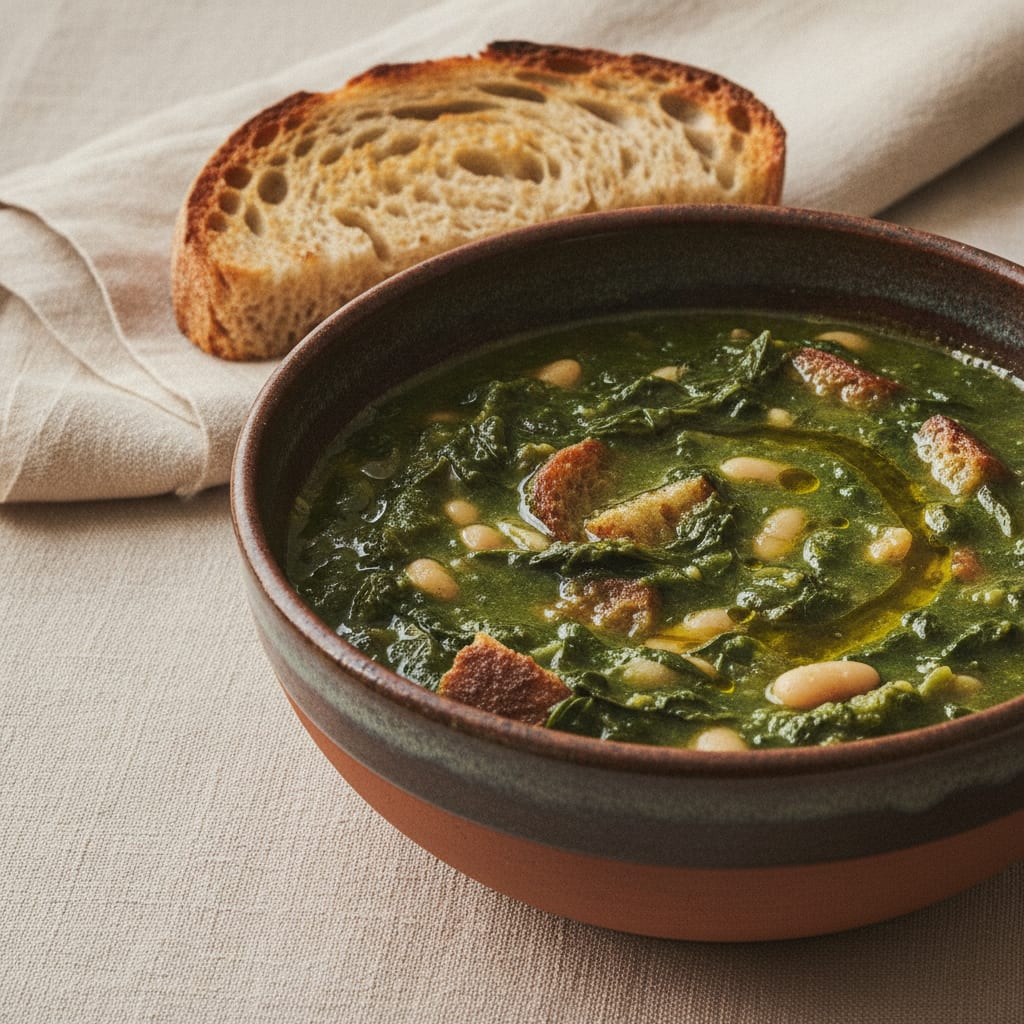
Tuscany's reboiled bread soup, two ways: cannellini beans, cavolo nero, soffritto and day-old bread cooked to a thick, spoon-standing meal — better on day two.
- Prep
- 20 min
- Cook
- 1h 10min
- Total
- 1h 30min
- Servings
- 6
- Difficulty
- Easy
Getting ready…
Ingredients
For 6 servings · 17 items
For the soffritto
For the soup
For the bread
To finish
Method
6 steps · check as you go
- →
Serve
Serve thick enough that the spoon stands up, never thin — ribollita is closer to a stew than a soup. Reheat the rested soup gently and finish each bowl with a heavy, generous pour of your best raw olive oil, black pepper, and a few thin slices of raw red onion if you like the bite. No cheese needed. It is, by design, a tomorrow dish: better reboiled than fresh.
The story
Ribollita is thrift made into a dish. The name means reboiled, and that is exactly what it is: a soup cooked once, rested overnight, and boiled again the next day — better the second time than the first. Its origins reach back to the Middle Ages, when the servants of Tuscan lords gathered the bread and vegetables left on their masters’ tables and reboiled the scraps into something that would feed a household. It became a cucina povera miracle: a single pot stretched across three days, the soup eaten as it was on the first day, allungata — stretched — with more stale bread on the second, reheated again on the third. Nothing wasted. Everything reboiled.
I learned it in Florence in the winter of 2014, in the Oltrarno, in the kitchen of a trattoria where the cook — a broad, unhurried woman named Wanda who ran the stove like a foreman — made a vat of it every Sunday for Monday service and would not let anyone serve it the day it was made. “Domani,” she said, flat. Tomorrow. She used the saltless Tuscan bread gone hard as a brick, tore it straight into the pot, and pushed it under with a wooden spoon until it vanished into the green. The cavolo nero she swore had to come after the first frost — “dopo il gelo è dolce,” after the freeze it’s sweet — and she was right about the chemistry without knowing the chemistry. Frost turns the kale’s starch to sugar.
This ribollita has no meat and never asked for any — it’s bread, beans, and winter greens, the plainest food there is. It is not a “vegan version” of anything. It is ribollita, made the only honest way: a slow soffritto, cavolo nero cooked soft, stale bread melted into the body, rested overnight, and reboiled the next day.
À la maison
The weeknight reading is the recipe above, and it asks for two things most recipes skip: stale bread and patience. The bread must be genuinely day-old and dry, torn into the pot and cooked until it disappears into the broth — fresh bread turns to glue, and there’s no recovering it. And the soup wants to rest overnight and be reboiled the next day; that’s not a serving suggestion, it’s the recipe, the step the name itself describes. Cook the cavolo nero long enough that it goes silky, mash half the beans for body, and finish every bowl with far more raw olive oil than feels reasonable. That last pour is the seasoning.
Au bistrot
The bistronomique reading honours the thrift but plates it with control — the dense reboiled base as the foundation, fresh-cooked greens and a crisp bread element placed on top.
Cook the ribollita to its full thick, rested, reboiled state, then pass a portion through a sieve or blitz it into a smooth, glossy purée to anchor the plate — deep green, intensely savoury. Cook a few cavolo nero leaves separately, blanched briefly so they keep their colour, then dressed in good oil. Make a crostino the right way: not bread cooked into the soup, but a thin slice of the saltless loaf brushed with oil, toasted hard, rubbed with raw garlic. Crisp a few whole beans in oil until golden for texture, and reduce a little of the bean broth to a glaze. To plate: a swept base of the green purée in a wide shallow bowl, the bright blanched cavolo nero arranged off-centre, the crisped beans scattered, the garlic crostino leaned at the edge, and a generous thread of grassy new-harvest olive oil and cracked pepper over all. The reboiled soul of the dish, read in parts.
Il piatto — Overhead, close, soft daylight. Wide shallow bowl, deep-green purée swept across, blanched cavolo nero and golden crisped beans arranged off-centre in odd numbers, a hard-toasted garlic crostino at the edge. A thread of bright green olive oil, cracked black pepper. Negative space. The plate should say thrift, composed — a reboiled peasant soup read once, deliberately.
What the other recipes get wrong
Most ribollita recipes online — I read the top ten in March 2026 — make it like a regular thick soup and serve it the same day, and many use fresh bread stirred in at the end. Both miss what ribollita is. I ran the test over a week in March 2026, three pots, same ingredients, only the bread and the timing changed:
- Fresh bread stirred in, served same day: gummy and pasty where the bread sat, the soup loose and thin elsewhere, the flavours raw and unmarried. A bread soup, not ribollita.
- Stale bread cooked in, served same day: much better body — the bread held and thickened properly — but the flavour was still flat and short, the greens and beans not yet melded.
- Stale bread cooked in, rested overnight, reboiled next day: thick enough to stand a spoon, deeply savoury, the bread and beans fully knit into one dense body. Not close. This was ribollita.
The reasons are physical, not sentimental. Stale bread has lost its free moisture and its starch has partly retrograded, so it holds its structure long enough to slowly dissolve and thicken the broth evenly; fresh bread, full of water and gelatinised starch, collapses straight to glue. The overnight rest does real work too: as the soup cools and sits, the bread and bean starches continue to hydrate and set, gelling the whole pot into a sliceable density, while the flavours have time to marry. The reboiling re-loosens it just enough to serve. And the cavolo nero matters — after a frost it converts starch to sugar as antifreeze, which is why winter ribollita made with frosted kale tastes sweeter and rounder. Skip the stale bread, skip the rest, and you have a thick vegetable soup. Do both and you have the real thing.
The line I draw
I will not serve ribollita the same day I make it, and I will not make it with fresh bread. The dish is defined by being reboiled — the name says so — and by the stale bread that gives it its body. Rest it overnight and reboil it, and the bread and beans set the soup to a dense, spoon-standing stew, the flavours deepening as they sit. Serve it fresh and you’ve made a loose, unmarried bread soup that happens to share the ingredients; use fresh bread and you’ve made paste. Wanda in the Oltrarno said domani — tomorrow — and shut the lid. She was protecting the dish from being served before it was finished. Make it the day before. The reboiling is the recipe.
When this can fail
Three ways, all from my own kitchen between 2022 and 2026:
- The gummy paste. Used fresh bread because that’s what I had, stirred it in, and it collapsed instantly into a gluey lump that never thickened the broth, only clotted in it. Fix: only ever use stale, dry, day-old bread — dry it in a low oven if you must — and cook it slowly until it dissolves.
- The loose, flat soup. Served it the night I made it, impatient; it was thin and the flavours hadn’t married, the cavolo nero still tasting separate from the broth. Fix: rest it overnight and reboil it the next day — that’s the step the name describes, not an optional one.
- The bitter, tough greens. Rushed the cavolo nero, cooking it only ten minutes; it stayed leathery and bitter against the soft beans. Fix: wilt it into the soffritto, then simmer a full thirty minutes until it goes silky — and use frosted winter kale when you can, which is naturally sweeter.
FAQ
QWhat is ribollita?
Ribollita is a thick Tuscan soup of cannellini beans, cavolo nero (Tuscan kale), other winter greens, soffritto, and day-old bread cooked until it's almost a stew. The name means 'reboiled' in Italian: traditionally the soup is made one day, rested overnight, then reheated — reboiled — the next day, which is when it's considered finished. It's a cucina povera dish built to stretch leftover bread and vegetables into several meals, and it should be thick enough that a spoon stands up in it.
QWhy is ribollita called 'reboiled'?
Because it is, traditionally, cooked twice. The dish dates to the Middle Ages, when servants gathered leftover bread and vegetables from nobles' tables and reboiled them into a meal. A family would make a big pot, eat it the first day, then 'stretch' it with more stale bread and reboil it on the second and even third day. The overnight rest and reheat are the defining steps — they let the bread and beans knit into the broth and deepen the flavour. Ribollita made and eaten the same day is technically not yet ribollita.
QWhy does ribollita use cavolo nero, and can I substitute it?
Cavolo nero — Tuscan or lacinato kale — is the traditional and ideal green: tough and leathery raw, it turns silky and sweet over long cooking in a way softer greens can't. It's at its best after a frost, because when temperatures drop below about 4°C the plant converts stored starch into sugars as natural antifreeze, making the leaves measurably sweeter and less bitter. If you can't find it, regular curly kale plus some savoy cabbage is the closest stand-in, though the flavour is a little less deep.
QWhat bread should I use for ribollita?
Stale, dry, day-old country bread — ideally the saltless Tuscan loaf (pane sciocco), but any sturdy crusty bread works. It must be dry, not fresh: stale bread holds its structure long enough to slowly dissolve into the broth and thicken it, while fresh bread collapses straight to a gummy paste. Don't use soft sandwich bread. The bread isn't a garnish here — it's the thickener that gives ribollita its dense, spoon-standing body.
QCan you make ribollita ahead?
You're supposed to. Ribollita is built to be made ahead — the overnight rest and next-day reheat (the 'reboiling') are part of the recipe, not a shortcut. It keeps 4–5 days in the fridge and only improves for the first two or three as the bread and beans meld and the flavours round out. Reheat gently on the stove, loosening with a splash of water if it's stiffened. It also freezes well. This is a dish that rewards making it the day before.