Pasta and beans, the Naples way.
Pasta e fagioli.
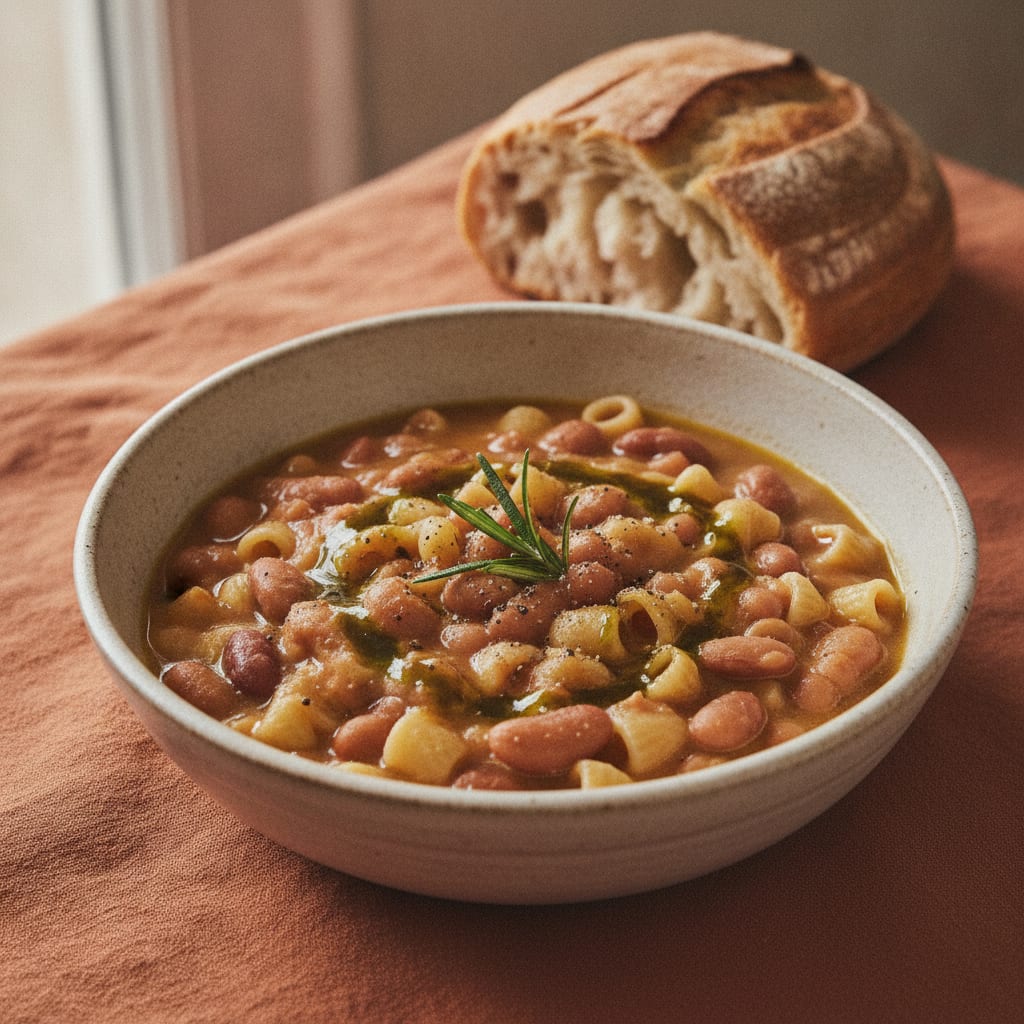
Naples' pasta and beans, two ways: half-puréed beans for a creamy base, broken mixed pasta cooked in, garlic, rosemary and good oil — cucina povera.
- Prep
- 15 min
- Cook
- 45 min
- Total
- 1h
- Servings
- 4
- Difficulty
- Easy
Getting ready…
Ingredients
For 4 servings · 17 items
For the base
For the soup
For the pasta
To finish
Method
6 steps · check as you go
- →
Serve
Serve hot in shallow bowls, thick but still loose — eat it with a spoon. Finish each bowl with a heavy pour of your best olive oil and a generous grind of black pepper; no cheese needed, though a little cashew parmesan is welcome. It thickens to a near-solid in the fridge, so loosen leftovers with hot water when you reheat. Crusty bread alongside, in the Naples way.
The story
Pasta e fagioli is two of the cheapest things in any Italian pantry — pasta and beans — cooked together until they become more than the sum of two cheap things. It is a pillar of Neapolitan cucina povera, the food built to feed the poorest people with what the market floor left behind. In Naples it is pasta e fasule, and the dialect mangled further into the pasta fazool that came over with emigrants. The beans go back to Roman tables; the pasta is the part that tells you who made it and how little they had. The traditional pasta is pasta mista or ammescata — “mixed” pasta — the broken offcuts of a dozen different shapes swept from the bottom of the box and cooked together, because throwing away the broken ends was a luxury nobody could afford.
I learned it in Naples in the summer of 2015, at Da Concettina, from the kitchen porter — a wiry old man named Ciro who wasn’t a cook at all but made the staff pasta e fasule on slow afternoons and was visibly offended by anyone who used a single, tidy pasta shape. He kept a paper bag of broken bits — “a’ pasta ammescata” — and tipped them straight into the pot. He puréed half the beans with the back of a ladle against the side of the pot, fast and rough, then stirred the whole ones back through. “Cremoso, ma con i fagioli interi,” he said — creamy, but with whole beans. Half and half. That was the whole secret, and he gave it away like it was nothing.
This pasta e fagioli has no meat and never needed it — it’s beans, pasta, garlic, oil. It is not a “vegan version” of anything. It is pasta e fasule, made the way the porter made it: a slow base, half the beans puréed creamy and half left whole, the broken pasta cooked right in the pot, and far too much black pepper.
À la maison
The weeknight reading is the recipe above, and it turns on two moves Ciro insisted on: purée half the beans, and cook the pasta in the soup. Blending half the beans (an immersion blender straight in the pot) gives you a creamy base with no cream; leaving the other half whole gives you something to chew. And the pasta cooks directly in the bean broth so it drinks up the flavour and binds the whole thing together — never cooked separately and added. Use mixed broken pasta if you can find it, or just snap some spaghetti into short lengths. Finish with real olive oil and real pepper. That’s the dish.
Au bistrot
The bistronomique reading keeps the creamy-and-whole bean logic but composes it — a smooth bean velouté as the base, the pasta and a few dressed beans placed with intention on top.
Cook the beans long and gently with the kombu and aromatics, then blend a good portion with their broth and a thread of olive oil into a smooth, glossy velouté — silky, savoury, the colour of the bean. Cook a small quantity of a single elegant pasta — fresh maltagliati, or quality tubetti — apart in well-salted water just to al dente, then glaze it in a little of the velouté so it stays distinct on the plate. Crisp a spoon of whole beans in olive oil with a sprig of rosemary until golden and nutty. To plate: pool the warm velouté in the base of a wide shallow bowl, lift a neat nest of the glazed pasta off-centre, scatter the crisped beans, then dress with a frizzle of rosemary-fried garlic, a grind of pepper, and a generous thread of your best new-harvest oil. The same humble bowl, read as parts: the creamy, the whole, the crisp.
Il piatto — Overhead, close, soft daylight. Wide shallow bowl, smooth pale bean velouté pooled at the base, a neat nest of pasta off-centre, golden crisped beans and frizzled garlic scattered, a thread of bright green oil and cracked pepper. Negative space. The plate should say creamy and whole, composed — a porter’s peasant bowl read once, deliberately.
What the other recipes get wrong
Most pasta e fagioli recipes online — I read the top ten in April 2026 — leave the beans whole in a thin broth and cook the pasta separately to stir in at the end. Both choices flatten the dish. I ran the test over a week in April 2026, three pots, same beans and aromatics, only the bean texture and the pasta handling changed:
- Whole beans only, pasta boiled separately and added: thin, watery broth with beans and pasta floating in it as two unconnected things. It read as bean soup with pasta thrown in, not one dish. Loose and unbound.
- All beans puréed, pasta cooked in: creamy and bound, yes, but monotone — a smooth bean purée with pasta, no contrast, nothing to chew against. Baby food, the porter would have said.
- Half beans puréed, half whole, pasta cooked in the soup: velvety and creamy from the purée, with whole beans for bite and pasta that had drunk the savoury broth and bound it all together. Not close. This was pasta e fasule.
The reasons are mechanical. Puréeing half the beans bursts their cells and releases starch and gelatinised solids into the liquid, thickening it to a creamy emulsion the way a flour roux would, but with pure bean — that’s where the body comes from with no cream in sight. Leaving the other half whole keeps a textural counterpoint so the bowl isn’t a single smooth note. And cooking the pasta in the soup rather than apart means it sheds its surface starch into the broth and absorbs the savoury liquid in return, so the pasta and the beans become one bound dish instead of two things in a bowl. The kombu, standing in for the pork rind a Naples cook would once have simmered in, supplies the glutamate depth underneath. Purée half, cook the pasta in — every batch, the difference was not subtle.
The line I draw
I will not cook the pasta separately and stir it in, and I will not leave all the beans whole. Pasta e fagioli is one bound dish, not pasta sitting in bean soup — and the binding comes from cooking the pasta in the broth so it sheds and absorbs starch, and from puréeing half the beans so the broth turns creamy. Cook the pasta apart and you get two separate things floating together, the broth thin, the dish unresolved. Leave every bean whole and the broth stays watery, with nothing to carry the pasta. The porter at Da Concettina mashed half the beans against the pot wall and cooked his broken pasta right in the pot, and he was protecting the one thing that makes this dish cohere. Half puréed, pasta cooked in. Cross that line and it falls apart into soup-with-noodles.
When this can fail
Three ways, all from my own kitchen between 2022 and 2026:
- The thin, unbound bowl. Left all the beans whole and cooked the pasta separately to be tidy; ended up with watery broth and pasta and beans drifting apart with nothing holding them. Fix: purée half the beans for a creamy base and cook the pasta directly in the soup so it binds.
- The set-solid leftovers. Refrigerated a batch and the next day it was a sliceable brick — the pasta and bean starch had drunk every drop of liquid. Fix: loosen reheated portions with plenty of hot water or stock, stirring gently; if making far ahead, cook the pasta separately.
- The flat, under-seasoned pot. Skipped the umami anchor and went light on pepper; the beans tasted plain and the whole bowl fell asleep. Fix: simmer a strip of kombu (or a Parmesan rind) in the broth for depth, salt properly, and finish with real olive oil and a heavy grind of black pepper — the pepper is not optional.
FAQ
QWhat is pasta e fagioli?
Pasta e fagioli — 'pasta fazool' in the Neapolitan-American accent — is an Italian dish of pasta and beans cooked together into a thick soup-stew, with a soffritto base, garlic and rosemary, and good olive oil to finish. It's a cornerstone of cucina povera, peasant cooking built on cheap, filling staples. In Naples the classic uses borlotti beans and mixed broken short pasta (pasta mista). The defining texture comes from puréeing about half the beans for a creamy base while keeping the rest whole.
QWhat pasta goes in pasta e fagioli?
Traditionally pasta mista or pasta ammescata — a mix of broken offcuts from several different pasta shapes. Historically these were the cheap odds and ends left in the bottom of the pasta box, swept together, which is pure cucina povera: nothing wasted. The mixed shapes cook at slightly different rates and give a varied, rustic bite. If you can't find pasta mista, use tubetti, ditalini, or simply break long spaghetti into short pieces. Whatever you use, cook it in the soup, not separately.
QHow do you make pasta e fagioli creamy without cream?
Purée about half the beans. Blending half of them (an immersion blender in the pot is easiest) releases their starch into the broth and makes it velvety and thick, while the rest stay whole for texture. No cream, no flour, no cheese needed. Cooking the pasta directly in the soup adds more starch and binds it further. The result is creamy from beans and pasta alone — exactly how the dish was always made by people who had neither cream nor money.
QShould I use canned or dried beans?
Either works. Dried beans, soaked and cooked from scratch, give the best flavour and a richer cooking liquid you can use as the broth — and salting them only near the end of cooking keeps their skins from toughening. But canned borlotti or cannellini are an honest shortcut: drain them, and use a little of the canned liquid (or extra stock) to loosen the soup. The recipe above is written for canned to keep it a true weeknight dish.
QWhy does pasta e fagioli get so thick when it sits?
Because both the bean starch and the pasta keep absorbing liquid as it cools. Pasta e fagioli is meant to sit between a soup and a stew when served, but in the fridge it sets almost solid. That's normal and not a fault — just loosen it with a splash of hot water (or stock) when you reheat, and stir gently. If you're making it well ahead, you can cook the pasta separately and add it on serving to keep the texture exactly where you want it.