Baked, not boiled — start to finish.
Gnocchi alla sorrentina.
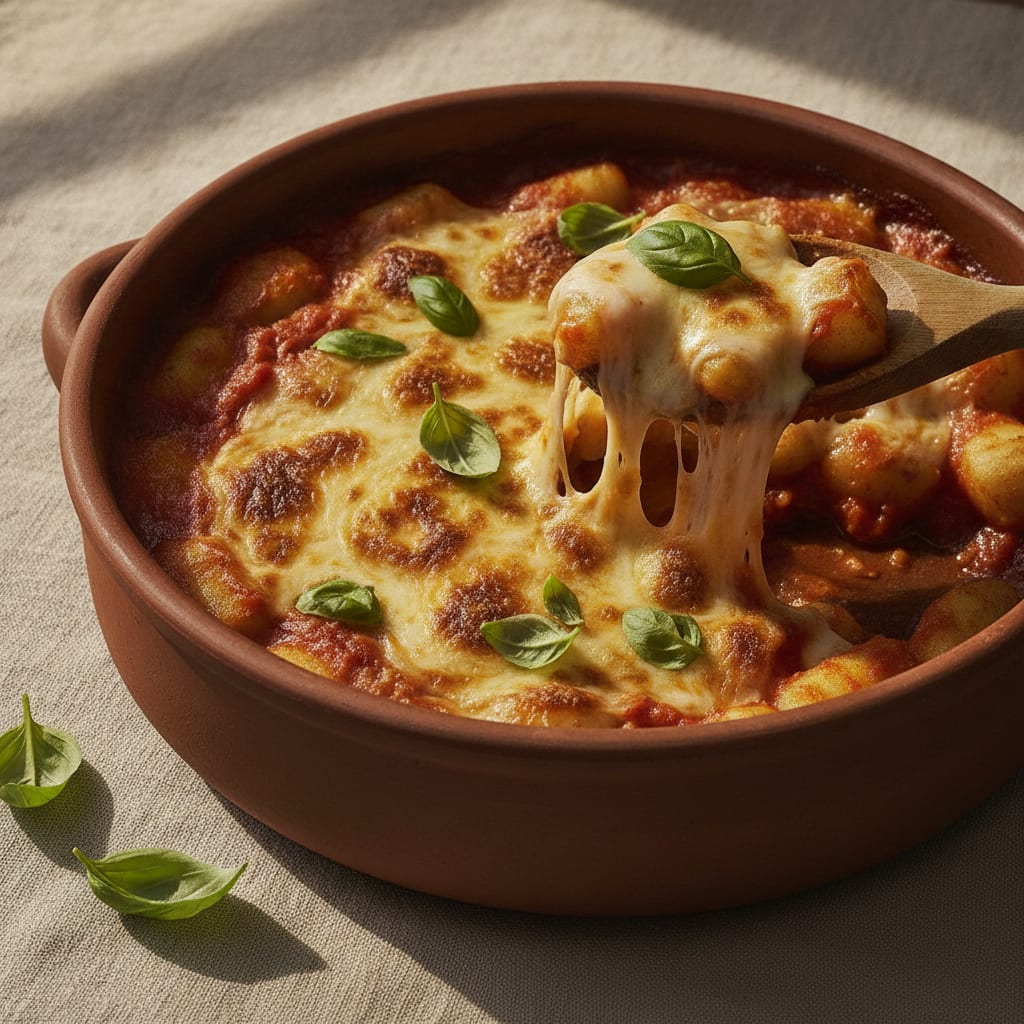
Sorrento-style baked gnocchi, two ways: pillowy riced-potato gnocchi in a quick tomato sauce with a fior di latte analog, baked in a dish until bubbling and golden.
- Prep
- 45 min
- Cook
- 30 min
- Total
- 1h 15min
- Servings
- 4
- Difficulty
- Medium
Getting ready…
Ingredients
For 4 servings · 12 items
For the gnocchi
For the tomato sauce
For baking
Method
7 steps · check as you go
- →
Serve
Bring it to the table in the dish it baked in, bubbling, with the melted vegan mozzarella still stretching and fresh basil torn over the top. Spoon it out so everyone gets the golden caught edges. A glass of Falanghina or a light red like Piedirosso, both Campanian, suit it. Eat it hot.
The story
Gnocchi alla sorrentina is what happens when you take a plate of potato dumplings and decide it isn’t finished until it has been baked — folded through a bright tomato sauce, layered with soft fior di latte, and put in a hot oven until the top catches gold and the cheese pulls in strands. It comes from Sorrento, on the Campanian coast, and the credit traditionally goes to a tavern cook there working with two New World ingredients — the potato and the tomato — that were still novelties in Italy when the dish took shape. The dates wander between accounts, sixteenth century in some tellings and nineteenth in others, so I won’t pin a year I can’t defend. What is solid: it is Campanian, it is baked, and the baking is the point. Gnocchi al pomodoro is the sauce; alla sorrentina is the oven.
I cooked it in Naples, in 2015, at Da Concettina, where it was a children’s-table favourite and a test of whether you could make gnocchi that didn’t sit in the stomach like gravel. The cuoca baked her potatoes whole and dry, never boiled them, and riced them while they were too hot to touch, swearing at the steam. “Poca farina,” she’d say, holding my wrist back from the flour bin. Little flour. She added the least that would bring the dough together and not a pinch more, and she would not let me knead it — a few folds and it was done. The gnocchi came out like clouds, and then she drowned them in tomato and fior di latte and baked them anyway.
This sorrentina has no dairy fior di latte — a good melting cashew mozzarella does the stretch, cashew parmesan does the savoury crust. Nothing else moves: the dry baked potatoes, the riced flesh, the barely-there flour, the ridges that grab the sauce, the hot oven that catches the top. It is not a “vegetable version” of gnocchi alla sorrentina. It is gnocchi alla sorrentina, baked the way it is named to be.
À la maison
The weeknight reading is the recipe above, and the cuoca’s two words run the whole thing: little flour. Bake the potatoes, don’t boil them, so they are dry and take up almost no flour — that is what keeps the gnocchi pillowy instead of dense. Rice them hot, add the least flour that brings a soft dough together, and don’t knead. Ridge each piece so it grabs the sauce, boil them only until they bob, and bake hot and short so the top catches without drying out. Get the flour right and everything downstream is easy. Get it wrong and no sauce in Campania will rescue a gummy gnocco.
Au bistrot
The bistronomique reading is the same sorrentina, broken out of the family dish into a precise individual bake with a smoother, glossier sauce.
Make the gnocchi a touch smaller and more even. Refine the sauce: cook the passata down further and pass it through a sieve into a glossy, intense coulis, then fold the boiled gnocchi through just enough to coat. Build individual portions in small cazuelas or deep ring moulds — gnocchi and coulis, a heart of torn vegan mozzarella in the centre so it melts to a molten core, a fine grating of cashew parmesan on top — and bake them hot until each one has a golden, caught crown and a bubbling edge. Unmould or serve in the little dish. Finish each with a single fried basil leaf for a crisp note, a few fresh leaves, a thread of good olive oil, and a dot or two of basil oil around the plate. The first spoon should break a browned top into a soft, sauced, stringy middle — the same dish, read as one tidy round instead of a shared casserole.
Il piatto — Three-quarter, close, shallow depth of field. Small terracotta cazuela or a neat unmoulded round, golden caught top, a spoon pulling a strand of melted vegan mozzarella from the centre. Glossy red sauce at the edge, a crisp basil leaf and fresh leaves, basil-oil dots. Warm light, deep shadow, faint steam. The plate should say baked and stringy and golden — a Sorrento casserole read once, single-portion, at a white tablecloth.
What the other recipes get wrong
Most gnocchi recipes online — I made the top ten over a fortnight in April 2026 — boil the potatoes for speed and then keep adding flour until the wet dough behaves, and the gnocchi come out heavy. I ran the test over that fortnight in April 2026, three batches, same shaping and same sauce, only the potato handling changed:
- Boiled potatoes, riced wet, flour added until workable (about 320 g): dense, chewy, slightly gummy; the gnocchi sat heavy and the ridges blurred under all that flour.
- Boiled potatoes, steam-dried hard, less flour (about 260 g): better, lighter, but still a faint gumminess where the residual water had needed flour to tame.
- Baked potatoes, riced hot, minimum flour (about 210 g): pillowy, tender, distinct ridges, a dough that came together soft and barely tacky. Not close. This is what gnocchi are supposed to be.
The science is water and gluten. Potato is mostly water, and boiling adds more through the skin and cut surfaces; the wetter the riced potato, the more flour you must add to get a dough that holds, and flour brings gluten. Worked with water and heat, that gluten develops into an elastic network — fine for bread, ruinous for gnocchi, which should be tender and yielding, not chewy. Baking drives moisture out instead of in, so the dry flesh needs far less flour, the dough stays low-gluten, and the gnocchi cook up light. Ricing hot and not kneading keeps the starch from being worked into glue. Dry potato, minimum flour, light hands. Boil the potato and you are signing up to add the flour that wrecks it.
The line I draw
I will not boil the potatoes for gnocchi, and I will not keep adding flour until a wet dough feels easy to handle. They are the same mistake wearing two hats. Boiled potato is waterlogged, and waterlogged potato demands flour, and flour past the minimum builds gluten that turns a gnocco from a pillow into a pellet. The entire pleasure of this dish is lightness — dumplings that almost dissolve under the baked tomato and the melted fior di latte — and lightness is a function of dry potato and a restrained hand at the flour bin. The cuoca held my wrist back from it for a reason. I bake the potatoes and add the least flour that works, or I don’t make gnocchi.
When this can fail
Three ways, all from my own kitchen between 2022 and 2026:
- The gravel gnocchi. Boiled the potatoes to save time, riced them wet, and had to pour in flour to get a dough — they baked up dense and chewy. Fix: bake the potatoes whole and dry, rice them hot, and add the least flour that brings a soft dough together.
- The dissolved batch. Left the gnocchi in the boiling water past the float, fussing with the sauce; they waterlogged and broke into mush. Fix: lift them out the second they bob to the surface, straight into the sauce.
- The watery bake. Used a loose, under-reduced tomato sauce; the finished dish came out of the oven thin and sloshing instead of clinging. Fix: simmer the sauce until it coats a spoon before it ever meets the gnocchi.
FAQ
QWhy bake the potatoes instead of boiling them for gnocchi?
Because a baked potato is much drier than a boiled one, and water is the enemy of light gnocchi. Boiled potatoes absorb water through the cut or skin, and that extra moisture forces you to add more flour to get a workable dough — more flour means more gluten and denser, gummier gnocchi. Baking drives moisture off, so you need far less flour and the gnocchi come out pillowy. If you must boil, do it whole in the skin and let them steam-dry well before ricing.
QHow do I keep my gnocchi from turning out dense and gummy?
Three things. Use the driest potatoes you can — baked floury potatoes, riced hot, spread to release steam. Add the least flour that brings the dough together, and stop the moment it does; every extra gram develops gluten and toughens them. And handle the dough lightly — do not knead it like bread. Dense gnocchi are almost always too much flour, too much working, or wet potatoes that demanded both.
QWhat are the ridges on gnocchi for?
They hold the sauce. Rolling each gnocco down a fork or a gnocchi board presses grooves into the surface, and those grooves catch and grip the tomato sauce so every bite carries it — a smooth gnocco sheds sauce, a ridged one wears it. The curl that forms as you roll also gives each piece a thin section that cooks through quickly and a plump section that stays pillowy. Function first, looks second.
QWhat can I use instead of fior di latte mozzarella?
Gnocchi alla sorrentina is built on fior di latte — soft cow's-milk mozzarella — for its melt and pull. A good cashew-based vegan mozzarella that actually melts is the closest analog; tear it into pieces and tuck them among the gnocchi so they melt into strands in the bake. Avoid the firm, rubbery blocks that never melt. A scatter of cashew parmesan over the top adds the savoury, aged note and helps the surface catch and brown.
QCan I make the gnocchi ahead or freeze them?
Yes, and freezing is the best make-ahead. Shape the gnocchi, spread them in a single layer on a floured tray, freeze until solid, then bag them — they keep a month and go straight from frozen into boiling water, needing just a minute more. Don't refrigerate raw gnocchi for hours; they weep and stick. You can also assemble the whole dish in its baking dish, refrigerate it, and bake it from cold, adding a few minutes.