Dark, sour, and built by browning.
Chana Masala.
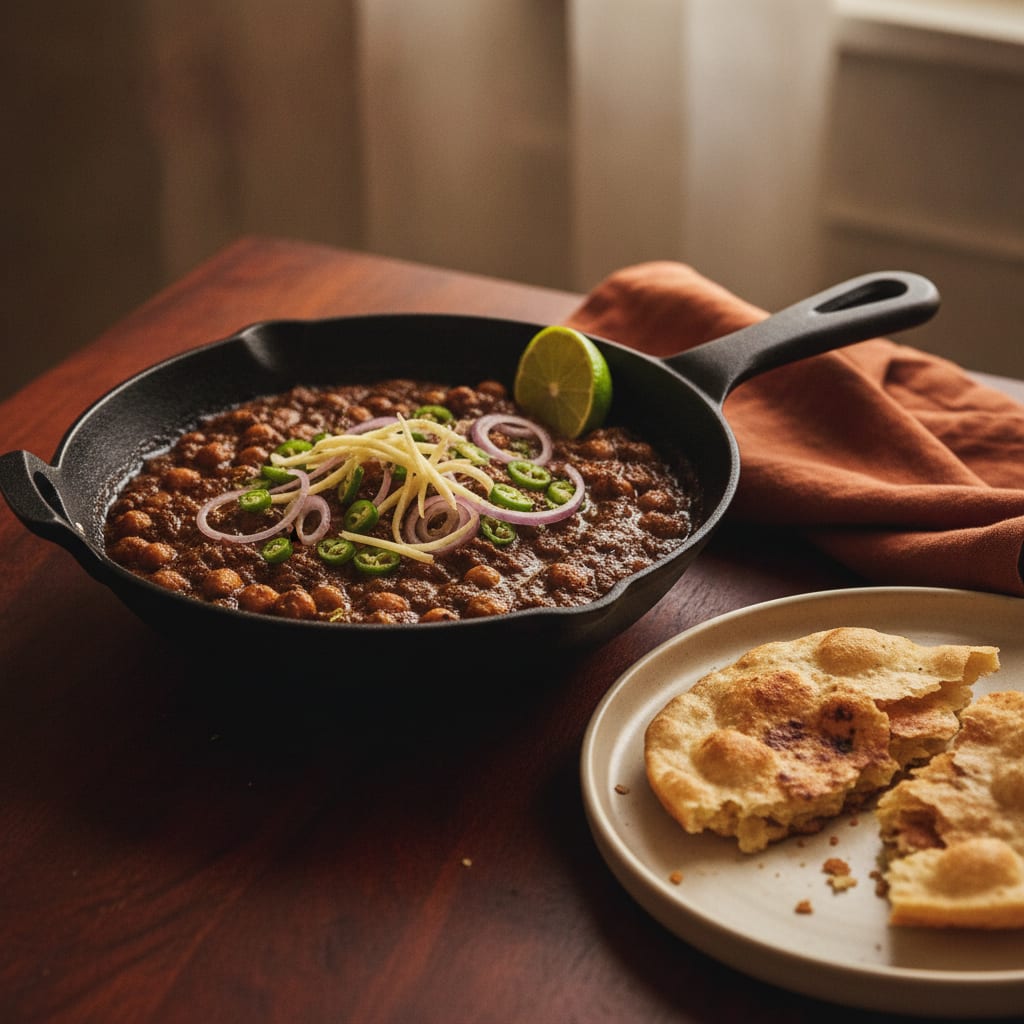
Punjabi chickpea curry, Pindi style: a dark bhuna onion-tomato masala, soured with anardana and amchur, darkened with black tea to a deep mahogany.
- Prep
- 15 min
- Cook
- 45 min
- Total
- 1h
- Servings
- 4
- Difficulty
- Easy
Getting ready…
Ingredients
For 4 servings · 23 items
For the chickpeas
For the bhuna masala
For the sour and the spice
To finish
Method
5 steps · check as you go
- →
Serve
Serve hot with bhatura, roti, or steamed rice, with rings of red onion, slivered ginger, green chilli, and a wedge of lime on the side. The classic plate is chole-bhature — the dark chickpeas with a puffed fried bread. It keeps and deepens for 3–4 days; loosen with a little water when reheating, as it tightens in the fridge.
The story
The first genuinely dark chana masala I made in Washington came out of frustration. It was an April evening in 2025, in my own kitchen in the District, and I had eaten chole-bhature that week at a weekend stall that sets up near the gurdwara off New Hampshire Avenue — a woman ladling out chickpeas so dark they were almost black, sour enough to make you blink, with raw ginger and green chilli thrown over the top. Mine kept coming out orange and timid. The difference, it turned out, was two things I was too cautious about: browning the onions far past where my instinct said stop, and dropping a tea bag in with the chickpeas.
That tea bag is the Pindi trick. Pindi chole — named for Rawalpindi, the dish’s home before Partition — gets its deep mahogany colour from black tea cooked alongside the chickpeas, not from heavy spice or burnt anything. The other half of its character is sour: anardana, ground dried pomegranate, with amchur behind it, sharp enough that the dish reads as tangy before it reads as anything else.
This curry is vegan as written, and the Pindi style mostly is by default — chickpeas, onions, tomato, spice, oil. It is not a “plant-based chickpea curry.” It is chana masala, built the dark Pindi way: tea-stained, hard-browned, sour with pomegranate. Made with what is in my hands now.
À la maison
The weeknight reading is the recipe above, and the two moves that matter are both about nerve. First, cook the chickpeas with a tea bag in the water — that is the whole colour trick, and it costs nothing. Second, brown the onions much harder than feels safe: deep brown, not golden, twelve to fifteen minutes, then cook the tomato masala down until the oil splits out at the edges. That browning is where the colour and depth live. Then it is just chickpeas, the sour pair of anardana and amchur, and a thick clinging gravy you thicken by mashing a few of the chickpeas against the pan. Raw ginger and green chilli over the top at the end is not optional — it is the dish.
Au bistrot
The bistronomique reading keeps the dark, sour Pindi masala but plates it as a composed course with the chickpeas worked two ways.
Cook the chickpeas with the tea as before, but split them: keep two-thirds whole and glossy in the masala, and blend the last third with a little of the dark cooking liquid into a smooth chickpea purée, seasoned with cumin and salt, to plate underneath as a savoury base. Reduce the bhuna masala harder than usual — almost a thick paste — so it sits as a deliberate spoonful rather than a stew. For texture, fry a small handful of the cooked chickpeas in hot oil until blistered and crisp, and toss them in a little anardana and chilli so they read as a sour, crunchy crouton. Build a wide plate: a swipe of the warm chickpea purée, the dark chickpeas in their tight masala spooned off-centre, the crisp chickpeas scattered over, and a tangle of the raw slivered ginger and green chilli on top. A small heap of quick-pickled red onion brings the acid and colour, and a single warm triangle of bhatura stands at the edge for the bread.
Le dressage — Three-quarter, slightly above. Wide dark plate. A swipe of pale chickpea purée, the mahogany chickpeas spooned in a tight off-centre mound, crisp chickpeas and slivered ginger over the top, pickled onion bright at the edge, a triangle of puffed bhatura standing. The plate should say the same dark, sour bowl, read with a steady hand — depth and tang composed, not tamed.
What the other recipes get wrong
Most chana masala recipes online get the colour wrong because they chase it the wrong way — more chilli powder, more garam masala, sometimes a slick of food colouring. The colour is not a spice; it is tea and browning. I ran the test over four evenings in May 2025 — five batches of the same chickpeas and masala, changing only how I got the colour and depth:
- No tea, onions cooked to golden only: thin, orange, and sweet-sour with raw tomato. It tasted like a generic chickpea curry. No backbone.
- No tea, onions browned deep: much better and properly savoury, but the colour stayed warm-brown rather than the dark mahogany of a Pindi bowl.
- Tea bag in the chickpea water, onions cooked only to golden: dark in colour but hollow underneath — the right look, the wrong depth.
- Tea bag in the water AND onions browned deep, masala bhuna’d until the oil split: this was the stall bowl. Dark mahogany, deep and savoury, the sour anardana clean on top.
The reason splits cleanly. The colour comes from the tea: the tannins and pigments in black tea stain the chickpeas and the gravy a deep brown the way they stain a cup, with only a faint tannic note and no off-flavour. The depth comes from the browning: deeply caramelised onions and a tomato masala cooked until the fat separates carry the savoury weight, and that oil-splitting is the visible signal the raw edge is gone. Tea without browning looks right and tastes thin; browning without tea tastes right and looks pale. You need both, every time — and then the anardana and amchur do the last job, the sour lift that makes a heavy, dark curry taste alive instead of muddy.
The line I draw
I will not thicken chana masala with cream or flour. The gravy is supposed to get its body from the chickpeas themselves — you mash a handful against the side of the pan and let their starch thicken the masala, and you reduce the dark cooking liquid until it clings. The moment you reach for cream you have made a different, softer, rounder dish that loses the dry, tangy, browned character that is the entire point of Pindi chole. If it is too thin, I reduce it or mash more chickpeas. I do not pour in cream to cover for a masala I didn’t cook down far enough.
When this can fail
Three ways, all from my own kitchen between 2022 and 2026:
- The orange, timid curry. Stopped browning the onions at golden because they looked done, and cooked the tomato for five minutes instead of ten. The result was thin, sweet, and pale — raw tomato over chickpeas. Fix: take the onions to deep brown, and bhuna the tomato masala until the oil visibly separates before the chickpeas go in.
- The chalky chickpea. Drained the boil while a few chickpeas were still firm in the centre because I was hungry. They never softened in the masala and never took on flavour. Fix: cook them until they crush between two fingers, with no resistance, before you build the curry.
- The flat, un-sour bowl. Forgot the anardana and leaned on garam masala instead. It tasted heavy and dark but dead — no lift. Fix: anardana and amchur are not optional in this style; if you’re out, amchur plus a squeeze of lime at the end, but get the sour in.
FAQ
QWhat is the difference between chana masala and Pindi chole?
They are versions of the same dish. Chana masala is the broad name for Punjabi chickpea curry; Pindi chole (or Rawalpindi chole) is the darker, drier, more tangy style that traces to Rawalpindi before Partition. The Pindi version is defined by three things: it is darkened with black tea cooked alongside the chickpeas, soured sharply with anardana (dried pomegranate) and amchur rather than much tomato, and built dry — a thick masala clinging to the chickpeas rather than a thin gravy. This recipe follows the Pindi style.
QWhy is my chana masala dark in restaurants but pale at home?
Two reasons. First, the colour: Pindi-style chole is cooked with black tea — a bag or loose leaf simmered with the chickpeas — which stains them a deep mahogany without affecting the taste. Second, the browning: the onions are cooked far darker than most home cooks dare, well past golden, and the tomato masala is bhuna'd until the oil separates. Pale, orange chana masala almost always means under-browned onions and a tomato base that wasn't cooked down enough.
QWhat gives chana masala its sour taste?
In the Pindi style, the sourness comes from anardana — ground dried pomegranate seeds — backed by amchur, dried green mango powder. Together they give a deep, fruity tang that is rounder and more complex than lemon juice. If you can't find anardana, use amchur plus a squeeze of lime at the end, but the genuine anardana sourness is what makes the dish taste like Pindi chole rather than a generic chickpea curry.
QCan I use canned chickpeas for chana masala?
Yes. Dried chickpeas soaked overnight have better texture and let you cook them with tea for the colour, but canned work well on a weeknight. Drain and rinse them, and to get the Pindi darkness, steep a black tea bag in 1.5 cups of just-boiled water for a few minutes and use that as your cooking liquid in place of the chickpea broth. Simmer the canned chickpeas in the masala a little longer to let them take on flavour, since they start out bland.
QIs chana masala vegan?
Traditional Pindi-style chana masala is naturally vegan — it is built on chickpeas, onions, tomatoes, and spices, with oil rather than dairy. Some restaurant versions finish with a swirl of cream or cook in ghee; this recipe uses oil or vegan ghee and gets all its richness from the bhuna'd masala and the chickpeas themselves, mashing a few to thicken the gravy. No dairy needed, and none missed.