The dal is the canvas; the tadka is the brush.
Dal Tadka.
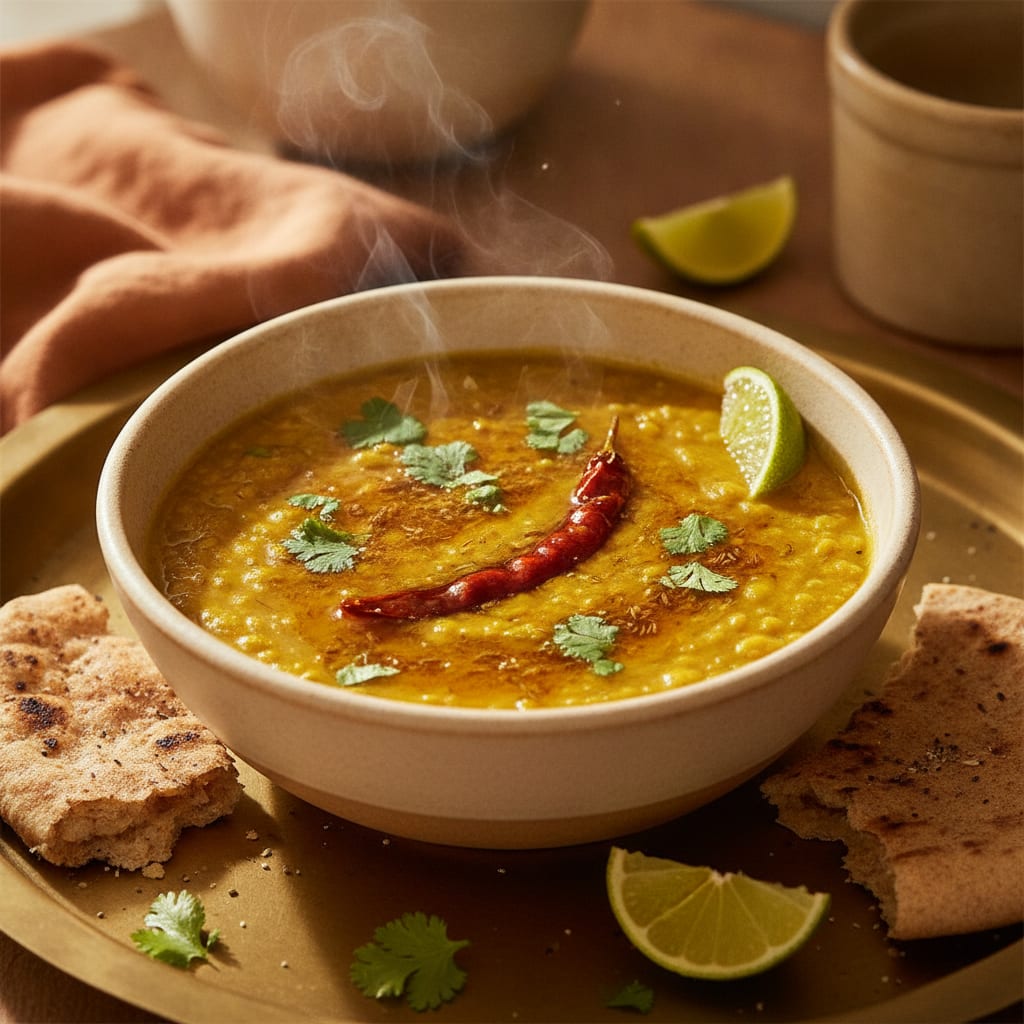
Soft yellow toor dal finished with a tadka — whole spices bloomed in hot ghee until the fat itself turns gold, cumin and garlic and chilli crackling.
- Prep
- 15 min
- Cook
- 45 min
- Total
- 1h
- Servings
- 4
- Difficulty
- Easy
Getting ready…
Ingredients
For 4 servings · 21 items
For the dal
For the masala base
For the tadka (the tempering)
To finish
Method
5 steps · check as you go
- →
Serve
Serve in a warm bowl with the tadka slick still visible on top, a wedge of lime, and either steamed basmati or hot roti. A spoon of the dal, a squeeze of lime, a piece of bread — that is the dhaba plate. Leftovers thicken overnight; loosen with hot water and, if you have the patience, give it a fresh tadka before serving again.
The story
There is a stretch of Route 1 north of College Park, Maryland, where the Indian groceries and the truck-adjacent lunch counters cluster, and on a grey February afternoon in 2025 I ate a dal tadka there that I am still chasing. The cook — a man who ran the steam table alone and answered every question with the same two words, “yes, good” — finished my dal by tipping a small steel ladle of cumin and chilli ghee over it right on the counter, where it hissed and threw up a cloud of cumin you could smell three feet away. It was a dollar-fifty side. It was better than dishes I have paid forty for.
That is the whole secret of dal tadka, and it is not a secret at all: the dal is the canvas, and the tadka — the tempering, the chaunk — is the brush you draw across it at the very last second. Dhaba dal got its name from exactly that kind of place: the open-air truck-stop kitchens along India’s highways, where a pot of dal simmers all day and gets finished to order with a flash of spiced fat.
This dal has no dairy in it. The cooking fat is vegan ghee, the body comes from the toor dal itself whisked to a cream, and the tadka does what it has always done. It is not a “dairy-free version” of dal tadka. It is dal tadka — the dal cooked soft, the tempering bloomed in hot fat and poured over hissing. Made with what is in my hands now.
À la maison
The weeknight reading is the recipe above, and it asks for almost nothing: cook the lentils until they fall apart, whisk them loose, and keep them a touch thinner than looks right because they set as they sit. The only moment that needs your attention is the tadka, and it takes fifteen seconds. Get the ghee genuinely hot — shimmering, the cumin should sizzle the instant it lands — bloom the spices fast, kill the heat, add the chilli powder off the flame so it stays red, and pour it over the dal right before it goes to the table. Do not stir it in. That slick of spiced fat on top is the dish.
Au bistrot
The bistronomique reading keeps the same dal but composes it as a plated course, with the tadka as the final gesture poured in front of the guest.
Push the base first: cook the toor dal in a light kombu-shiitake stock instead of plain water for a rounder, savoury floor, and finish it with a knob of vegan butter whisked in so the purée turns glossy and falls in a clean ribbon. Pass it through a fine sieve so it plates as a smooth, pale-gold pool rather than a rustic bowl. Build two contrasting textures on top: a small quenelle of cumin-roasted carrot purée for sweetness against the savoury dal, and a scatter of crisp fried curry leaves and slivered shallot for crunch. Char a wedge of lime cut-side-down in a dry pan so it brings smoke as well as acid. Then the tadka: heat the ghee, cumin, dried chilli and sliced garlic to blooming and carry it to the table in the hot ladle, pouring it over the pooled dal in front of the guest so the cumin cloud rises at the plate. A torn shard of crisp roti stands upright in the purée for the bread.
Le dressage — Overhead, then a second frame at the pour. Wide shallow bowl, ivory glaze. The dal a smooth pale-gold pool, the carrot quenelle and fried curry leaves off-centre, the crisp roti standing up. The tadka poured tableside so the chilli and cumin sit proud on the surface and the fat catches the light. The plate should say restraint with a hot heart — one quiet pool with one loud gesture across it.
What the other recipes get wrong
Most dal tadka recipes treat the tadka as a garnish you do whenever the dal is ready and then stir in. It is not a garnish, and the timing is the dish. I ran the test over a week in March 2025 — six batches of the same toor dal, same masala base, changing only how and when the tadka went on:
- Tadka made early, stirred fully in, dal held 20 minutes: round and pleasant but flat on top. The cumin and chilli had dissolved into the body and there was no distinct aroma rising from the bowl. It tasted cooked, not finished.
- Tadka in oil that smoked before the spices went in: acrid. The cumin browned to bitter in seconds and the chilli powder scorched. No amount of salt fixed it.
- Tadka in shimmering (not smoking) ghee, chilli powder added off the heat, poured over at the last second and left unstirred: this was the dhaba bowl. Cumin and garlic loud on the surface, the chilli powder red instead of brown, the first spoonful carrying the whole tempering.
The reason is chemistry, not opinion. The aromatic compounds in these spices — cuminaldehyde in cumin, capsaicin in chilli — are hydrophobic: they dissolve into fat and barely into water. Hot ghee, shimmering around 180–190°C, ruptures the spice and pulls those oils into the fat, which is why a tadka tastes of far more than the same spices simmered in the dal. Push the fat to smoking and you cross from blooming into burning, and the same compounds turn bitter. Add the ground chilli while the fat is still on the flame and it scorches; off the heat, the residual warmth blooms its colour without burning it. And pour it on early and the volatile top notes — the part you smell before you taste — have already flashed off. Shimmering fat, off-heat chilli, last-second pour: every batch, that was the bowl from Route 1.
The line I draw
I will not let the tadka fat smoke. The window between shimmering and smoking is maybe fifteen seconds, and on the smoking side everything you do is ruined — the cumin blackens, the chilli powder goes acrid, and you cannot salt your way back. If I look away and the ghee starts to haze, I pour it out and start the tadka again with fresh fat. It costs a tablespoon of ghee and ninety seconds. A burnt tadka costs the whole dish, because it sits right on top where you taste it first.
When this can fail
Three ways, all from my own kitchen between 2022 and 2026:
- The stiff dal. Whisked the toor dal to a cream, judged the consistency in the pot, plated it twenty minutes later — and it had set to paste. Dal thickens hard as it cools and sits. Fix: keep it visibly looser than looks right, and loosen again with hot water right before the tadka goes on.
- The bitter tadka. Got distracted, the ghee smoked, dropped the cumin in anyway because I didn’t want to waste it. The whole bowl tasted of ash. Fix: shimmering, not smoking — if it hazes, dump it and start the tadka over with fresh fat.
- The flat, stirred-in finish. Made the tadka on time but stirred it all the way through to “mix it in.” The bowl smelled of nothing. Fix: pour it over, leave most of it sitting on the surface, and carry it to the table while it is still hissing.
FAQ
QWhat is the tadka in dal tadka?
Tadka — also called chaunk or tempering — is whole spices and aromatics fried in hot fat for a few seconds, then poured over the cooked dal. It is the move the dish is named after. Cumin, dried chilli, garlic and asafoetida hit shimmering ghee around 180–190°C and bloom: the heat ruptures the spices and their aromatic oils dissolve into the fat. Because most of those compounds are fat-soluble, they release into hot ghee in a way that simmering in water never achieves. The tadka goes on at the very last second so the perfume is still rising when the bowl reaches the table.
QWhich dal is used for dal tadka?
Classic dhaba dal tadka uses toor dal — split pigeon peas, also sold as arhar or tuvar dal. It cooks down to a creamy, slightly nutty purée that holds the tempering well. Many homes use a mix of toor dal with some masoor (red lentil) or moong (split mung) for a softer, faster-cooking base. The recipe here is all toor for the cleanest, most recognisable dhaba flavour, but a half-and-half toor and masoor blend works and cooks a little quicker.
QWhy is my dal tadka bland?
Almost always one of three things. First, the tadka was poured on too early or stirred flat, so the top-note aromatics dissipated — make it at the last second and leave it sitting on the surface. Second, the chilli powder or spices burned in fat that was too hot, going bitter instead of fragrant; the ghee should shimmer, not smoke. Third, not enough salt or acid — dal needs a firm hand with salt and a squeeze of lime at the table to lift it. A dal that tastes flat in the pot is usually under-salted and under-acidulated, not under-spiced.
QCan you make dal tadka vegan without ghee?
Yes. Ghee is traditional and carries the fat-soluble spice aromatics beautifully, but a good vegan ghee does the same job because the mechanism is the fat, not the dairy. Neutral oil also works — it is quieter and a little less rounded, so lean on the cumin, garlic and a touch more chilli to make up the depth. The blooming science is identical: any fat hot enough to shimmer will extract the spice oils.
QWhat do you serve with dal tadka?
Steamed basmati rice or hot roti, plus a wedge of lime. At a dhaba it comes with onion rings, green chilli and bread. For a fuller plate, pair it with a dry sabzi or a tomato-based curry like chana masala or makhani so you have one creamy dal, one saucy curry, and rice to bridge them.