Infused Oils.
Four pantry jars — garlic confit, chili-citrus, basil-parsley, herbs de Provence — that turn a tin of beans into dinner in ten minutes.
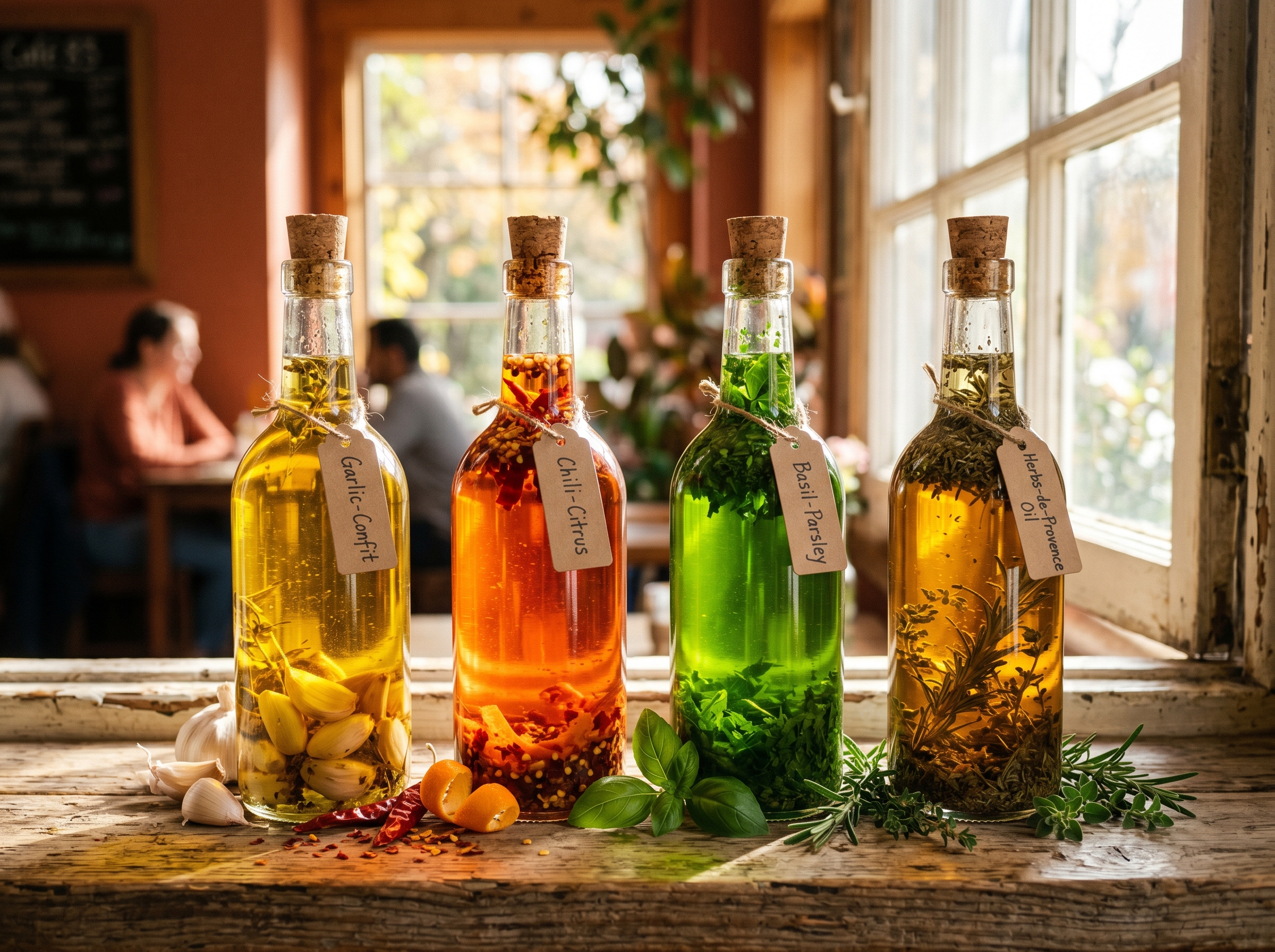
Getting ready…
Four jars on the door of the fridge, each doing the work of a separate spice cabinet. A tablespoon of garlic confit oil onto canned chickpeas with a squeeze of lemon is dinner. A drizzle of chili-citrus oil over a bowl of plain rice is a meal. The basil-parsley oil turns a tomato salad into something worth setting the table for. And the herbs de Provence oil drizzled on roasted root vegetables sells the room.
The principle is the same one every Mediterranean kitchen has known for two thousand years: warm, gentle steeping. Not frying. Not boiling. Not bottling-with-fresh-aromatics-and-hoping. A low temperature long enough to pull the flavor out, cool enough not to cook it.
You'll need
Ingredients
For 1 servings · 14 items
The base
Garlic confit oil
Chili-citrus oil
Basil-parsley oil
Herbs de Provence oil
The method
Method
4 steps · check as you go
What this enables
Questions, honestly answered
FAQ
QIs homemade garlic-infused oil safe?
Yes, if you refrigerate it and use it within three weeks. The botulism risk on garlic oil comes from storing fresh garlic in oil at room temperature — anaerobic conditions where Clostridium botulinum can grow. Keeping the oil refrigerated (under 4°C) and using it within three weeks eliminates that risk. Never leave garlic oil on the counter.
QWhat's the difference between infused oil and flavored oil?
Infused oil is made by warm-steeping aromatics in oil under 90°C, then cooling and straining; the flavor comes from gentle extraction. Flavored oils sold commercially often use essential oils or artificial flavorings blended into a neutral carrier — faster to make, brighter on the tongue, but flatter in cooking. Real infused oils carry the aromatic across a whole dish.