Aglio e Olio.
Four ingredients. Twenty minutes. The Naples pasta that ends every long-night argument about whether you need anything more than garlic, oil, and salt.
- Prep
- 5 min
- Cook
- 15 min
- Total
- 20 min
- Servings
- 2
- Difficulty
- Easy
Getting ready…
Ingredients
For 2 servings · 9 items
For the pasta
For the sauce
Method
6 steps · check as you go
- →
Serve
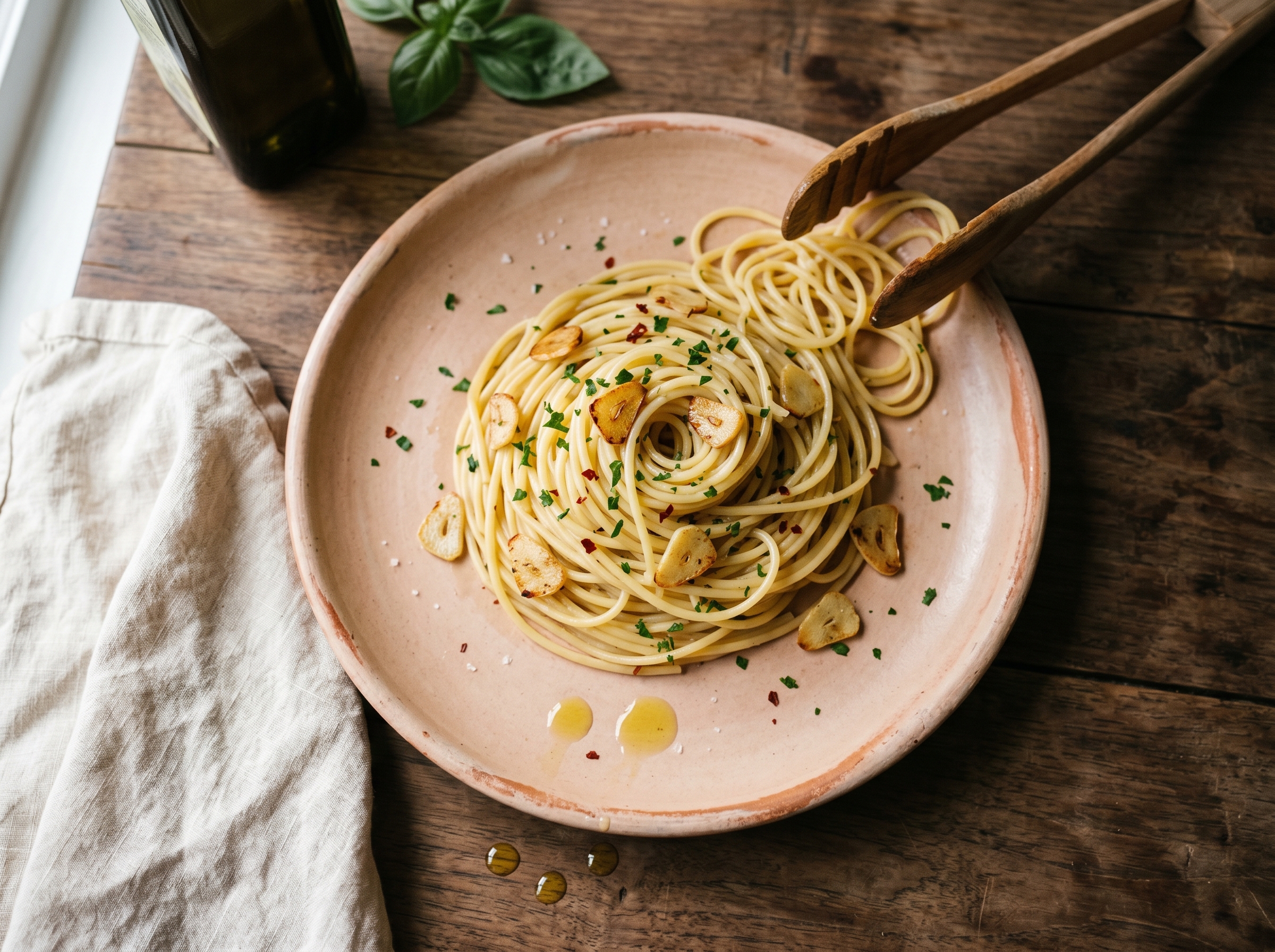
Twirl onto warmed plates using tongs and a spoon — the swept-into-a-nest technique. Drizzle the last spoonful of pan-sauce over the top of each portion. Eat immediately, while the surface still gleams. A glass of cold Falanghina or a Verdicchio is the local pairing.
The story
In Naples, spaghetti aglio e olio is the dish you make at 1 a.m. when you got home late and want to eat something good before bed. Four ingredients, twenty minutes, no negotiation. Garlic, olive oil, chile, pasta. Parsley and salt at the end. That’s the whole list. The dish was designed to be made by tired people in small kitchens with whatever was already in the cupboard, and the design is so good that two-Michelin-starred chefs put it on their tasting menus and charge eighteen euros for it.
I learned to make it properly in the spring of 2015, in the back kitchen of a trattoria in Naples called Da Concettina, where I spent a year as the lowest-ranked cook on the line. The man who ran the pasta station was named Tommaso. He grew up in a fishing town outside the city and refused to call the dish aglio e olio e peperoncino because — and I quote — “the chile is implied, you don’t need to say it.” After service one night in March, we made a batch for ourselves in the empty kitchen, the dining room lights already off, the air still smelling of the night’s garlic and burnt sugar from a discarded pan. He cooked. I watched. He started the garlic in cold oil, which I had never seen anyone do. He pulled the pan off the heat the moment the garlic turned pale gold, which I had also never seen anyone do. He added a cup of pasta water to the skillet before the pasta even came out, which made me think he was overcomplicating it. He was not. The pasta came out the most glossy, evenly-sauced aglio e olio I have ever eaten, and we ate it standing up at the pass at 1 a.m. and walked home shortly after.
The trick — and there is really only one trick — is the cold-oil start. Garlic dropped into hot oil burns in 90 seconds. Garlic in cold oil that is then brought up to medium-low heat takes 4 to 6 minutes to reach the same color, but with a gradient you can monitor, and a sweet toasted flavor instead of a bitter charred one. Pale gold is the destination. Past that, into amber, the dish gets bitter. Pull the pan the moment the garlic is the color of a champagne label.
The other thing nobody outside Italy seems to do: emulsifying the sauce with starchy pasta water. Drain the pasta one minute early. Save a mug of the water. Tip the pasta into the garlic oil. Toss with a quarter cup of the reserved water. The starch in the water binds the oil into a glossy, clinging sauce that coats every strand. This is the difference between aglio e olio and “spaghetti with garlic oil on it.”
What the other recipes get wrong
Most aglio e olio recipes online — I checked the top ten in March 2026 — treat the olive oil as a substrate. Any extra virgin is fine, the thinking goes; the garlic and chile do the lifting. I tested four oils across eight batches over a week in March 2026, same pasta, same garlic, same heat curve. Here is what I found:
- Grassy Sicilian (a Nocellara from Castelvetrano): peppery on the throat, pushed the garlic into the background, made the dish taste assertive and slightly bitter.
- Fruity Pugliese (a Coratina): big tomato-leaf nose, sweet enough to read as cooked-down. Beautiful with bread. Wrong here — it competed with the chile.
- Mild Ligurian (a Taggiasca): light, almondy, recessive. Let the garlic lead. The cleanest sauce of the four.
- Supermarket Extra Virgin: tasted of nothing. The dish collapsed into a wet noodle bowl with garlic on it.
The combination that worked every time, across all eight batches: a mild Ligurian or comparable light EVO for the cook, the cold-oil garlic start, a pull off the heat before the chile, and a hard toss with pasta water at the end. A grassy oil is the second-best choice if all you can find. A supermarket Extra Virgin is a different dish and not this one.
The line I draw
I will not use pre-minced garlic from a jar. Not in this dish, not in any dish. The jarred stuff is preserved in citric acid and water, which means it tastes of nothing and turns the oil cloudy when you heat it. The dish has four ingredients. One of them is the garlic. If the garlic is wrong, the dish is wrong, and there is no recovery from wrong garlic when there are only three other things on the plate. Slice fresh garlic by hand. Paper-thin, lengthwise, with a sharp knife. If you cannot do this, choose a different recipe.
When this can fail
Three ways, all from my own kitchen between 2022 and 2026:
- Burnt garlic. Hot oil at the start, garlic in past pale gold, the smell goes from sweet-toasted to acrid in under a minute. The dish is unrecoverable — bitterness sits at the back of the throat for hours. Fix: cold oil, garlic in first, medium-low heat, pull the pan at champagne-label gold and not one shade past.
- Broken sauce. Pasta drained too dry, no pasta water reserved, oil pooling at the bottom of the bowl while the noodles sit dry on top. Fix: scoop a full mug of pasta water before draining, leave the noodles slightly wet, toss in the pan for 60 to 90 seconds with the heat back on.
- Sliced-too-thick garlic. Slices over 1mm thick gave me chewy chips that floated to the top of every forkful, instead of dissolving into the oil. Fix: a sharp knife and patience, or a mandoline on the finest setting. Paper-thin or it is not the same dish.
A few smaller notes.
Use a good olive oil. The oil is the dish. A peppery, grassy, fruity extra-virgin — the kind you’d pour over toast — is the right call. The cheap stuff works but tastes like an apology.
Salt the pasta water like the sea. A tablespoon per liter, minimum. Taste it before the pasta goes in. If it tastes like a mouthful of seawater, you’re correct.
Pull the pan off the heat before you add the chile flakes. They cook in 20 seconds in residual heat. In direct heat they scorch.
If you’re feeling fancy, finish with a flick of lemon zest — it lifts the garlic and chile without intruding. If you’re feeling Neapolitan, skip it. Both are right.
Eat the moment it’s in the bowl. The sauce holds its gloss for about 90 seconds.
FAQ
QWhat is the secret to a great aglio e olio?
Three things, in this order. First, salt the pasta water heavily — it should taste like the sea. Second, start the garlic in cold oil, not hot, so it infuses without burning. Third, finish the pasta by tossing it in the pan with a quarter cup of starchy pasta water — this emulsifies the oil into a glossy, clinging sauce instead of leaving it as a slick on the plate.
QWhy is starchy pasta water important?
Starch from the pasta dissolves into the cooking water during boiling, turning it into a mild emulsifier. When you add starchy pasta water to oil-based sauces like aglio e olio, the starch binds the oil and the residual water from the pasta into a creamy emulsion that coats every strand. Without this step, oil-based pasta sauces remain a slick on the surface and pool at the bottom of the bowl.
QCan I use a different pasta shape for aglio e olio?
Spaghetti is the traditional choice — the long strands hold the oily, garlicky sauce evenly. Linguine and bucatini are excellent substitutes. Avoid short shapes like penne or rigatoni — the sauce slides off without anywhere to anchor. Capellini (angel hair) is too thin and turns mushy under the toss step. Stick to long pastas with some surface area.
QWhy does my garlic always burn in aglio e olio?
Because you're starting it in hot oil. Garlic burns in 60 to 90 seconds when added to oil already over medium heat. The fix: put garlic into cold oil, then turn on the heat. The garlic and the oil heat together, giving you 4 to 6 minutes of gradient — translucent, pale, gold — to monitor and pull at the moment you want. Burnt garlic is bitter, and there is no salvage; start over if it gets there.
QShould I add cheese to aglio e olio?
Traditionally, no. The dish is built on the trio of garlic, oil, and chile — adding cheese muddies the clean punch of those three flavors. Many home cooks finish with grated Pecorino or Parmigiano (or in our case, a cashew-and-nutritional-yeast blend), and there's no crime in it — but the classic Naples version stays cheeseless. Try it the traditional way once before deciding.