Chickpea flour, fire, salt.
Socca.
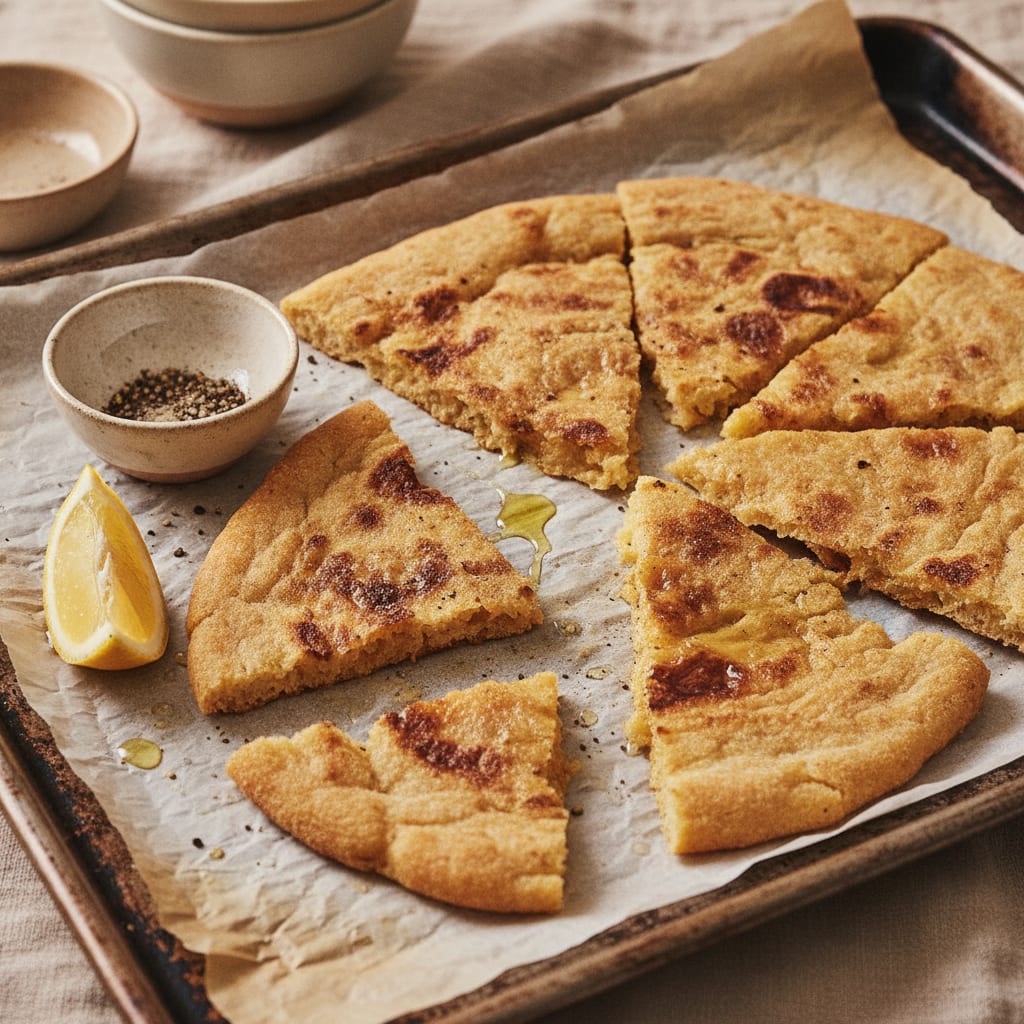
Nice's chickpea-flour pancake, two ways: a blistered, smoky home version baked screaming-hot, and a plated socca with toppings, cut like a tart at the bistro.
- Prep
- 10 min
- Cook
- 12 min
- Total
- 1h 22min
- Servings
- 4
- Difficulty
- Easy
Getting ready…
Ingredients
For 4 servings · 8 items
For the batter
To finish
Method
5 steps · check as you go
- →
Serve
Serve the socca hot, torn into rough pieces, with a heavy grind of black pepper and flaky salt — the classic Niçois way is in a paper cornet, eaten standing up. A glass of chilled rosé or a dry white is the Nice pour. It is a starter or an apéritif snack, not a side; do not let it sit, as it firms up fast.
The story
The first socca I made worth eating, I made in a cramped apartment kitchen in Petworth, in Washington, D.C., in the autumn of 2025 — a long way from the Cours Saleya. My neighbour Marcus had come over to fix my smoke detector, which kept going off, and I told him the truth: it was supposed to. I was running the oven at full broiler to blister a chickpea pancake, and the detector and I were in a standing disagreement about whether that was an emergency. The smell coming off the pan was toasted chickpea and hot olive oil and a little char. He stayed for the second one.
Socca belongs to Nice, where it is the great street food — poured thin into wide copper pans, baked in a fierce wood oven, scraped up, and sold in a paper cornet to be eaten standing on the Cours Saleya with a brutal grind of black pepper. Its origin is honestly disputed: the Niçois claim it, the Genoese claim its twin farinata, and the truth is probably that these old port cities traded the recipe across the Ligurian coast and lost track of who was first. One legend has Roman soldiers cooking chickpea paste on a shield; another has it born under siege. I can’t confirm any of them, and I won’t pretend to.
Here is the thing people miss: socca is already exactly itself. Chickpea flour, water, olive oil, salt, fire. There is no egg to replace, no dairy to stand in for, no wheat to engineer around. It is not a “vegan flatbread” — it is socca, and it has always been four ingredients and a hot oven.
À la maison
The weeknight reading is the recipe above, and it asks for almost nothing but heat and patience. Two moves carry it. First, rest the batter at least an hour — a 1:1 weight ratio of water to chickpea flour, left to hydrate, is what gives you a custardy inside instead of a pasty one. Second, get the pan and oven as hot as they will go and pour the batter thin; the blistered, lacy edges come from ferocious top heat hitting a well-oiled pan. Finish under the broiler if you have one, and eat it the second it is out, before it cools and goes leathery.
Au bistrot
The bistronomique reading keeps the socca exactly as it is and treats it as the base of a composed plate, cut clean like a tart rather than torn.
Bake the socca a touch thicker and a shade less charred so it holds a clean edge, then cut it into neat wedges or rounds with a hot knife. Build a small composition on each: a smear of something cool and sharp under it — a lemony white-bean purée or a thin labneh-style cashew cream — then a few dressed components that nod to Nice. Slow-roasted cherry tomatoes, a scatter of olives and capers, ribbons of grilled courgette, a few leaves of basil, a thread of the best olive oil you have. Or go further toward pissaladière: a tangle of deeply caramelised onions cooked down to jam, black olives, a confit garlic. Plate one wedge off-centre, the toppings arranged with restraint, the cool purée swiping under the warm socca so the temperatures play against each other. It stops being street food and becomes a plated starter — still chickpea flour, oil, and fire underneath.
Le dressage — Overhead, tight. A single clean wedge of socca off-centre, a swipe of pale purée beneath, slow-roasted tomatoes and olives arranged in odd numbers, a basil leaf, oil pooled at the edge. Warm directional light to catch the blister on the surface. The plate should say the Cours Saleya, plated — a market snack given a white tablecloth.
What the other recipes get wrong
Most socca recipes — I read the top ten in November 2025 — undersell two things: they skip the rest, and they undershoot the heat. Both leave you with a pale, pasty pancake instead of a blistered one. I ran the test over a weekend in November 2025, four batches, same batter, changing only the rest time and the oven heat:
- No rest, moderate oven (220°C), cool pan: floppy, pale, faintly raw and bitter in the centre. The batter never fully hydrated and never set right.
- No rest, max heat + broiler, hot pan: better colour, but the inside stayed slightly chalky and grainy — the flour hadn’t had time to swell.
- 1-hour rest, moderate oven, cool pan: tender inside but no blister at all, no char, no crisp edge. Pleasant and dull.
- 1-hour rest, max heat + broiler, preheated cast-iron: custardy inside, lacy charred edges, the smoky blistered top a wood oven gives. This was the dish.
The reason is two separate mechanisms. The rest is hydration: chickpea flour is dense, and its starch and protein need time in water to swell fully, which is what sets the interior into something custardy rather than pasty — and it lets the faint raw-bean bitterness mellow. The heat is surface chemistry: a screaming-hot, well-oiled pan fries the underside crisp while top heat from the broiler drives the Maillard browning and the blister. You need both. Rest without heat gives you tender mush; heat without rest gives you a chalky crust. Hydrate first, then hit it with everything the oven has.
The line I draw
I will not pour socca thick. Not to make it “more filling,” not to stretch one pan into a meal. Socca is defined by the contrast of a crisp, blistered edge against a thin custardy centre, and that only happens when the batter is poured to about 5 mm and set fast under fierce heat. Pour it thick and you get a dense, bready chickpea cake — perfectly edible, but it is no longer socca; it is a different thing wearing the name. Thin, hot, fast, and eaten immediately. That is the whole discipline of the dish.
When this can fail
Three ways, all from my own kitchen between 2022 and 2026:
- The pasty centre. I skipped the rest because I was hungry; the inside came out raw-tasting and grainy under a set top. Fix: rest the batter at least an hour so the chickpea flour fully hydrates — there is no shortcut around it.
- The pale, floppy socca. I used a cool sheet pan in a merely warm oven; it steamed instead of crisping and never blistered. Fix: preheat a cast-iron pan in the hottest oven you have and finish under the broiler.
- The leathery, waited socca. I held a batch warm for fifteen minutes while the rest of dinner came together, and it turned tough and chewy. Fix: bake socca to order and serve it the moment it leaves the oven — its crisp window is only a few minutes.
FAQ
QWhat is socca made of?
Just four things: chickpea flour, water, olive oil, and salt. It is a thin, unleavened pancake from Nice, baked screaming-hot until the edges blister and char while the inside stays custardy-soft. Its Ligurian cousin across the border is called farinata and uses the same batter. The whole dish is naturally vegan and gluten-free — there is no egg, no dairy, and no wheat in a real socca.
QWhat is the difference between socca and farinata?
They are essentially the same dish on two sides of a border. Socca is the Niçois name; farinata is the Ligurian (Genoese) name, and you also find it as cecina in Tuscany and fainá in parts of Sardinia, Argentina, and Uruguay carried there by Genoese sailors. The batter — chickpea flour, water, oil, salt — and the high-heat bake are the same. The origin is genuinely disputed between Nice and Genoa; both are old hungry port cities that almost certainly traded the recipe back and forth.
QWhy does socca batter need to rest?
Resting the batter for at least an hour lets the chickpea flour fully hydrate, so the starch and protein swell and the foam settles. That full hydration is what lets the batter set into a tender, custardy interior instead of a raw, pasty one, and it lets any faint bitterness in the chickpea flour mellow. A 1:1 ratio of water to flour by weight, plus the rest, is the technical heart of a good socca.
QWhy is my socca soft and not crispy?
Almost always not enough heat or too thick a pour. Socca needs a ferociously hot oven and a preheated, well-oiled pan — 250°C (480°F) or hotter, ideally finished under a broiler to blister the top. Pour the batter thin, about 5 mm, so it sets fast and crisps at the edges. And eat it immediately: socca goes leathery within minutes of cooling, so the crisp window is short.
QCan you make socca without a wood oven?
Yes. The wood oven in Nice gives socca its char, but you can get close at home by heating a cast-iron skillet on the top rack of your hottest oven and finishing the socca under the broiler for a minute or two. The goal is the same: blazing top heat against a thin, well-oiled batter. A cast-iron pan holds and radiates that heat better than a thin sheet pan.