Green, not khaki — that is the whole game.
Palak Paneer.
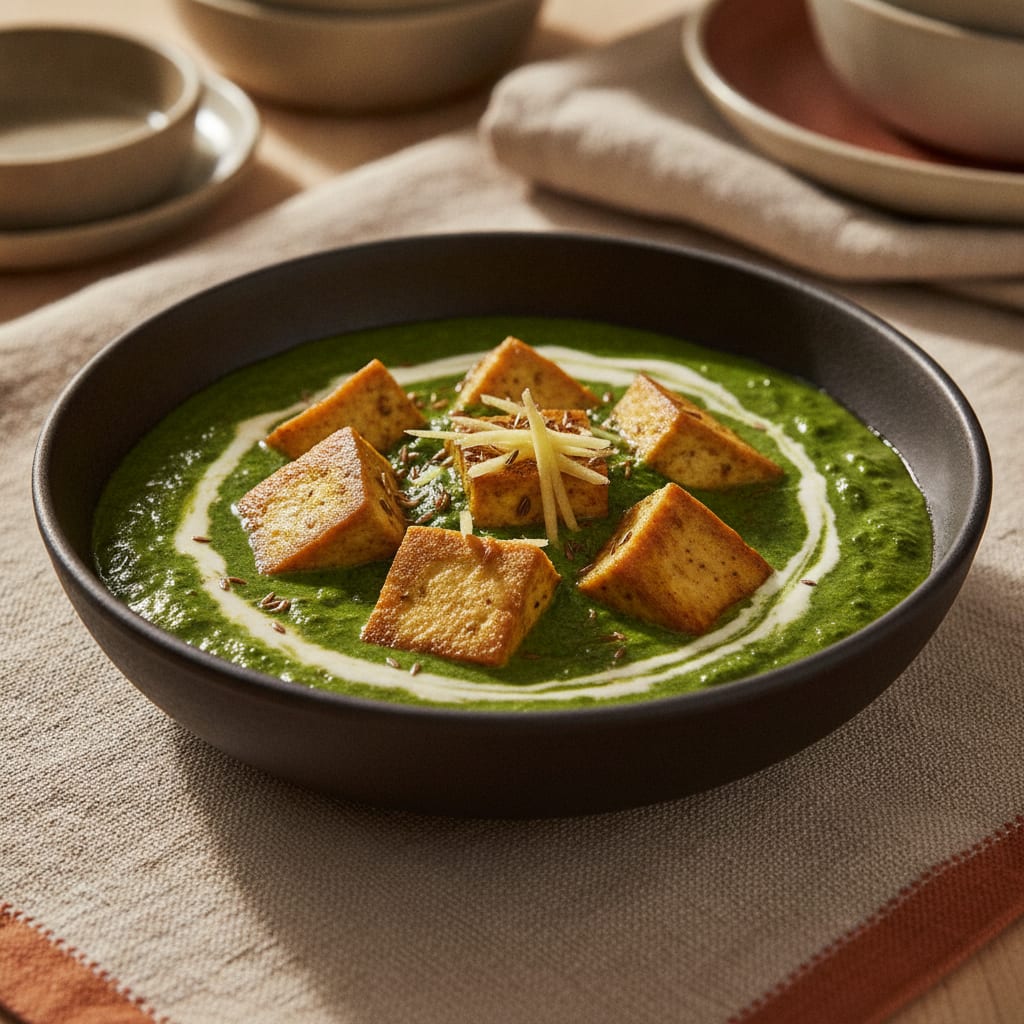
Bright-green spinach curry with golden tofu standing in for paneer — spinach blanched and shocked so it stays electric green, finished with cashew cream.
- Prep
- 25 min
- Cook
- 35 min
- Total
- 1h
- Servings
- 4
- Difficulty
- Medium
Getting ready…
Ingredients
For 4 servings · 19 items
For the tofu (the paneer stand-in)
For the spinach
For the masala
For the cashew cream finish
Method
7 steps · check as you go
- →
Serve
Serve hot with naan, roti, or basmati rice, the cashew cream swirled on top and, if you like, a sizzle of cumin-ginger tadka. It is best fresh, while the green is vivid; it stays delicious the next day but the colour dulls toward forest green as it is reheated, so make it close to serving when the colour matters.
The story
I lost a perfectly good palak paneer to impatience on a Sunday in March 2025, in my own kitchen in the District, and it taught me the dish. I had wilted the spinach straight in the pan, the lazy way, and let it simmer in the masala while I pressed the tofu — and by the time I served it, the curry had gone the colour of pond water. It tasted fine. It looked like something I’d left out. A friend across the table, a cook from Hyderabad who had eaten her mother’s palak paneer for thirty years, looked at the bowl and said, kindly, “It’s a little tired.” She was right. The green was dead.
The fix turned out to be one technique borrowed straight from the French kitchen I trained in: blanch and shock. Sixty seconds in boiling water, then straight into ice. It sets the chlorophyll and locks the colour, and from that point the rule is simply never boil the green again. Palak — spinach alone — is supposed to read bright, almost electric green; that is what separates it from saag, the darker mixed-greens curry it gets confused with.
This palak has tofu where the paneer goes — pressed, browned, soft inside. It is not a “tofu substitute version” of palak paneer. It is palak paneer, the spinach kept vivid, the cream made from cashews, the tofu standing where the fresh cheese stood. Made with what is in my hands now.
À la maison
The weeknight reading is the recipe above, and it has two non-negotiable moments and a lot of easy ones. The first is the blanch: sixty seconds in fast-boiling water, then straight into ice water — set a timer, because ninety seconds is already too long. The second is restraint at the end: the bright spinach purée goes into a fully cooked masala over low heat and is only warmed through, never boiled, because every extra minute of hard heat pulls the green toward khaki. The tofu is just pressed and pan-fried until golden, and the cream is cashews blended smooth. Cook the masala completely before the spinach ever touches the pan, fold the green in last, serve fast. Green in, warm through, out.
Au bistrot
The bistronomique reading keeps the vivid spinach but composes the plate so the green reads as the deliberate centre, with the tofu given a proper crust.
Treat the spinach two ways. Reserve a few of the blanched, shocked leaves whole and pat them dry; the rest becomes the bright purée, passed through a sieve this time so it plates as a glossy, electric-green pool. Press the tofu hard, cut it into clean rectangular batons, and shallow-fry them until deeply golden and crisp on every face, finishing with a little salt and a brush of the cumin-ginger tadka so each baton carries its own seasoning rather than relying on the sauce. Make the cashew cream a touch looser so it can be spooned as small bright-white dots. Build a wide plate: the green purée pooled and swept, two or three tofu batons set across it, dots of cashew cream, the reserved whole spinach leaves crisped for a second in hot oil and laid on like a garnish, and a fine sliver of raw ginger. Crush the kasoori methi over the top at the table so the fenugreek aroma rises as the plate lands.
Le dressage — Overhead. Wide white plate to make the green louder. A swept pool of electric-green purée, golden tofu batons across it, white dots of cashew cream, crisp spinach leaves and a sliver of raw ginger on top. The green kept absolutely true, not olive. The plate should say one colour, held at its brightest — the discipline of the blanch made visible.
What the other recipes get wrong
Most palak paneer recipes tell you to add the spinach early and simmer the whole thing together “to let the flavours marry.” That instruction is how home palak paneer goes khaki. I ran the test over three Sundays in March 2025 — six batches, same masala, same tofu, changing only how the spinach was treated:
- Raw spinach wilted into the masala and simmered 15 minutes: dull olive-brown, flat-tasting, exactly the pond-water bowl my friend called tired.
- Raw spinach wilted, blended, simmered 10 minutes: a little brighter to start, but it dulled to drab green by the time it reached the table.
- Blanched 3 minutes, shocked, blended: greener, but the long blanch had already started cooking it toward khaki and it didn’t hold.
- Blanched 60 seconds, shocked in ice, blended cold, folded into the masala off the boil and only warmed through: vivid, electric, restaurant green — and it stayed that way on the plate.
The reason is the chlorophyll. A short, hot blanch brightens green vegetables because it drives out the gases trapped in the leaf that mute the colour and briefly sets the chlorophyll vivid. But heat and time are also what destroy it: prolonged cooking, and the acids the leaf releases, convert bright-green chlorophyll into dull, grey-olive pheophytin. So the technique is a race — get the leaf hot fast to brighten it, then ice it to stop the clock before the degradation starts, then keep it away from sustained heat for the rest of the cook. The blanch-and-shock and the off-the-boil finish are the same idea applied twice: brighten quickly, then never give the heat a chance to undo it. Every batch that boiled went khaki; the one that was warmed through stayed green.
The line I draw
I will not simmer the spinach. Once the bright purée goes into the pan, it gets low heat and two or three minutes — warmed through, never bubbling hard. The entire identity of palak, as opposed to saag, is that bright spinach green, and that colour is a casualty of time at heat. The moment someone says “let it cook down together for fifteen minutes so it deepens,” they are describing how to make a brown curry. If the masala needs more cooking, I cook the masala fully before the spinach goes in. The green is the last thing in and gets the least heat of anything in the dish.
When this can fail
Three ways, all from my own kitchen between 2022 and 2026:
- The khaki curry. Over-blanched the spinach to three minutes and then let the finished curry sit on a low burner while I made rice. By serving it had gone olive. Fix: blanch 60 seconds with a timer, shock hard in ice, and serve within a few minutes of folding the green in.
- The weeping tofu. Skipped the press because I was short on time. The tofu refused to brown, dumped water into the pan, and broke into crumbs in the sauce. Fix: press 20 minutes minimum, then fry until genuinely golden before it goes anywhere near the spinach.
- The gritty cream. Blended the cashews without soaking and without a high-speed blender; the cream went in grainy and left the sauce sandy. Fix: soak the cashews in hot water 15 minutes first, and blend until completely, silkily smooth before adding.
FAQ
QWhat is the difference between palak paneer and saag paneer?
Palak means spinach, so palak paneer is made only with spinach — which is why it has that recognisable bright, almost electric green when it is made well. Saag means mixed greens, so saag paneer uses spinach together with mustard greens, fenugreek leaves and other greens, which cook down to a darker olive or forest green and a more bitter, earthier flavour. This recipe is palak — pure spinach, kept as green as possible — with golden tofu standing in for the paneer.
QHow do you keep palak paneer green and not brown?
The colour is decided by two moves. First, blanch the spinach in rapidly boiling water for only about 60 seconds, then plunge it straight into ice water — the short hot blanch sets the chlorophyll and the ice shock stops it cooking before it can turn khaki. Second, never boil the spinach purée: it goes into the cooked masala at the very end and is only warmed through for a couple of minutes. Long cooking and high heat are what turn vivid green into drab olive, so the spinach gets the gentlest, shortest heat of anything in the pan.
QCan you make palak paneer with tofu?
Yes, and it works beautifully. Press extra-firm tofu to drive out water, cube it, and pan-fry until golden so it browns and holds its shape, then fold it into the sauce at the end. Pressed, fried tofu plays the same role paneer does — soft inside, holding together in the sauce, taking on a savoury crust. Dropping the fried cubes in warm salted water before they go into the curry keeps them tender rather than rubbery, the way fresh paneer stays soft.
QShould you blanch spinach for palak paneer?
Yes — blanching and shocking is what gives restaurant palak paneer its bright green colour. Boiling the spinach briefly and then shocking it in ice water sets the chlorophyll and prevents the slow oxidation and overcooking that turns home versions a dull khaki. You can make palak paneer by just wilting raw spinach in the pan, but the colour will be darker and duller. For the vivid green, the 60-second blanch and ice shock are worth the extra step.
QWhat does kasoori methi do in palak paneer?
Kasoori methi is dried fenugreek leaves, crushed between the palms and stirred in near the end. It adds a slightly bitter, savoury, almost maple-edged aroma that is one of the signature notes of North Indian curries — fenugreek contains sotolon, the same compound found in maple syrup and caramel. Crushing the dried leaves and adding them late releases the volatile aroma without cooking it away. It rounds out and deepens the spinach, and a curry that tastes like it's missing something often just needs the methi.