The celebration noodle.
Japchae.
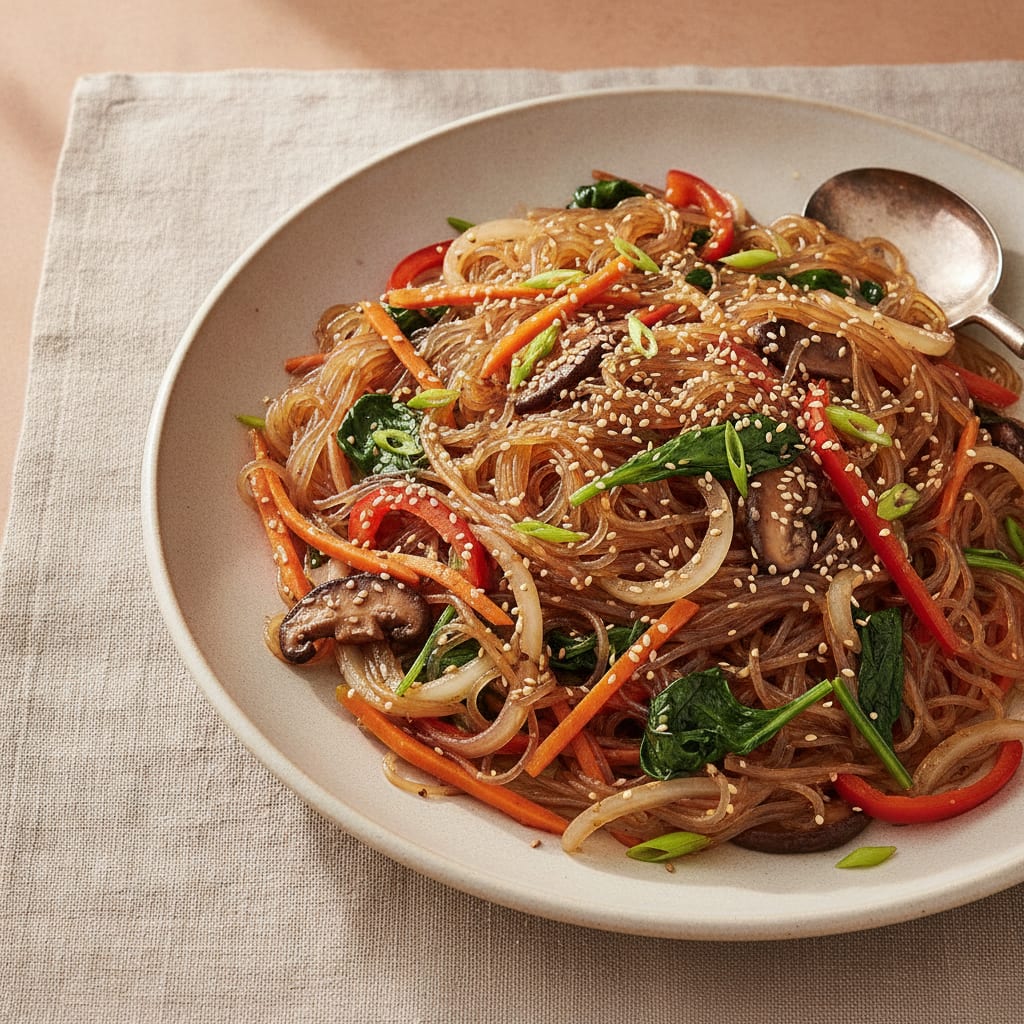
Korean sweet-potato glass noodles tossed with separately cooked vegetables and shiitake in a sesame-soy glaze — chewy, glossy, savory-sweet, for sharing.
- Prep
- 30 min
- Cook
- 25 min
- Total
- 55 min
- Servings
- 4
- Difficulty
- Medium
Getting ready…
Ingredients
For 4 servings · 17 items
For the noodles
For the vegetables
For the sauce
To finish
Method
5 steps · check as you go
- →
Serve
Pile high on a wide platter and serve family-style, warm or at room temperature, as a shared dish among others. Japchae is a celebration food — it belongs in the middle of the table at a holiday or a party, eaten with chopsticks, alongside rice and banchan. It also keeps and reheats well, with a splash of water and sesame oil to loosen it.
The story
I learned japchae in Washington, in the late summer of 2025, the same way I learn most things — by hanging around a kitchen until somebody got tired of me watching. This was an older Korean cook at a market deli in Annandale who made trays of it on Friday afternoons for the weekend crowd, and what struck me was how many pans she had going at once. Not one wok of everything. Five small piles, cooked in sequence, each tasted and set aside, the noodles waiting glossy in their own bowl. One by one, she said, when I asked why she didn’t just throw it all in together. If you rush, it’s wet. Nobody wants wet japchae. She was right, and the rule has never left me.
The dish is a courtier. Japchae dates to the 17th century, the Joseon dynasty, when — court records say — an official named Yi Chung made it for a banquet of King Gwanghaegun, who liked it enough to promote him. But the original had no noodles at all. Japchae literally means “mixed vegetables,” and for its first three centuries it was exactly that: finely shredded vegetables and mushrooms. The chewy sweet-potato glass noodles that now define it only arrived in Korea in the early 1900s. The dish we call japchae is younger than its name by some two hundred and fifty years.
This japchae has no beef. It has sliced shiitake for the savory, meaty bite, and it leans on the noodles and the discipline of the vegetables. It is not a “vegetable version” of japchae — it is closer to the original than the beef-laden one is. It is japchae: the chewy dangmyeon, the each-part-apart method, the sesame-soy gloss, all intact.
À la maison
The weeknight reading is the recipe above, and the single thing that matters is patience for the separate sautés. It is tempting to throw everything in one pan; resist it. Cook each vegetable on its own, keep it in its own pile, and let the noodles soak up the sauce in the warm pan before the vegetables go back in. The only timing trick is the noodles — pull them at six or seven minutes, the moment they turn fully glassy, because sweet-potato starch noodles overcook into mush in a hurry. Dress them in oil straight out of the water so they don’t clump while you work.
Au bistrot
The bistronomique reading keeps the each-part-apart method but tightens it to a composed, deliberate plate rather than a generous tangle.
Cut every vegetable to an identical fine julienne so the threads read as intentional. Cook the shiitake harder, almost to a crisp, and reserve a few caps whole and glazed as a focal point. Reduce a little of the sesame-soy sauce with a touch more sugar into a glaze with real sheen, and toss only the noodles in it so they lacquer dark and glossy. Build a neat, twirled nest of the glossed noodles in the center of a wide plate — wound around a fork or in a ring mold so it stands tall — then drape the julienned vegetables over and through it in a controlled fan of color: carrot orange, pepper red, spinach dark green, onion pale. Set the glazed whole shiitake caps as anchors. A scatter of toasted sesame and a few fine scallion threads to finish. Same dish, same components, read as a plated course rather than a party platter.
Le dressage — Overhead, tight. Pale plate, a tall twirled nest of dark-glossed noodles centered, julienned vegetables fanned over it in clear bands of color. Glazed shiitake caps as anchors, sesame scatter, negative space around the edge. The plate should say the celebration noodle, composed — abundance disciplined into one clean read.
What the other recipes get wrong
Most japchae recipes online — I read the top ten in May 2026 — tell you to stir-fry all the vegetables together in one pan to save time, and many overcook the noodles into softness. Both betray the dish. I ran the test over a week in my Washington kitchen in May 2026: three batches, same vegetables, same sesame-soy sauce, only the cooking method and the noodle timing changed.
- Everything in one pan, noodles boiled 9 minutes: a wet, uniform tangle. The vegetables had bled their water into each other and the soft noodles, the colors had dulled to one brownish tone, and the whole thing pooled liquid on the plate.
- Vegetables cooked apart, noodles boiled 9 minutes: distinct, bright vegetables, but the noodles were soft and slick, with none of the springy chew that makes japchae satisfying — they fell apart against the bite.
- Vegetables cooked apart, noodles boiled 6–7 minutes and dressed immediately: this was japchae. Distinct colors and textures, dry and glossy rather than wet, and noodles with a real elastic chew that held the sauce.
The reasons are both method and chemistry. Cooking vegetables separately keeps each one’s water and seasoning its own; combine them and the high-moisture ones steam the rest and everything homogenizes into a wet uniform mass. The noodle texture is starch science: sweet-potato dangmyeon is rich in amylose, and as the cooked noodles cool slightly and the dissolved amylose chains realign — retrogradation — they set into that prized springy, glassy chew. Overboil them and you gelatinize past the point where that structure can form, and they slump into softness. Pull them at full translucency, dress them warm so they absorb the sauce, and the retrograding amylose gives you the elastic bite. Drop the separate cooking and you get wet. Overcook the noodles and you get mush. Keep both right and you get japchae.
The line I draw
I will not cook the vegetables together to save a pan. The entire identity of japchae is that each component is itself — distinct in color, in bite, in flavor — threaded through the noodles rather than melted into a single wet stir-fry. The moment you tip carrot, onion, pepper, mushroom, and spinach into one pan together, the slow ones overcook, the watery ones weep, the colors muddy, and you have made a generic glass-noodle stir-fry that happens to share japchae’s ingredients. Five piles, cooked in sequence. It is more work and it is the whole point.
When this can fail
Three ways, all from my own kitchen between 2022 and 2026:
- The wet tangle. Cooked all the vegetables together once because I was feeding a crowd and short on time. The dish pooled liquid, the colors went brown, and it tasted of one thing instead of six. Fix: cook each vegetable separately, even quickly, and keep it in its own pile until the final toss.
- The mush noodles. Boiled the dangmyeon the full nine minutes the bag suggested and let them sit undressed. They overcooked into soft strings and then clumped into a solid mass. Fix: pull them at six to seven minutes the instant they turn fully translucent, and toss them in sesame oil immediately.
- The bland surface. Added cold noodles and vegetables to the sauce all at once at the very end. The sauce sat on the outside and never penetrated; the noodles tasted of nothing under a salty coating. Fix: toss the warm noodles in the sauce on low heat first, let them drink it in and gloss over, then thread the vegetables through.
FAQ
QWhat noodles are used in japchae?
Japchae is made with dangmyeon — Korean glass noodles spun from sweet-potato starch. Raw, they are grey and brittle; cooked, they turn translucent and springy-chewy, which is why they're called glass noodles. They are not the same as mung-bean vermicelli (Chinese cellophane noodles), which are thinner and softer; sweet-potato dangmyeon has a thicker, chewier, more elastic bite that is essential to the dish. Look for them in Korean and most Asian groceries.
QWhy is japchae cooked one component at a time?
Because each vegetable has a different cooking time and water content. Onion needs to soften, carrot needs to stay just tender, red pepper should keep its snap, mushrooms want to brown, and spinach is only blanched. Cook them together and the slow ones overcook while the fast ones release water and turn the whole dish wet and uniform. Cooking each apart — the defining rule of japchae — keeps every vegetable's color, texture, and flavor its own, then threads them through the seasoned noodles at the end.
QCan you make japchae without meat?
Yes — and in its original form japchae had no meat or noodles at all. Japchae is defined by the separately cooked, distinct components tossed in a sesame-soy glaze, not by beef. Sliced shiitake brings the savory, meaty bite, and the dish is built on the noodles and the discipline of the namul-style vegetables. Everything that makes japchae japchae is present: the chewy dangmyeon, the each-part-apart method, the glossy sesame-soy dressing.
QWhere does japchae come from?
Japchae dates to the 17th century, the Joseon dynasty. According to court records it was created by an official named Yi Chung for a banquet of King Gwanghaegun, who liked it so much he promoted the cook. The original had no noodles at all — japchae literally means 'mixed vegetables' (jap, mixed; chae, vegetables) and was a dish of finely shredded vegetables and mushrooms. The sweet-potato glass noodles that now define it were only introduced to Korea in the early 20th century, transforming the royal vegetable dish into the noodle dish we know.
QWhy are my glass noodles clumpy or mushy?
Two common faults. Clumping happens when drained noodles sit without being dressed — toss them in sesame oil and a little soy the moment they're drained, and snip the pile with scissors. Mushiness happens from overcooking: sweet-potato starch noodles go from chewy to soft fast, so pull them at 6–7 minutes the instant they turn fully translucent and springy. If anything, slightly undercook them, since they keep absorbing sauce and softening as you toss the dish together.