The crunchy mister.
Croque-monsieur.
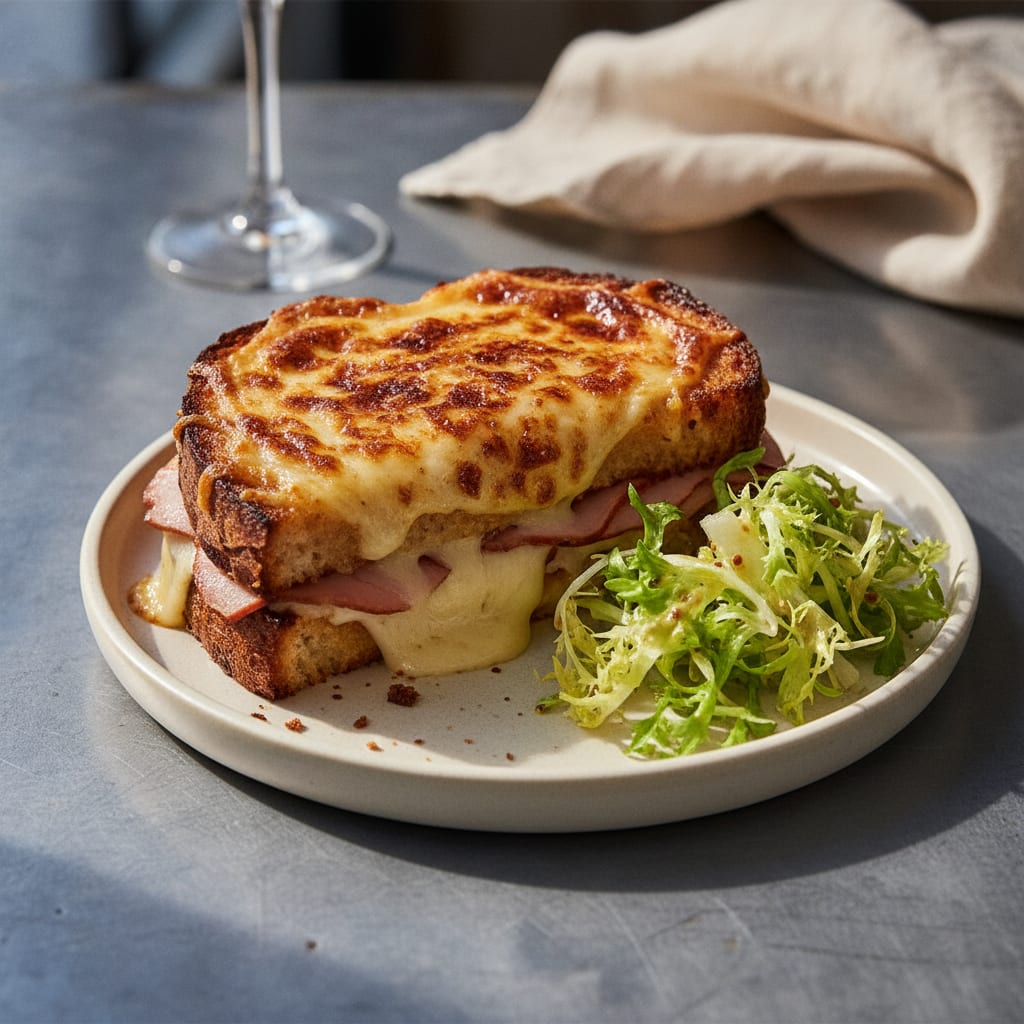
The Parisian café sandwich, two ways: cashew mornay and smoked tofu ham on buttered pain de mie, gratinéed until the top blisters and the corners crunch.
- Prep
- 20 min
- Cook
- 20 min
- Total
- 40 min
- Servings
- 2
- Difficulty
- Easy
Getting ready…
Ingredients
For 2 servings · 17 items
For the cashew mornay
For the smoked tofu ham
To build
Method
6 steps · check as you go
- →
Serve
Serve hot, one per person, on a small plate with a tangle of frisée or mâche dressed in mustard vinaigrette and a few cornichons. Cut on the diagonal so the molten interior shows. A glass of cold Beaujolais or a dry cider is the café pour. For a croque-madame, top with a fried-egg stand-in — a turmeric-seasoned soft tofu round — just before serving.
The story
The croque-monsieur was born hot and quick, the way café food is. Its most famous form — square sandwich bread, ham, and a cheese gratin under the salamander — turned up on Parisian menus around 1910, reportedly first on the boulevard des Capucines, and the name is a small joke: croquer, to crunch, plus monsieur, the gentleman. Within a decade it was respectable enough to land in literature. Marcel Proust drops it into À l’ombre des jeunes filles en fleurs — Mme de Villeparisis has ordered “des croque-monsieur et des œufs à la crème” for the narrator and his grandmother after a concert. A sandwich named for a crunch, written into the longest novel in French.
I cooked them for years in Paris, first as staff lunch, later for real, and the lesson never changed: a croque is not a melted-cheese sandwich, it is a small architectural problem. Bread crisp on the outside, soft within. Sauce inside and over the top. Color — real, blistered, dark color — on the lid. Get those three and the filling almost doesn’t matter. Get them wrong and the best ham in France can’t save it.
So this one has no ham and no Gruyère, and it is still a croque-monsieur. A cashew mornay built on soy milk, nutritional yeast, and white miso carries the aged, savory length that the cheese used to give; smoked tofu, glazed and seared, stands in for the jambon. The bread is still buttered on the outside, the sauce still goes inside and over the top, the lid still goes dark under the grill. It is not a “vegan croque.” It is a croque-monsieur, built the way a croque is built.
À la maison
The weeknight reading is the recipe above, and the only thing it asks is that you respect the gratin. Butter the bread on the outside — this is the one move that turns a sandwich into a croque. Spread the mornay inside and then blanket the top, right to the edges, and grill it until the lid is genuinely dark, not timidly golden. The mornay blends in a minute and cooks in four; the tofu ham takes another four. If you keep a jar of the mornay in the fridge, this is a ten-minute supper that tastes like an afternoon in a café on the rue de Buci.
Au bistrot
The bistronomique reading keeps every café instinct and tightens the frame to a plated course. Trim the crusts and cut the assembled croque into a clean rectangle so the layers read in cross-section. Make the mornay richer — fold a spoon of it with a little extra tapioca and pipe it on top in even lines rather than spooning, so the gratin browns in neat ridges. Under the tofu ham, lay a thin smear of caramelized onion jam cooked down slow with a splash of cider vinegar, the depth that a real croque gets from a long-aged cheese and a good ham together. For the croque-madame move, set a soft round of seasoned silken tofu, turmeric-yellowed and warmed, where the fried egg would sit, the “yolk” a loosened cashew cream you break with the fork. Plate it off-centre on a warm plate with a small, sharp salad of frisée and shaved radish in a mustard vinaigrette, a single line of the onion jam dragged across, and three cornichons fanned. The plate should feel like a café croque that put on a jacket — same dish, more composed.
Le dressage — Overhead, then a tight three-quarter on the cut edge. Warm matte plate, the croque rectangle off-centre with its piped gratin ridges dark and even. The soft-tofu “egg” catching light, a drag of amber onion jam, frisée in a loose pile. Negative space, hard side light, a zinc-bar mood. The plate should say café, refined — not banquet.
What the other recipes get wrong
Most plant-based croque recipes online — I read the top ten in April 2026 — melt a bag of shredded “cheese” between two slices and call it done. The result tastes of coconut oil and sets to rubber the moment it cools. The croque’s soul is the mornay, not a melt, so I built the sauce as the variable. I ran the test over a week in April 2026, four mornays, same bread, same tofu ham, same grill, only the savory base changed:
- Shredded vegan cheese, melted: greasy, one-note, and rubbery within two minutes of leaving the grill. No depth, no nappe.
- Cashew + soy milk only: smooth and clean but flat — it tasted of cashew, not of cheese. The texture was right and the flavour wasn’t there.
- Cashew + nutritional yeast: savoury and yellow but with that loud, slightly sour yeast top-note sitting on the surface and never resolving.
- Cashew + nutritional yeast + white miso + a pinch of nutmeg: round, long, faintly funky, with the aged-Gruyère finish that keeps going after you swallow. This was the one.
The reason is fermentation, not opinion. Aged Gruyère’s savour comes from proteins broken down over months into free glutamate and a barnyard funk. Nutritional yeast brings glutamate and a cheesy top-note but no length; white miso — itself fermented for months — adds the slow, deep, slightly funky tail that yeast alone can’t. Together they read as aged cheese the way kombu and shiitake together read as meat: each covers the other’s gap. The nutmeg is the classic mornay grace note, and it does the same job here it does in a dairy béchamel — it rounds the edges. Drop the miso and the sauce goes shrill; drop the yeast and it goes flat. Across all four batches, the pair was the one that tasted aged.
The line I draw
I will not under-grill a croque-monsieur. A pale, blond top is the single most common way the dish dies — it looks finished and it isn’t. The lid has to go genuinely dark, the corners almost too far, because that color is browning on the soy proteins and the starch and it is where half the flavour lives. A croque pulled while the top is still cream-coloured tastes of raw sauce and soft bread, and no amount of good filling rescues it. I would rather take a croque one shade past where a nervous cook would stop than serve one that never got its crust. The café cooks who taught me would push the tray back under the salamander without a word. They were right.
When this can fail
Three ways, all from my own kitchen between 2022 and 2026:
- The gluey mornay. Cooked the tapioca sauce too long, walked off to slice tofu, came back to paste. It spread like wallpaper glue and the finished croque was dense and gummy. Fix: pull the sauce the instant it coats a spoon and holds a line — it firms further under the grill — and loosen with a splash of soy milk if it has stiffened.
- The pale lid. Trusted the grill timer instead of my eyes and served a croque the colour of a brioche. It tasted of raw sauce. Fix: grill by sight, not clock, until the top is properly dark and the corners blister; finish in a hot oven if your grill is weak.
- The soggy build. Assembled four croques, let them sit twenty minutes while guests arrived, then grilled. The bread had drunk the sauce and gone limp; no toasting could bring the crust back. Fix: assemble and grill in one motion. Prep the components ahead, build at the last minute.
FAQ
QHow do you make a vegan croque-monsieur taste like the real thing?
Two moves carry it. First, a cashew mornay built on soy milk, nutritional yeast, and white miso — the miso and yeast supply the fermented, aged-cheese savour that Gruyère gives, while tapioca starch provides the stretch and gloss. Second, smoked tofu glazed with soy, maple, and smoked paprika to stand in for the jambon. Butter the bread on the outside so it toasts to a café-crisp shell, spread the mornay inside and over the top, and gratiné under a hot grill until the lid blisters dark. It reads as a croque-monsieur because it is built and finished like one.
QWhat can I use instead of ham in a croque-monsieur?
Smoked firm tofu, sliced thin and glazed with soy sauce, a touch of maple, and smoked paprika, then seared until the edges bronze. The smoke and the salt-sweet glaze are what read as cured ham. If you can only find plain firm tofu, add a quarter-teaspoon of liquid smoke to the glaze. Marinated seitan or thin slices of smoked carrot 'ham' also work, but smoked tofu is the easiest honest stand-in.
QWhy do you butter the outside of the bread for a croque-monsieur?
Because the croque is defined by its crisp, caramel-toasted shell. Butter on the outside of the pain de mie lets the bread brown and crunch under the grill while the inside stays soft and soaks up the mornay. Butter on the inside, or no butter, gives you a soft sandwich with a melted top — not a croque. It is the single move most home versions skip.
QWhat is mornay sauce and how is it different from béchamel?
Mornay is béchamel with cheese stirred in — a white sauce enriched and made savory. Here the cashew mornay is built the same way in spirit: a smooth, pourable white sauce (cashews and soy milk in place of roux and milk) made savory with nutritional yeast and white miso in place of grated Gruyère. It should nappe — coat a spoon and hold a line — when hot, and set soft as it cools.
QCan I make croque-monsieur components ahead?
Yes. The cashew mornay holds 4 days in the fridge; it firms when cold, so warm it with a splash of soy milk to loosen back to a pourable nappe. The tofu ham can be glazed and seared a day ahead and reheated. Assemble and gratiné fresh — a built croque held before grilling goes soggy. From cold components, you are eight minutes from the table.