Born in the snow.
Miso Ramen.
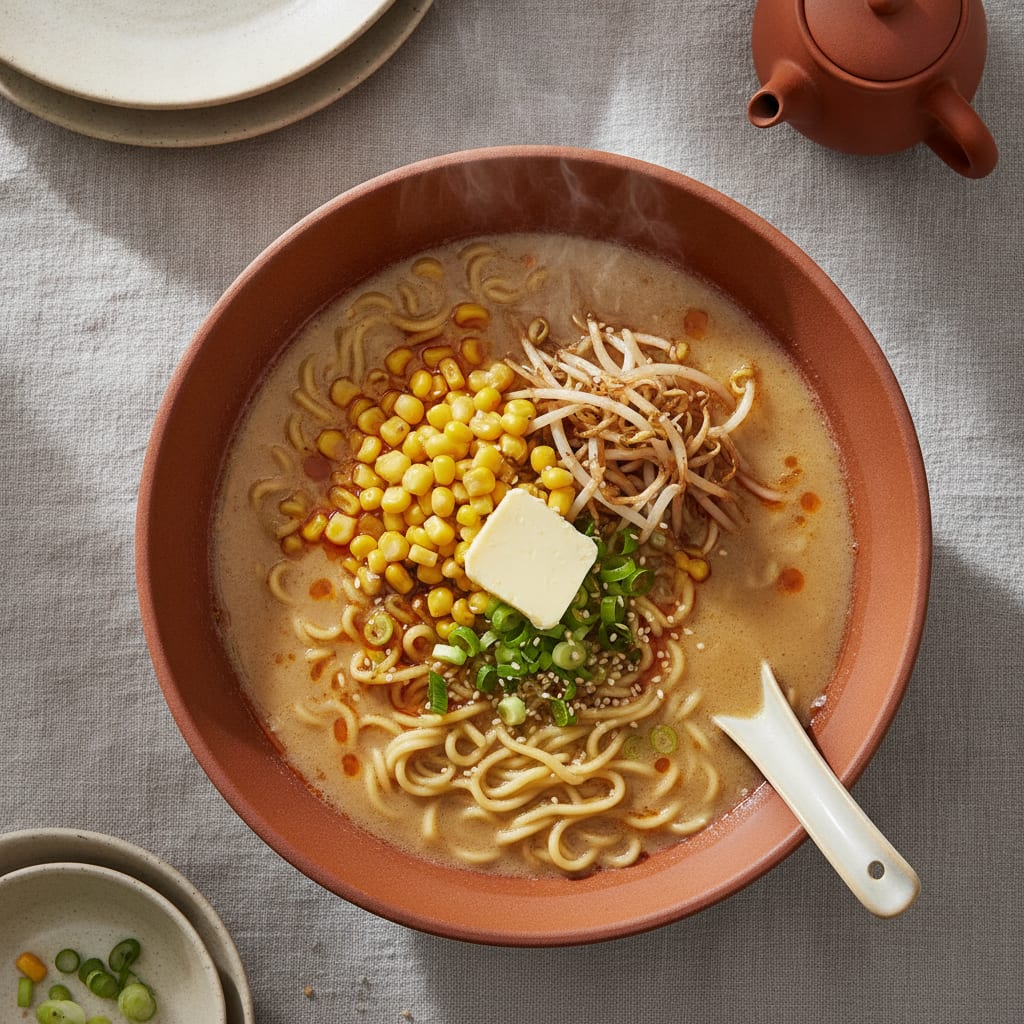
Sapporo's own ramen, two ways: a wok of fried ginger-garlic aromatics, a miso tare bloomed in fat, a rich mushroom broth, wavy noodles, corn and butter on top.
- Prep
- 40 min
- Cook
- 2h 30min
- Total
- 3h 10min
- Servings
- 4
- Difficulty
- Ambitious
Getting ready…
Ingredients
For 4 servings · 21 items
For the broth
For the miso tare and fried aromatics
For the toppings
Method
7 steps · check as you go
- →
Serve
Serve scalding, the butter still melting into the corn. Set out warm bowls, chopsticks and a renge. The Hokkaido way is corn and a pat of butter on top, melting into the rich miso broth — let it. Eat leaning over the bowl. A cold Sapporo beer is the local pour. No bread.
The story
I spent a year at Tetsu’s counter in Sapporo, from February 2020 to February 2021 — Wakō, eight seats, the snow piled to the windowsills by January. Miso ramen is Sapporo’s own, and Tetsu made it the city way: he kept a small wok by the burners and, for every miso bowl, he would fry the miso. Garlic and ginger into hot oil, then a spoon of red miso pressed into the fat, hissing, until it darkened and the whole counter smelled toasted. “Kogasu,” he’d say — to scorch it, almost, but not quite. A night in December 2020, the snow coming down hard in Susukino outside, he handed me a bowl of it: thick tan broth, wavy noodles, a pat of butter melting into a pile of corn. I understood then that miso ramen was a different animal from the clear bowls — louder, richer, made for a Hokkaido winter.
Miso ramen has a birthplace and a date. It was created in Sapporo in 1955 by Morito Omiya at his restaurant Aji no Sanpei, and from there it spread until Sapporo and miso ramen became almost the same word. This bowl follows that line: a rich mushroom broth, a fried miso tare bloomed in aromatics, thick wavy noodles, and corn and butter on top the way Hokkaido does it.
It is not a “vegetable version” of miso ramen. It is miso ramen: the fried tare, the thick broth, the corn and butter, made with what is in my hands now.
À la maison
The weeknight reading is the recipe above, and it turns on one move the other ramen styles don’t have: frying the miso. Do not stir the paste in raw. Heat oil, fry garlic and ginger, then press the miso into the hot fat and let it darken and toast for half a minute — that caramelization is the whole soul of a Sapporo bowl. The broth wants body, so it gets a slightly harder simmer than a clear shoyu and a splash of soy milk to make it cling. Everything else is the corn, the flash-fried sprouts, the butter — the Hokkaido finish that makes it unmistakable.
Au bistrot
The bistronomique reading keeps the fried-miso heart and builds a more composed, layered bowl.
The tare gets a real kaeshi treatment: I fry three misos rather than two — adding a spoon of dark hatcho for depth — with the garlic, ginger and a whisper of toban djan, then mount it with a little toasted sesame paste so it emulsifies thick and glossy. The broth is enriched not just with soy milk but with a knob of brown-butter-flavored vegan butter whisked in off the heat, echoing the pat on top. For the plate, the corn is no longer a scoop: I char a small wok of kernels hard until some blister and pop, and pile them in a neat mound at twelve o’clock with the pat of butter set on it to melt as the bowl reaches the table. The bean sprouts are dressed and twirled into a tidy nest; the tofu is a single seared, miso-glazed batonnet; a few threads of bright scallion and a dusting of white pepper go on last. A thread of chili-sesame oil is dragged across the surface. The bowl is still rich and loud — that is the point of miso ramen — but every element is placed.
Mori-tsuke — Overhead, shot at the moment the butter starts to melt into the corn. A wide pale bowl so the tan broth and orange sheen read warm. Corn mound and butter at twelve o’clock, the other toppings arrayed clockwise, odd numbers. Hard steam. A side light catching the melting butter and the oil beads. The plate should say winter richness, controlled.
What the other recipes get wrong
Most plant-based miso ramen recipes online — I read the top ten in March 2026 — stir the miso into the broth raw, off the heat, “to preserve the probiotics,” and call it done. So I ran the test: six bowls over a week in March 2026, in my Washington kitchen, identical broth and toppings, changing only how the miso tare was treated before it hit the bowl.
- Raw miso whisked into the broth: salty, flat, faintly sour, sitting on the surface. It tasted like miso soup with noodles, not miso ramen. No depth, no roundness.
- Miso warmed gently, not fried: better integrated but still one-dimensional — the sharpness softened but nothing new appeared.
- Miso fried in hot oil with garlic and ginger, 30–60 seconds, until darkened: toasty, deep, round, the sourness gone and a caramelized backbone in its place. This was the Sapporo bowl. It was not close.
The reason is chemistry, not tradition for its own sake. Miso is dense with amino acids and reducing sugars from its koji fermentation; held briefly at frying heat in fat, they undergo Maillard browning, generating exactly the toasty, savory, complex compounds that raw miso lacks. The fat also carries the fried garlic and ginger’s aromatics into the paste and tempers miso’s raw acidity. The “preserve the probiotics” instinct misses the point — you are not eating miso ramen for live cultures, you are eating it for that fried, caramelized depth, and you only get it with heat. Across all six bowls, the fried tare won every time. Frying the miso is not optional in a Sapporo bowl. It is the dish.
The line I draw
I will not stir raw miso into a Sapporo bowl and call it miso ramen. The fried tare is the thing that makes this dish itself — it is what Tetsu meant by kogasu, the near-scorch, the caramelization that turns flat salty paste into something deep. Stir it in raw and you have miso soup with noodles in it: a fine thing, but not this. The fry takes under a minute. Skipping it to “keep the miso alive” trades the entire character of the bowl for a wellness instinct that has no place here. Heat the oil, fry the aromatics, press the miso in until it darkens. Every time.
When this can fail
Three ways, all from my own kitchen between 2022 and 2026:
- The sour, flat tare. Rushed once and whisked the miso into the broth raw; the bowl tasted sharp and one-note, the miso sitting on top instead of folded through. Fix: always fry the miso in hot oil with garlic and ginger for 30–60 seconds until it darkens and smells toasty before it meets the broth.
- The split broth. Boiled the soy-milk-enriched broth hard after adding it; it curdled into grainy flecks. Fix: whisk the soy milk in off direct heat and keep the broth hot but never boiling once it is in.
- The limp sprouts. Boiled the bean sprouts with the noodles instead of flash-frying them; they came out grey and watery and bled into the broth. Fix: flash-fry sprouts and corn over high heat for one minute only, keeping the snap, and add them at the end as the crisp counterpoint.
FAQ
QWhere did miso ramen come from?
Sapporo, Hokkaido. Miso ramen is credited to Morito Omiya, founder of the restaurant Aji no Sanpei, who developed it in 1955 — the story goes that a customer asked for noodles to be added to a bowl of miso-and-pork soup, and Omiya refined the idea into a dish. As Aji no Sanpei was picked up by magazines, miso ramen spread nationwide and Sapporo became synonymous with it. Hokkaido was a natural birthplace: a cold, snowbound region with a strong miso-making tradition and a taste for rich, warming food.
QWhat makes Sapporo miso ramen different from other ramen?
Two things. First, the miso tare is fried — bloomed in hot oil with minced garlic and ginger before it meets the broth, which caramelizes the miso and deepens it. Second, the broth is thick and clinging rather than clear, built to coat the characteristic thick, wavy Sapporo noodles. The bowl is finished Hokkaido-style with flash-fried bean sprouts, sweetcorn, and a pat of butter melting on top. It is the richest, most assertive of the classic ramen styles.
QWhy do you fry the miso instead of just stirring it in?
Frying the miso in hot oil with aromatics is the signature Sapporo technique. Heat drives a Maillard browning of the miso's amino acids and sugars, turning raw, sharp, salty paste into something toasty, round and deep, and the hot fat carries garlic and ginger into it. Stirred in raw, the miso tastes flat and faintly sour and sits on top of the broth; fried, it becomes the deep, caramelized backbone of the bowl. It takes under a minute and it is the difference between a good and a forgettable miso ramen.
QWhy corn and butter on miso ramen?
Because it is from Hokkaido. Hokkaido is Japan's dairy and sweetcorn heartland, and Sapporo miso ramen has long been finished with a scoop of buttered sweetcorn — the butter melts into the rich miso broth and the corn adds bursts of sweetness against the salt. It is regional, not a gimmick: corn-and-butter miso ramen is one of the signatures of the city. A plant butter does the same job, melting a glossy richness across the top.
QWhat noodles does Sapporo miso ramen use?
Thick, curly, springy alkaline wheat noodles (chukamen). The thick wavy shape is built to grab and hold the heavy miso broth, so each bite carries plenty of soup, and the chew stands up to the assertive seasoning. Thin straight noodles, which suit a light clear shoyu broth, get lost in a miso bowl. Look for thick wavy fresh chukamen; good dried equivalents work.