Noodles, not rice.
Fideuà.
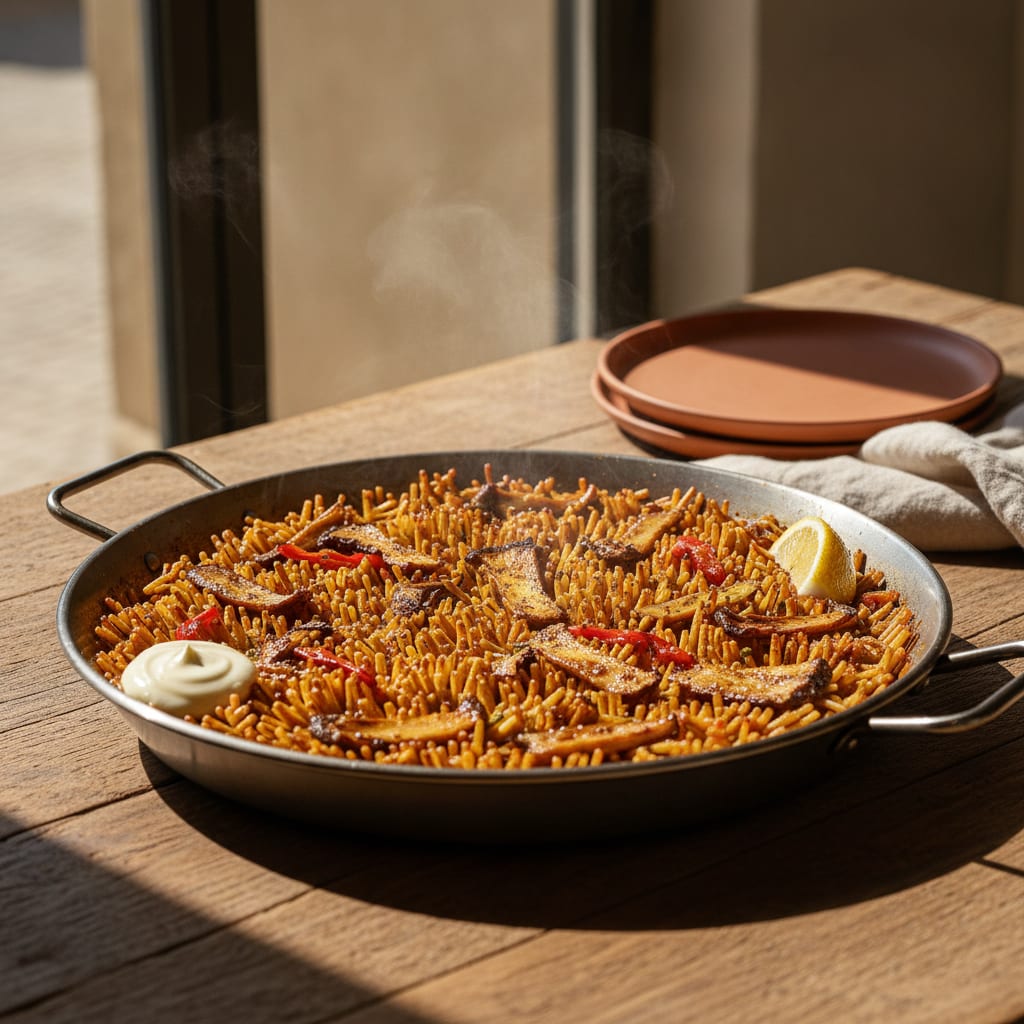
Gandia's noodle paella, two ways: toasted fideos in a smoked sofrito and mushroom-kombu fumet, cooked dry to a crackling socarrat, finished with allioli.
- Prep
- 25 min
- Cook
- 35 min
- Total
- 1h
- Servings
- 4
- Difficulty
- Medium
Getting ready…
Ingredients
For 4 servings · 19 items
For the fumet (broth)
For the fideuà
For the allioli
Method
8 steps · check as you go
- →
Serve
Serve straight from the pan at the table, with lemon wedges and a bowl of allioli to spoon over. Each guest scrapes down to lift some socarrat from the base — that is the point of the dish. A cold Valencian white, an Albariño or a chilled rosado, is the pour. Eat it the moment it comes off the heat.
The story
Fideuà is paella’s argumentative cousin: the same wide flat pan, the same sofrito and saffron and the same hunt for a crisp base, but built on short noodles instead of rice. It comes from Gandia, the port town just south of Valencia, and it was born at sea. The most-repeated origin story credits a deckhand named Bautista Pascual Sanchís — Zabalo — born in Gandia in 1915, who sailed on the boat Santa María and, the tale goes, swapped the rice in the crew’s seafood pot for noodles, partly so the skipper would eat less of it and leave more for the boys. Whether or not the detail is exact, the shape of the story is right: fideuà is a working boat’s dish, invented to stretch a catch.
I cooked it for a summer in 2018, working the arroces and fideuàs at La Riuà in El Carmen, Valencia, in the tangle of old streets behind the cathedral. The cook who ran the pans there toasted his fideos dry until they smelled like a bakery and treated the last ninety seconds — the dash for the socarrat — as the only part that mattered. “Escolta,” he’d say, leaning over the pan: listen. When the crackle came and the toasted smell hit, he pulled it off the flame, not a second later. The first time I let it go too long he made me start the pan again.
This fideuà has no shellfish in it and reaches the sea another way: a fumet built on kombu and dried shiitake, a little nori for the marine top-note, seared king oyster for the springy chew. The method does not move — the toast, the dark sofrito, the saffron, the dry cook, the still pan, the socarrat, the allioli at the end. It is not a “seafood-free version” of fideuà. It is fideuà, cooked the way the man at La Riuà taught me, with what is in my hands.
À la maison
The weeknight reading is the recipe above, and it turns on two moves. First, toast the dry fideos until they are honey-coloured before any liquid touches them — that is the whole character of the dish, the nutty depth that rice doesn’t have. Second, once the hot fumet goes in, do not stir, not once. Spread the pan flat, scatter the mushrooms over the top, and leave it to cook dry, then chase the socarrat over high heat in the last minute by smell. The aquafaba allioli takes two minutes in a jug with a stick blender and is the sharp, garlicky foil the rich pan wants. Lemon, and eat it straight from the pan.
Au bistrot
The bistronomique reading is the same fideuà, the components split out and the socarrat treated as the hero rather than a happy accident.
Keep the pan identical but build around it. Reduce a second batch of the fumet with a splash of white wine and a thread of saffron down to a glossy, deep-amber jus to brush around the plate. Sear the king oyster as thick medallions, scored and basted in fumet, so each one is a deliberate bite rather than scattered chunks. Confit strips of red pepper slowly in oil until silky. Whip the allioli looser and pipe it in fine dots, or aerate it into a light garlic foam if you are honest about wanting one. Then, instead of serving the whole pan, cut and lift a single intact disc of the noodle cake with its socarrat side up — a galette of fideos — and set it crisp-side proud on a warm plate. Lay the seared medallions off-centre, dot the saffron jus and the allioli around, drape the confit pepper, and finish with a few young herb leaves and a squeeze of lemon. The socarrat faces up so it is the first thing read.
El emplatado — Three-quarter, low raking light to catch the crackled socarrat. A single disc of fideos set crisp-side up on a warm pale plate, seared king oyster medallions off-centre, dots of saffron jus and white allioli around it, a drape of confit pepper. Negative space, one lemon cheek. The plate should say socarrat, plated — the crisp base of the boat’s pan read once, at a white tablecloth.
What the other recipes get wrong
Most fideuà recipes online — I read the top ten in June 2026 — treat the noodles like any pasta: boil-soft, barely toasted, often stirred through a thin tomato sauce. That is a noodle stew, not a fideuà. I ran the test over two days in June 2026: nine pans, same fumet and same sofrito, changing only how the noodles were handled and whether the pan was stirred.
- Untoasted noodles, stirred: pale, soft and gluey, a uniform tangle with no socarrat. It tasted of wet pasta in tomato; nobody reached back into the pan.
- Toasted noodles, stirred after the broth: better flavour from the toast, but the stirring pulled starch out and the base never crisped — a savoury mush, no crackle.
- Toasted noodles, never stirred, high heat at the end: separate, nutty noodles standing on their ends, a genuine crackling socarrat on the base, the part everyone scraped for. Not close.
The reason is starch and Maillard chemistry. Toasting the dry fideos browns their surface starches and proteins before any water arrives, which both builds nutty flavour and firms the outside so each piece drinks broth without dissolving. Stirring after the liquid goes in does the opposite — it abrades the softened surfaces, sloughing amylose into the liquid until the pan turns to paste, exactly the gluey texture stirring would give a paella. And the socarrat is simply caramelisation: with the broth gone and the heat high, the sugars and starches pressed against the hot metal brown and crisp in the last sixty to ninety seconds. Leave the pan still, dry it out, then push the heat. Across all nine pans, only the toasted-and-untouched method gave the dish a base worth fighting over.
The line I draw
I will not stir a fideuà once the broth is in, and I will not pull it before the socarrat forms. The dish is defined by two things rice can’t give it — the toasted-noodle depth and the crisp caramelised base — and both die under a spoon. Stir it and you make a gluey noodle pot; serve it before the last burst of high heat and you make a soft, broth-soaked pan with no crackle, the fideuà equivalent of a risotto with no wave. The man at La Riuà restarted my pan when I lost my nerve at the socarrat. He was right: the last ninety seconds, untouched and over high heat, are the dish.
When this can fail
Three ways, all from my own kitchen between 2022 and 2026:
- The gluey tangle. Stirred the pan after the fumet went in, out of habit from cooking pasta; the noodles bled starch and set into a soft paste with no socarrat. Fix: spread it flat, scatter the toppings, and do not touch it again until it comes off the heat.
- The burnt base. Chased the socarrat too hard, walked to grab the allioli, and came back to an acrid, scorched bottom. Fix: stay over the pan in the last two minutes and pull it the instant you smell toast — the window between socarrat and burnt is about thirty seconds.
- The thin, watery pan. Skipped cooking the sofrito all the way down to save time and used too much broth; the fideuà came out pale and soupy with no backbone. Fix: cook the grated tomato to a dark jam until the oil splits out, and add hot fumet only to cover the noodles, never more.
FAQ
QWhat is the difference between fideuà and paella?
The grain. Fideuà uses fideos — short, often hollow Spanish noodles — where paella uses rice, and is cooked dry in the same wide flat pan with a sofrito, saffron and a good broth, chasing the same crisp socarrat on the base. The story from Gandia is that a cook on a fishing boat swapped rice for noodles, by some accounts to stretch the meal, by others so the skipper would eat less and leave more for the crew. Toasting the noodles before the broth gives fideuà a nuttier, deeper character than rice, and the noodles cook faster, so the whole dish comes together in under fifteen minutes once the broth goes in.
QCan you make fideuà without seafood?
Yes — fideuà is defined by its method, not by shellfish. The dish is toasted fideos, a dark tomato-and-paprika sofrito, saffron, a flavourful broth cooked dry, and a socarrat on the base. A fumet built on kombu and dried shiitake carries the deep savour seafood used to give, because kombu's glutamate and shiitake's guanylate multiply each other into a meaty, almost marine savour, while a little nori or smoked salt adds the sea note. Seared king oyster mushroom supplies the firm, springy chew. Finished with garlic allioli and lemon, it eats as fideuà, not as a substitute for it.
QWhat are fideos and what can I use instead?
Fideos are short Spanish wheat noodles, traditionally fideos no. 2 — thin, often hollow tubes about 2–3 cm long that toast and hold their shape in the pan. If you can't find them, the closest stand-in is dried spaghettini or capellini snapped into 2–3 cm lengths, or a short vermicelli. Toast whatever you use dry in the pan until honey-coloured before adding liquid; that toasting is essential to fideuà and is why you can't simply boil noodles and stir them in.
QHow do you get the socarrat on fideuà?
The socarrat is the crisp caramelised layer on the base of the pan, and it forms in the final minute. Cook the fideuà flat and unstirred until almost all the liquid is gone, then turn the heat to high for one to two minutes. Listen for a faint crackle and a toasted smell — that is the base caramelising. Pull it off the heat the instant you smell toast, before it tips into burnt. A thin, even layer of noodles and a heavy flat pan make the socarrat form evenly rather than in scorched patches.
QWhy is my fideuà gluey or mushy?
Two usual causes. Either you stirred it after adding the broth — like paella, fideuà must be left alone once the liquid is in, because stirring releases starch and turns it pasty — or you used too much broth. Add hot fumet just to cover the noodles and let it cook away; the noodles should end up tender and separate, not swimming. Toasting the fideos first also helps, because it firms their surface so they drink the broth without collapsing.