When to Salt — Water Versus Food.
Salting pasta water, salting roasted vegetables, salting onions. Three different timings for one word. Get this right and everything tastes better.
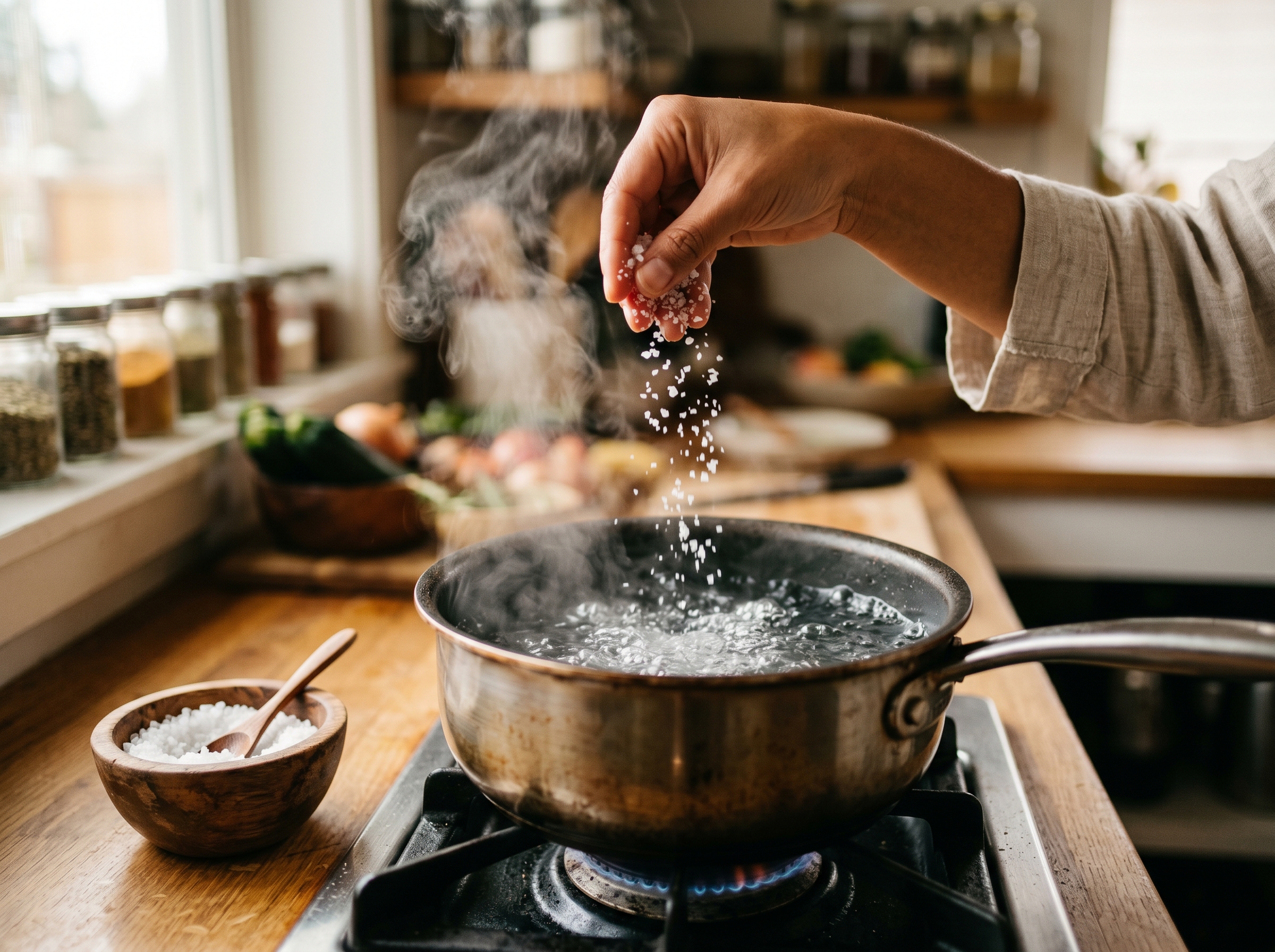
A small rule with enormous consequences. Three different actions for the same word, and getting them right is the difference between food that tastes seasoned and food that tastes flat. First, salt your pasta water heavily — 1.5 tablespoons of fine sea salt per pound of pasta in one gallon of water, which is the famously “salty like the sea” benchmark — and salt the water before the pasta goes in. Second, salt roasted vegetables AFTER they come out of the oven, the moment they hit the sheet pan rest, never before — salting before draws out water and the vegetables steam instead of brown. Third, salt onions DURING the sweat, not before and not after — a half-teaspoon stirred in at the start helps the onion release water and sweeten as it cooks. Three different timings. Same word. One rule per moment.
Why this works
Salt does different things at different moments of cooking, and the timing controls which job it performs. In pasta water, the dissolved salt seasons the noodle from the inside out as it absorbs cooking water — there is no other moment you can salt pasta from the inside. On roasted vegetables, salt is hygroscopic — it pulls water to the surface — and water on the surface of a vegetable in a hot oven is steam, which prevents the Maillard reaction that gives roasted vegetables their brown crust. So you salt them after. On onions, salt during the sweat ruptures the cell walls slightly, releasing the natural sugars and water content, which is exactly what you want for a slow oil-onion reduction. Same molecule. Different chemistry per moment.
Where it shows up
The sofrito is built on this rule — the onion gets salted at the start of the 25-minute sweat, the tomato gets salted with the second teaspoon, and the finished sofrito is never salted again because the cooking concentrates it. The pesto-pasta lives or dies on the pasta-water salt: undersalted water means undersalted noodles, and no amount of pesto-salt covers the gap. The chickpea-milanesa sheet of roasted vegetables — finished with flaky salt the second they hit the rest, not before.
The line I draw
I will not skip salting pasta water with the “I’ll season the sauce” argument. A pound of pasta cooked in unsalted water is bland-pasta, and no sauce, however well-seasoned, fully compensates. The pasta absorbs the salt from the cooking water in a way it cannot absorb from a coating sauce. Salt the water heavily. That’s the moment.