Vermicelli Rice.
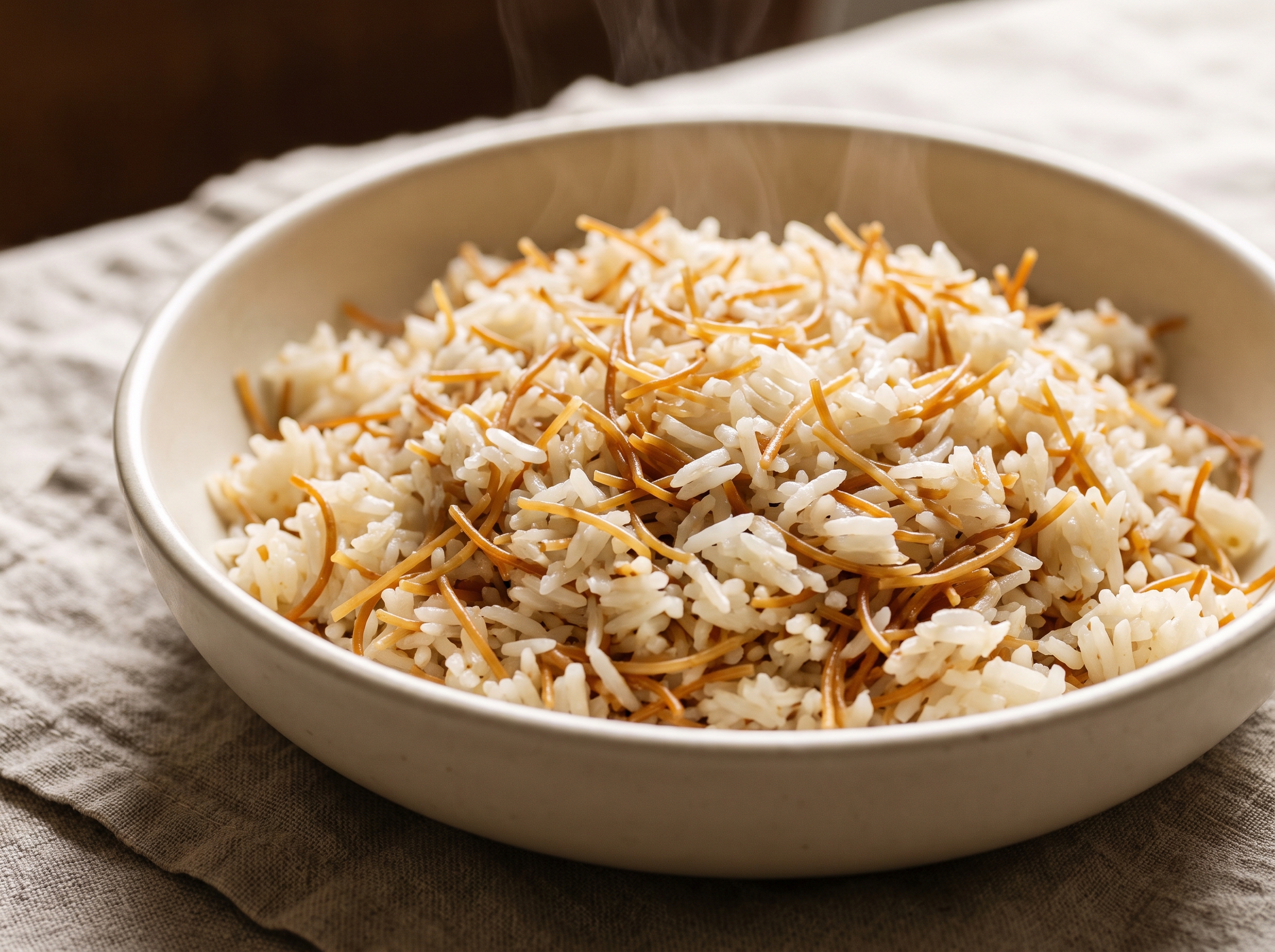
The toasted-vermicelli pilaf next to the beans in the photo. One pot, twenty minutes, four portions — plus the cauliflower trick that lightens it.
Getting ready…
This is the rice in the photo — the pilaf with the little toasted threads running through it, sitting next to the beans. It takes one small pot and about twenty-five minutes, ten of them hands-on, and it’s the difference between a plate that feels like a proper meal and one that feels like diet food.
The toasted vermicelli is the trick the whole thing turns on. Two minutes of browning before the rice goes in, and a plain pot of rice becomes nutty and golden and worth eating on its own. It’s Lebanese in my kitchen, Turkish in someone else’s, and it shows up next to beans across half the world for a reason: toasted starch makes lean food taste rich.
The line I draw
I will not lift the lid early. The off-heat rest does the real work — the rice firms up steaming in its own trapped heat. Every time someone tells me their pilaf came out wet on the bottom and crunchy on top, they peeked. Set a timer, walk away, trust the pot.
When this can fail
- The vermicelli burned. It went from gold to black while you turned around. Fix: start over — burnt vermicelli is bitter through the whole pot. Keep your eyes on it; it’s only two minutes.
- The rice is gluey. You stirred after the liquid went in, or skipped rinsing. Fix: rinse next time until the water runs clear, and one stir only.
- Wet on the bottom. You lifted the lid during the cook or skipped the rest. Fix: lid stays on, and give it the full ten-minute rest off the heat.
Cook fast on a Tuesday because you did this on a Sunday.
You'll need
Ingredients
For 1 servings · 6 items
The pilaf
The lighter swap (optional)
The method
Method
4 steps · check as you go
What this enables
Questions, honestly answered
FAQ
QWhat is the cauliflower swap, and does it actually taste good?
After the rice is cooked, you fold 2 cups of raw riced cauliflower through it off the heat. The trapped steam warms the cauliflower without overcooking it, and once it's tossed with the toasted, seasoned rice it more or less disappears — same fork-fluffed look, same nutty flavour, roughly half the calories per cup because half the bowl is now a vegetable. It's the single easiest way to lighten this plate, and on a plate next to saucy beans nobody at the table notices. Start at half-and-half; go further if you like it.
QHow much rice is one portion?
This makes four portions of about a cup cooked each — a sensible side next to a generous scoop of beans, not a mountain. On the lighter week, the beans are the centre of the plate and the rice is the supporting act: a cupped handful, not half the plate. If you're hungrier, add more beans or more salad before you add more rice — they fill you up for far fewer calories.
QCan I make this with brown rice?
Yes, with two changes: use 2.25 cups of liquid instead of 1.75, and cook 35 to 40 minutes instead of 15. Toast the vermicelli the same way. Brown rice adds fibre, which helps with fullness, at the cost of the lighter texture. I keep white here because next to high-fibre beans the difference in the whole meal is small — but if you prefer brown, it works.