The Vinaigrette Ratio, Memorized.
Three oil, one vinegar, mustard, shallot soaked five minutes, salt. The French ratio. Memorize once, never read a vinaigrette recipe again.
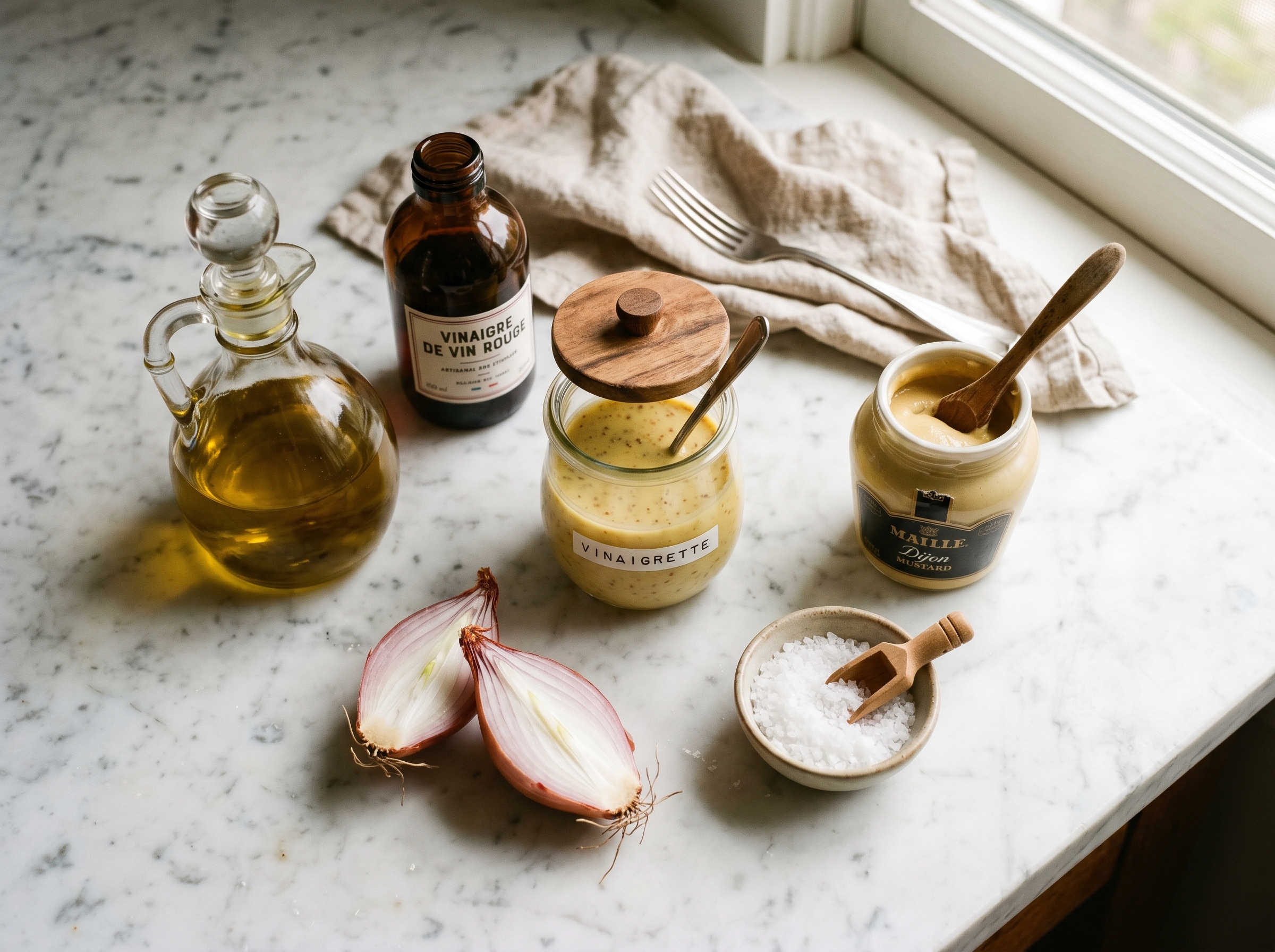
The French ratio is three parts oil, one part vinegar, mustard for emulsification, finely minced shallot soaked for five minutes in the vinegar before any oil is added, and salt dissolved into the acid before the oil hits the jar. That’s it. Once you have this in your head, you never read a vinaigrette recipe again. Start with one tablespoon of red wine vinegar in the bottom of a jar. Add one tablespoon of finely minced shallot. Let it sit for five minutes — the vinegar takes the bite out of the shallot. Whisk in one teaspoon of Dijon mustard and a generous pinch of fine sea salt; stir until the salt dissolves. Pour in three tablespoons of good olive oil while whisking with a fork. The vinaigrette emulsifies on contact. Done. Twenty seconds of work; salad for the week.
Why this works
The three-to-one ratio is the proportion that lets the oil dominate the palate while the acid still cuts through fat. Anything sharper — two-to-one or one-to-one — and the vinaigrette tastes harsh; anything flatter — four-to-one — and the dressing reads as oily without brightness. The mustard is the emulsifier; the lecithin in the mustard seeds binds the oil and water phases together so the dressing doesn’t separate in your jar. The five-minute shallot soak does what the pickled-onion brine does, but faster — the vinegar neutralizes the harsh sulfur compounds in the raw shallot, leaving you with a sweet allium-bite rather than a punch. Salt dissolves in the acid because salt cannot dissolve in oil — get this step out of order and you have crystals in the dressing.
Where it shows up
A small jar of vinaigrette lives in my fridge alongside the the-five-minute-pickled-onion. Any green salad — Boston, romaine, frisée, arugula — dressed in 30 seconds. The chickpea-milanesa sandwich plate gets a small arugula side dressed with this. The pesto-pasta cold-leftover-bowl on Wednesday: half a cup of vinaigrette converts yesterday’s pasta into a grain salad. Five variations live in my head: replace half the red wine vinegar with lemon juice for delicate salads, add a teaspoon of maple syrup for rounder mid-winter, finish with fresh thyme leaves for roasted vegetables, swap Dijon for whole-grain mustard for chunkier texture, add a teaspoon of soy sauce for an Asian-leaning grain bowl. Five jobs from one base.
The line I draw
I will not buy bottled salad dressing. The Newman’s, the Ken’s, the Wishbone — all of them have the same defects: vegetable oil instead of olive (because olive oil clouds in the fridge and consumers complain), preservative-driven shelf stability that gives the dressing a chemical aftertaste, and a sugar-and-salt-heavy formulation that masks the lack of fresh shallot. Twenty seconds of whisking gives you a vinaigrette that tastes of olive oil, vinegar, and shallot — the three things a vinaigrette is supposed to taste of. There is no reason to buy the bottle.