The Toasted Breadcrumbs Jar.
Stale bread, pulsed, toasted in olive oil with salt. The Italian pangrattato finish — the difference between home pasta and restaurant pasta.
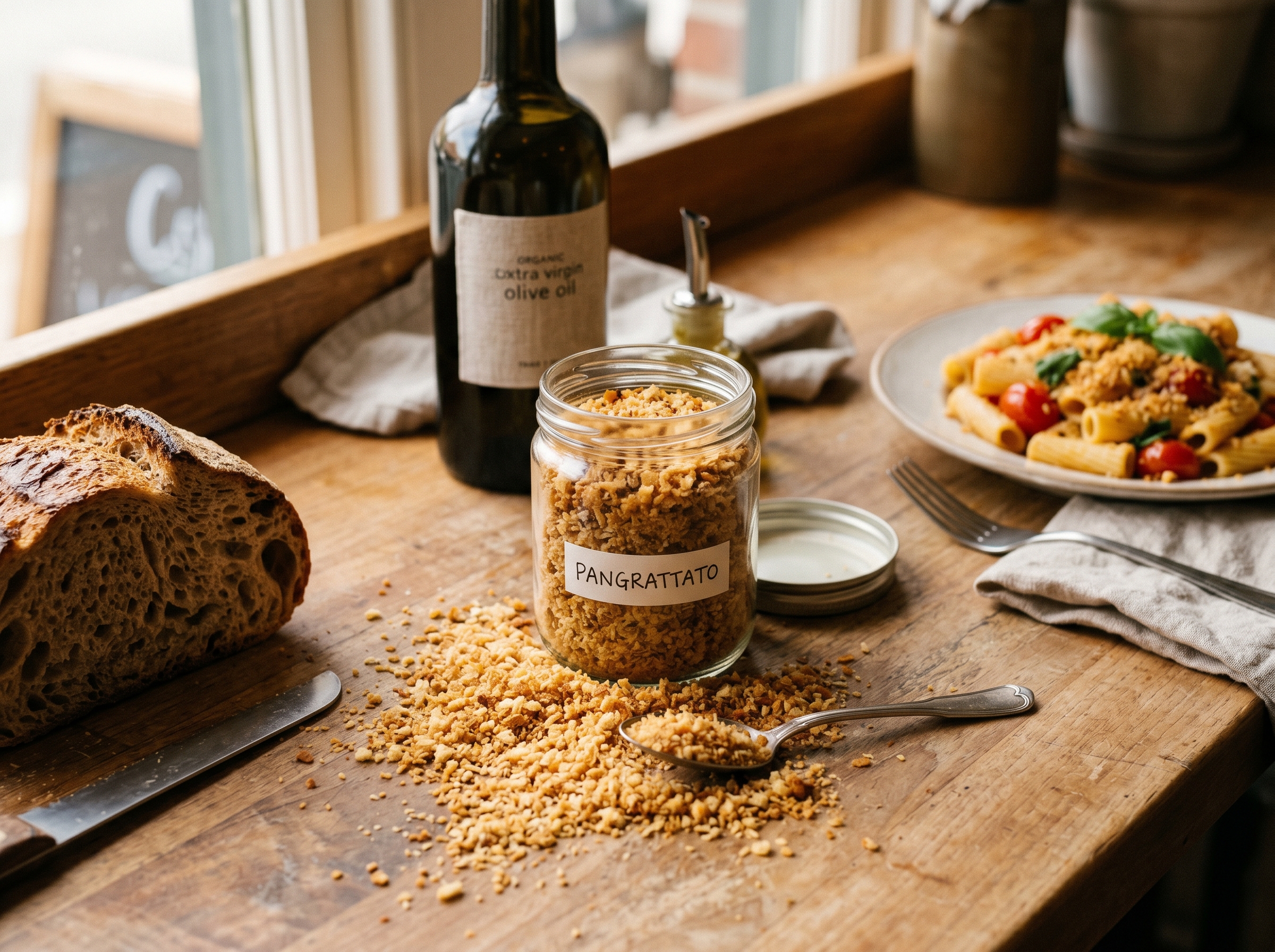
The stale bread ends. The heels. The half-loaf that’s two days past its best. Don’t throw any of it away. Tear the bread roughly into chunks, drop them into a food processor, and pulse — fifteen short pulses — until you have coarse crumbs the size of split peas. Heat a dry 12-inch skillet over medium. Add two tablespoons of olive oil, then the crumbs, then a pinch of fine sea salt. Toast for four to five minutes, stirring constantly with a wooden spoon, until the crumbs are deep gold and smell like something you’d order in a restaurant. Cool completely on a sheet pan. Pour into a clean jar with a tight lid. Keep on the counter. Two months. The finish that makes home pasta taste like Naples.
Why this works
Pangrattato — literally “grated bread” in Italian — is the Neapolitan substitute for parmesan that I learned at Da Concettina during the year I lived in Naples in 2014. The cooks toasted day-old bread crumbs in oil with garlic and a pinch of red pepper, then showered them over pasta tossed in olive oil and anchovy. The crumb does two jobs no cheese can do. First, it adds texture — pasta finished with pangrattato has a crunch on every forkful that a cheese-only finish lacks. Second, the deep-toasted Maillard browning gives a nutty, almost-coffee depth that reads as “savory” without being salty. The jar holds two months because once the bread is thoroughly toasted, the moisture is gone and there’s nothing left to spoil.
Where it shows up
The jar finishes the pesto-pasta — a heavy two-tablespoon dusting over each bowl, the crumb absorbing some of the pesto oil and turning into a savory crust on top. The aglio-e-olio in my kitchen gets a final shower of pangrattato over the plated pasta — that’s the Neapolitan version, not the Roman one. Even the chickpea-milanesa breading uses these same toasted crumbs mixed with the panko, which is the trick that gives the cutlet its shatter.
The line I draw
I will not buy store-bought breadcrumbs. The Progresso, the 4C, the supermarket “Italian seasoned” containers — they have the texture of sawdust and taste like nothing. Stale bread you would have thrown away makes a crumb ten times better in five minutes. There is no excuse.