The Mushroom-Stem Stock Bag.
A freezer bag labeled stock. Every vegetable trimming goes in. Three weeks of normal cooking fills it. Free stock when full.
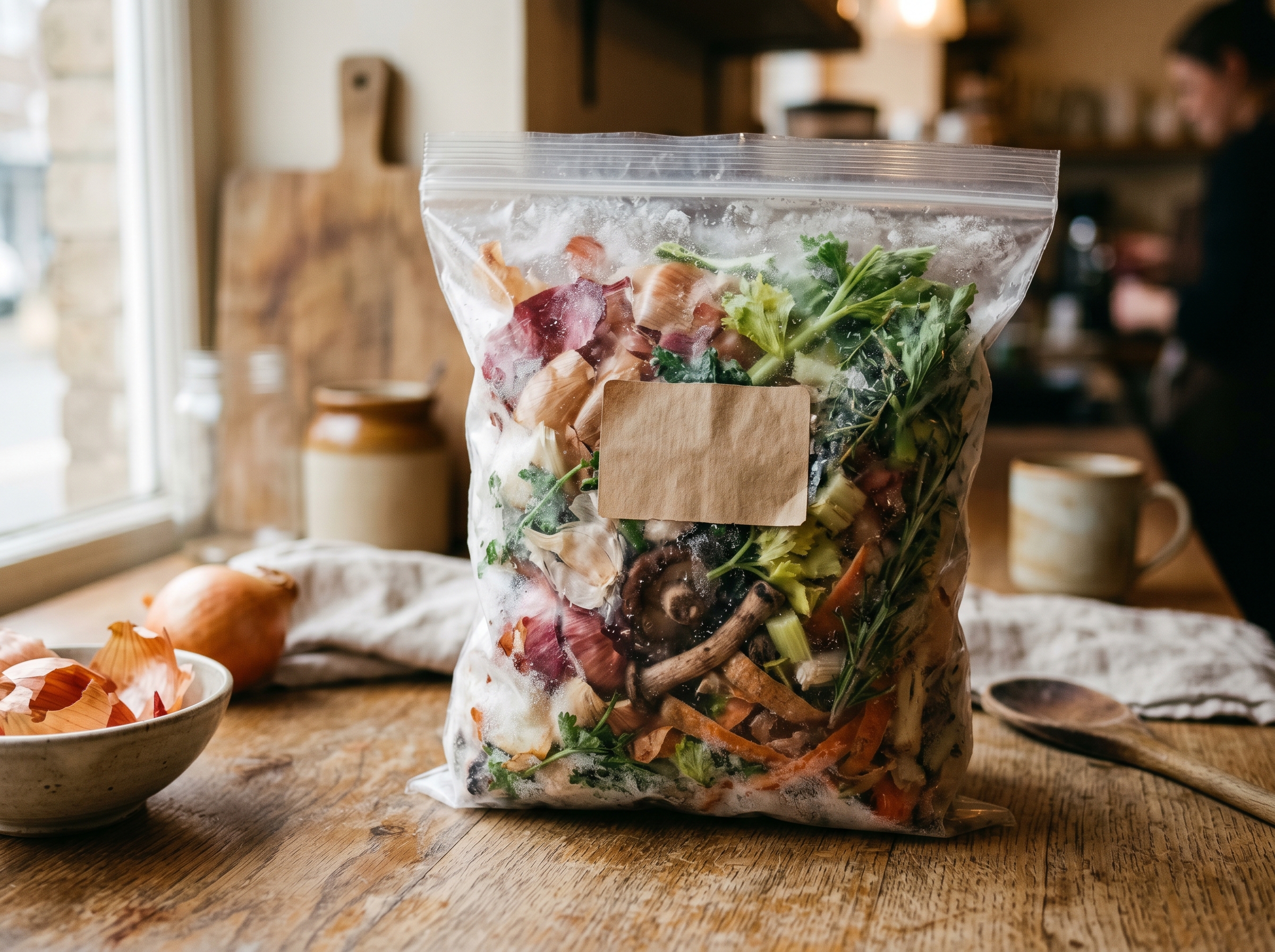
Keep a gallon-size freezer bag standing open in the freezer, labeled “stock” in black marker. Every time you prep vegetables for any dinner, the trimmings go in. Mushroom stems. Onion ends — the root nub and the papery top. Carrot peels. Celery tops and the pale inner leaves. Leek roots and the dark green tops most recipes tell you to throw away. Parsley stems. Fennel fronds and core. Garlic skins. Tomato cores. Corn cobs in summer. The bag fills in about three weeks of normal cooking, depending on how much you cook. When the bag is full, you have everything you need for two quarts of mushroom-kombu broth, and the vegetable cost of that broth is zero — you were going to throw the trimmings in the trash anyway.
Why this works
Vegetable stocks taste of whatever was strongest in the pot — usually onion and carrot, sometimes celery, occasionally mushroom. By the time three weeks of trimmings have accumulated in one bag, you have a balanced mix of every vegetable you cook with, which is exactly the proportion you want in a stock. The freezer does the same thing it does to ginger: cell walls fracture from ice crystals, so when the trimmings go into a pot of cold water with a sheet of kombu, they release flavor faster than fresh trimmings would. A trimmings-stock made from a three-week freezer bag is roughly the same flavor as a stock made from the same vegetables fresh, but the only labor is “open bag, dump in pot, simmer.”
Where it shows up
This is the input feed for the mushroom-kombu-broth — the base of every soup, every risotto, every braise in my kitchen. The risotto-allo-zafferano is built on a stock made entirely from one bag of three-week trimmings. The paella socarrat — the same. I cannot remember the last time I bought boxed vegetable broth.
The line I draw
I will not include brassica trimmings in the bag. Broccoli stems, cauliflower cores, cabbage ribs, Brussels-sprout outer leaves — all of them turn the stock sulfurous and slightly bitter once simmered. The same goes for beet trimmings, which dye the stock magenta and make it useless for anything but borscht. Brassicas and beets get composted separately; everything else goes in the bag.