The Aquafaba Jar.
Save chickpea brine. Whisks to stiff peaks like egg whites, makes the wash for breading, binds mayo. Keeps five days fridge, three months freezer.
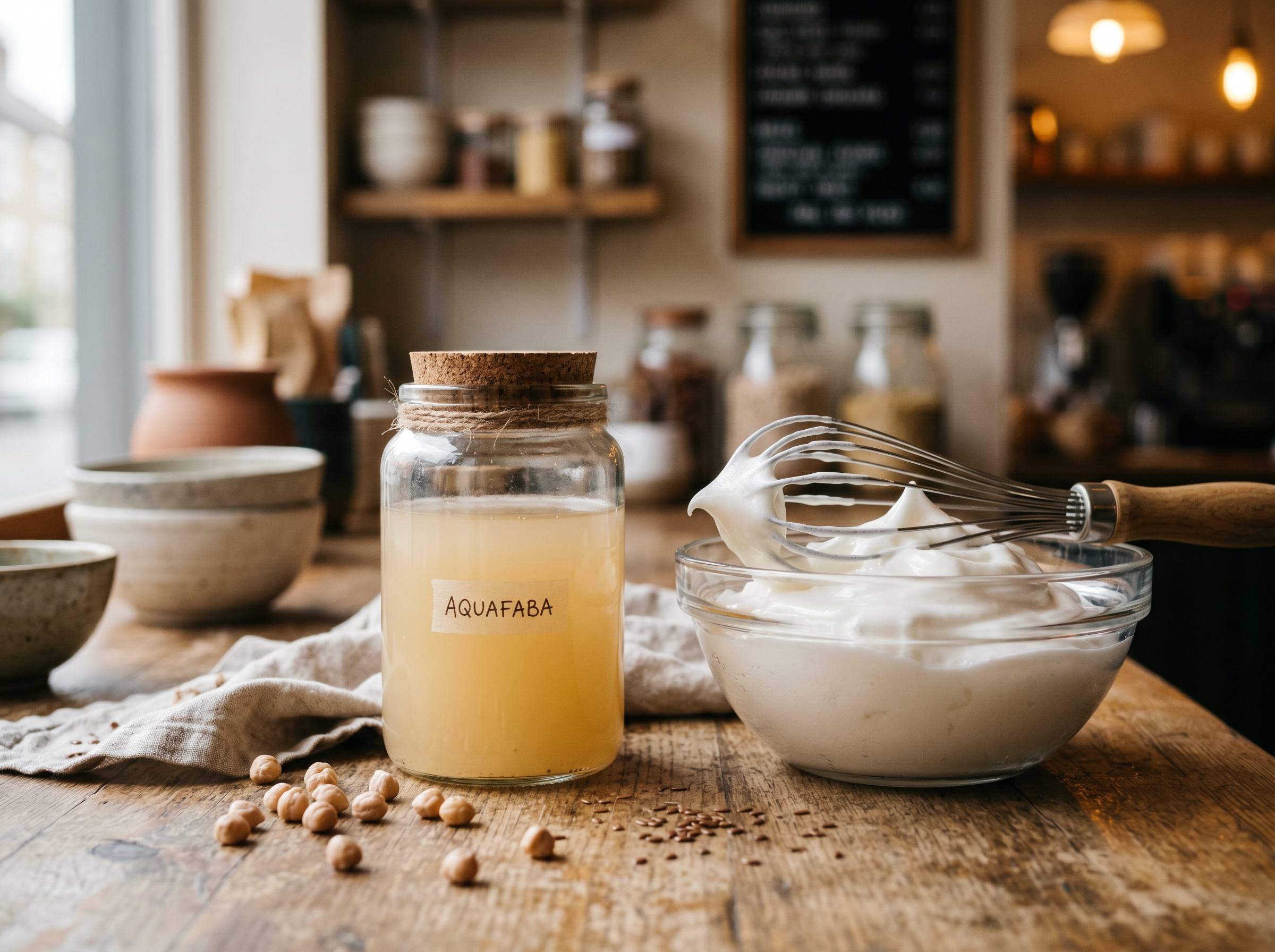
Every time a can of chickpeas opens, the brine — the cloudy, slightly viscous liquid the chickpeas were packed in — goes into a sealed glass jar in the fridge. Never down the sink. The liquid is aquafaba, literally “bean water” in Latin, and it is the closest functional analog to egg white that exists outside of an egg. The jar keeps five days sealed in the fridge — long enough that the next can of chickpeas you open the following weekend tops it off naturally. For longer storage, portion the aquafaba into ice cube trays: three tablespoons per cube, which is the equivalent of one egg white. Freeze. Pop into a labeled bag. Three months in the freezer with no loss in performance.
Why this works
The brine from canned chickpeas contains a specific protein-and-starch complex that mimics egg-white function with surprising fidelity. The proteins are mostly globulins and albumins — the same families that give egg whites their foaming ability. Whisked aggressively (a stand mixer at high speed for 5 to 7 minutes), aquafaba forms stiff peaks just like egg whites. It also performs the binding job egg wash does in breading: the proteins coagulate when they hit a hot pan, gluing the panko to whatever you’re frying. The starches add a slight viscosity that helps emulsions hold, which is why aquafaba mayonnaise is stable for two weeks in the fridge.
Where it shows up
The chickpea-milanesa breading uses aquafaba as the middle wash between the flour and the panko — three tablespoons per cutlet, whisked just to froth, and the breading sticks for the entire pan-fry without ever sliding off. The same jar makes the aioli that finishes the paella plate, whisked with garlic and lemon and good olive oil. Even the pesto-pasta gets a tablespoon stirred into the pesto base for a glossier, more clinging emulsion.
The line I draw
I will not pour chickpea brine down the sink. The home cook who throws away the liquid from every can of chickpeas is throwing away the egg-white function in their kitchen for free — the brine is already paid for, already in the can, already at the moment of opening. The pour-it-out reflex is the single most common waste in the home kitchen. Open the can. Pour the brine into the jar. The jar lives in the fridge door, exactly where the ketchup used to live.