The Lomein Sauce.
The jar that turns any 12-minute pan of noodles into dinner. Eleven ingredients, fifteen minutes, holds a month. Highest-leverage sauce on the site.
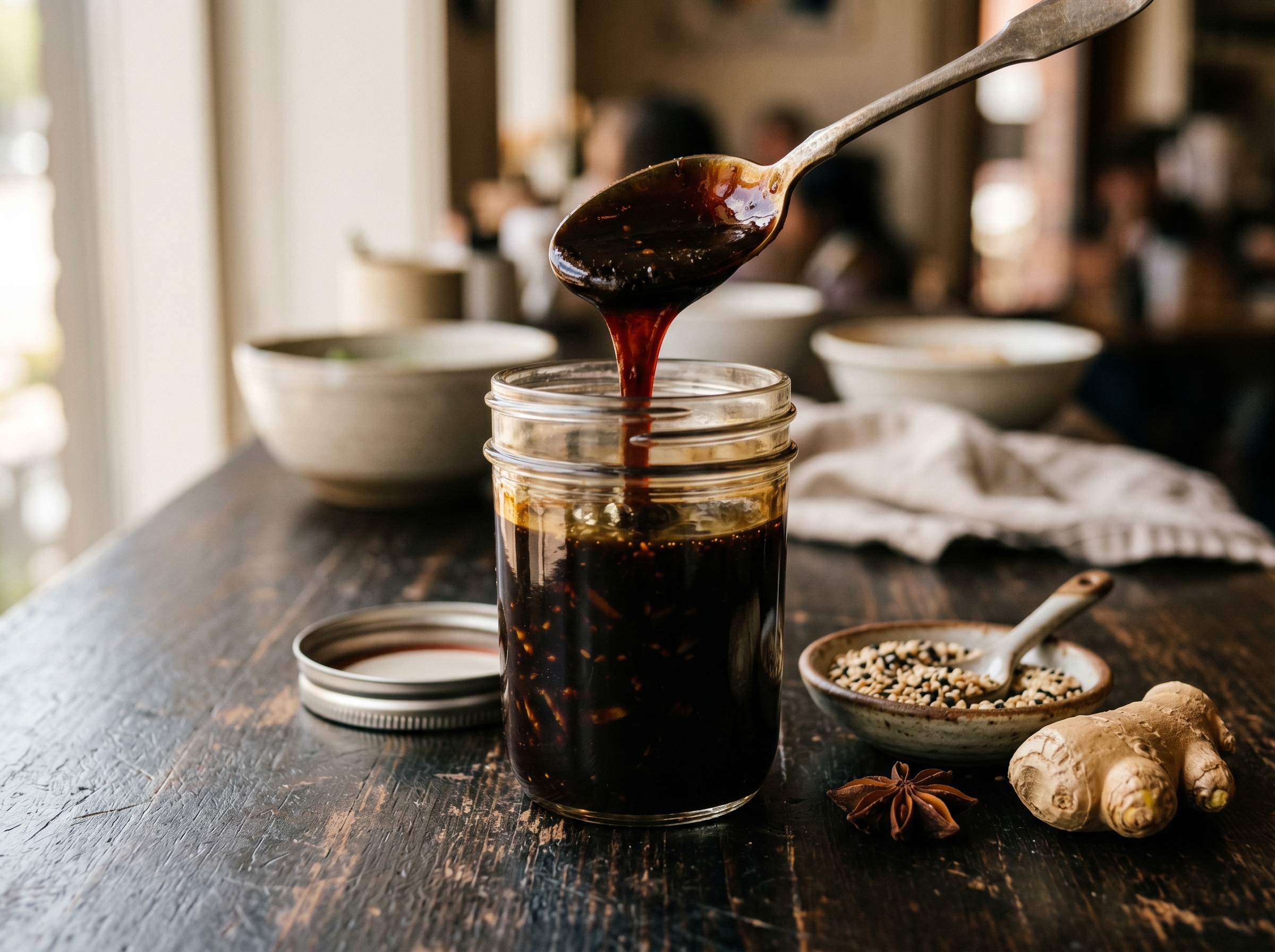
Getting ready…
This is the highest-leverage sauce on this site. Fifteen minutes of work yields one jar. That jar makes a month of Tuesday-night noodles, fried rice, marinades, and dumpling dips. The math is absurd: ten minutes invested, ten dinners returned.
I learned the proportions at a small wok station in Sapporo’s Susukino district during the 2020 ramen apprenticeship — the cook ran a side hustle making lomein for delivery on his off shifts, and the standing 750-mL jar of sauce in his fridge was the only thing that made the operation possible. He showed me the recipe one Tuesday night after service, written on the back of a delivery receipt.
The Cantonese tradition of pre-mixed sauce in a jar is one of the most under-rated moves in Western home cooking. A restaurant wok station is fast because the sauce is already balanced. You’re not measuring soy and vinegar and sugar one at a time while the noodles overcook. You’re pouring one-third of a cup from a jar.
The line I draw
I will not use bottled stir-fry sauce. The Kikkoman, the LaChoy, the Soy Vey — they’re all serviceable, the way a frozen pizza is serviceable. The flavor is the dominant note of whatever stabilizer the brand uses (xanthan, modified corn starch, potassium sorbate), not of soy and sesame and ginger. Fifteen minutes of work makes you a sauce with no stabilizers, no preservatives, and a clearer flavor. There is no reason not to.
When this can fail
- The cornstarch lumped. You forgot to slurry first and dumped the cornstarch in dry. The sauce now has tapioca-pearl-sized lumps. Fix: blend the whole sauce with an immersion blender. It’ll be smooth. The texture is slightly more puréed than ideal but no one will know.
- The garlic browned. You let the sesame oil get too hot before adding the garlic, or held the garlic in for too long. The sauce has a faint bitter background. Fix: stir in 1 teaspoon of sugar and 1 teaspoon of rice vinegar. Use the sauce in dishes with strong companion flavors (chili, fried rice) where the bitter edge will be masked.
- The sauce separated after a week in the fridge. The sesame oil rose to the top, the rest stayed below. This is normal — shake the jar before each use. It’s not broken.
Cook fast on a Tuesday because you did this on a Sunday.
You'll need
Ingredients
For 1 servings · 11 items
The base
The aromatic
The body
The method
Method
6 steps · check as you go
Questions, honestly answered
FAQ
QHow do I use this sauce to make a stir-fry?
The 12-minute weeknight version: cook 8 oz of fresh lo mein noodles (or dried wheat noodles) to package time, drain. In a wok or heavy 12-inch skillet on high heat, stir-fry 4 cups of mixed vegetables (mushrooms, snap peas, scallions, bok choy, bell pepper) in 1 tablespoon of neutral oil for 3 minutes. Add 1 cup of pre-cooked or pan-seared protein (seitan, marinated tofu, king oyster mushroom). Add the drained noodles. Pour over 1/3 cup of lomein sauce. Toss aggressively over high heat for 2 minutes until everything is coated and glossy. Off the heat, finish with chopped scallion greens and a final drizzle of sesame oil. Twelve minutes from cold pan to plate.
QCan I use this for fried rice, dumpling dipping sauce, or marinade?
Yes to all three, with adjustments. For fried rice, use 3 tablespoons per 4 cups of rice — less than for noodles, since rice has less surface area. For dumpling dipping sauce, thin with 1 tablespoon of rice vinegar per 1/4 cup of sauce — the texture is too thick for dipping straight. For marinade, thin with 1 tablespoon of water per 1/4 cup, and use it on tofu or seitan for 2 to 24 hours.
QWhy two soy sauces?
Light Japanese soy provides the salt and the bright top-note umami; dark Chinese soy provides the deep color and the molasses-like undertone. Either alone gives you a working sauce. Both together give you a restaurant-quality sauce. The ratio (3/4 cup light + 3 tbsp dark) is the proportion every Cantonese kitchen uses for lo mein.
QWhat's the best substitute if I don't have Shaoxing wine?
Dry sherry is the closest match — it has the same oxidized, slightly-fortified character. Use the same quantity. Mirin works in a pinch but is sweeter; reduce the sugar in the recipe by 1 teaspoon if substituting mirin. Do not substitute white wine or sake — both are too clean. Rice cooking wine from the Asian aisle of a regular supermarket works if labeled 'Shaoxing-style'.