The Sea Garden. The frontier we have only just started to map.
In 2007 a young Spanish chef takes over a restaurant on the salt flats outside Cádiz. In 2009 he becomes the first person on earth licensed to cook with marine phytoplankton. In 2011 he invents marine charcuterie. In 2017 he discovers a grain humans had never eaten — a grain that grows under the sea, captures more carbon than rainforest, and contains more protein than rice.
The thesis of this experience is short and worth repeating: we are not at the end of cooking. We are at the very beginning of a new chapter. For ten thousand years humans built cuisine on the meat-axis. In the last twenty years, a handful of chefs — Ángel León, the most visible — have been quietly proving how much else is out there.
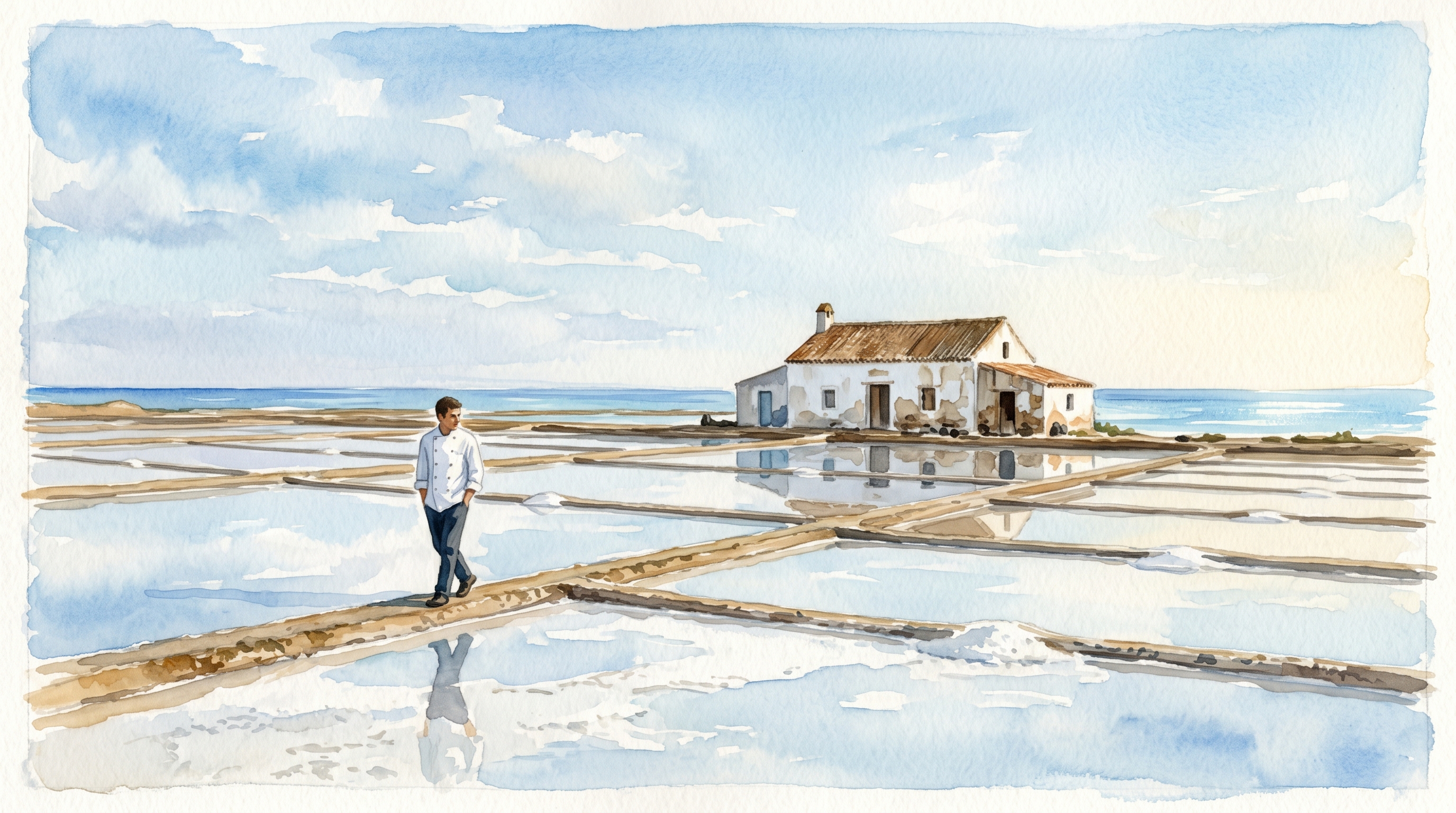
A young chef on a salt flat looks at the sea differently.
Ángel León takes over a small restaurant on the salt flats outside the port of Cádiz, southern Spain. Across the road, the Atlantic. Across the salt walls, the bay. Most chefs who arrive in this place buy fish. He starts asking a different question: what else is the sea hiding?
The salt flats are a kind of in-between landscape — neither sea nor land, salt-soaked, full of micro-life that nobody cooks with. For three years he experiments. Then in 2009, he travels to Madrid Fusión with a small vial in his coat pocket.
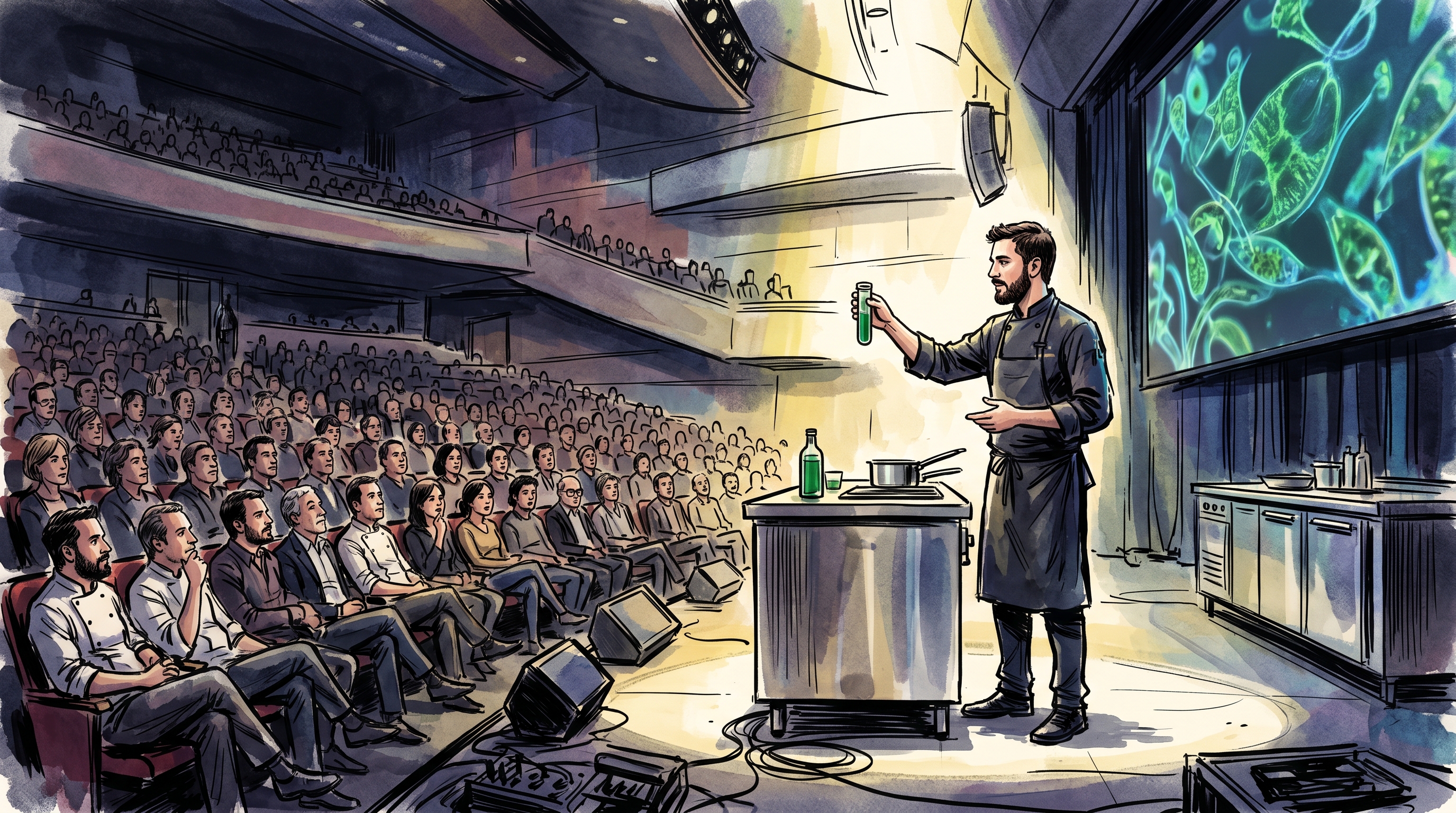
He becomes the first chef on earth to cook with phytoplankton.
On stage at Madrid Fusión 2009, Ángel holds up a vial of vivid emerald-green liquid. Marine phytoplankton — the microscopic algae that form the base of every food chain in the ocean. He is the first chef in the world authorized to use it as a food ingredient.
The audience is split. Scientists in the room recognize what he's done — phytoplankton is one of the most nutritionally dense organisms on the planet. Other chefs are puzzled. You cooked algae? The question, he later said, was the wrong one. He didn't cook algae. He cooked the first ingredient ever pulled from the bottom of the ocean food chain.
Today, phytoplankton appears in restaurant kitchens from Tokyo to Copenhagen. The 2009 vial was the start.
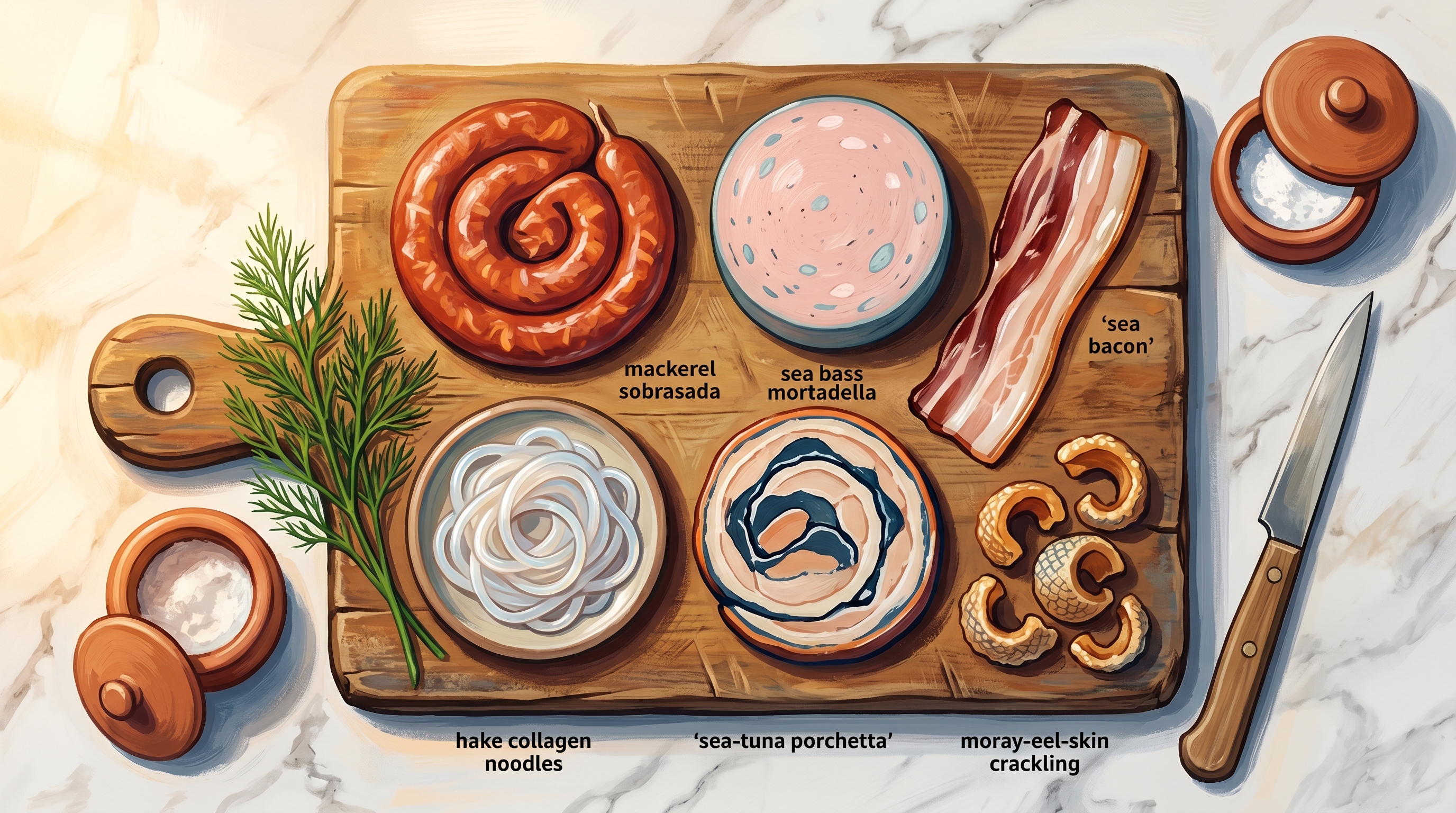
He invents the marine charcuterie.
Two years later, at Madrid Fusión 2011, Ángel presents charcutería marina — marine charcuterie. A board with mackerel sobrasada that looks like Catalan raw sausage. Sea bass mortadella that looks like Italian mortadella. Hake collagen 'noodles.' Sea bacon from sea bass belly. Atlantic 'porchetta.' Moray-eel-skin crackling.
The premise: every technique European peasants invented to preserve and transform pork over the last 800 years can be applied to fish parts that fishermen routinely discard. The bellies, the skins, the collagen, the offal. The result is a charcuterie tradition that no one had ever written down before.
It is also the proof of concept for a larger thesis: the technique stack of European cuisine doesn't need land animals. It needs structure. The sea has structure.
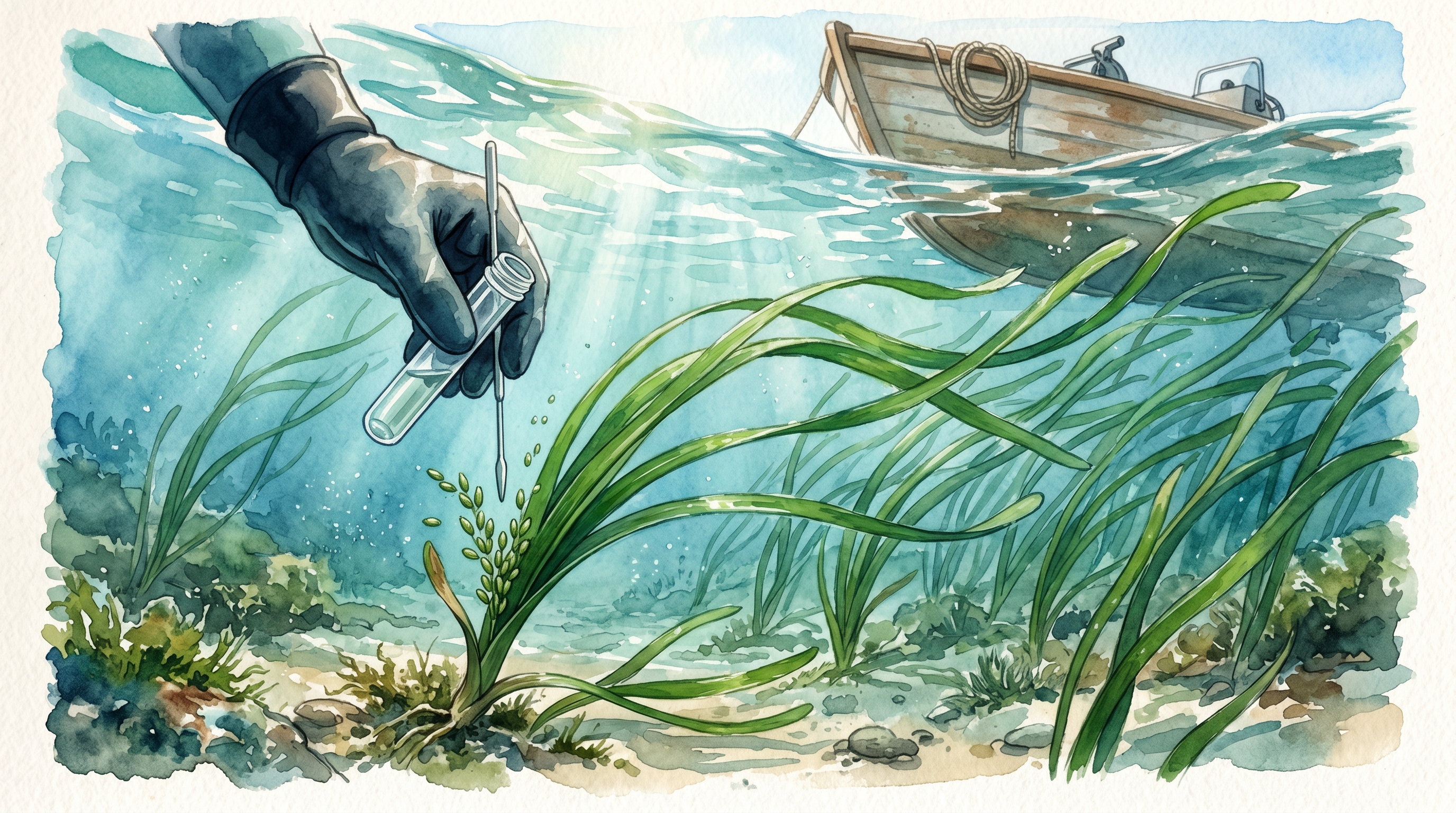
He finds a grain humans had never eaten.
Walking through the shallows of the Bay of Cádiz in 2017, Ángel notices tiny green grains clinging to the base of Zostera marina — eelgrass, a marine plant that carpets the floor of coastal bays in temperate seas. He has walked past these grains a thousand times. So has every fisherman in the region for the last thousand years. No one had thought to harvest them.
He sends a sample to the laboratory of the University of Cádiz. The results, when they come back, are extraordinary. The grains contain 50% more protein than rice. Seventeen times more fiber. They are gluten-free. They are rich in omega-6 and omega-9 fatty acids. They require no fresh water, no fertilizer, no arable land. They grow in salt water on a plant that — though it covers less than one percent of the ocean — already accounts for nearly twenty percent of all carbon sequestered in the sea.
It is a new food. Humans have farmed wheat for 10,000 years. Rice for 9,000. The first chef-driven harvest of Zostera marina grain happened in 2017. We are nine years into knowing about it.
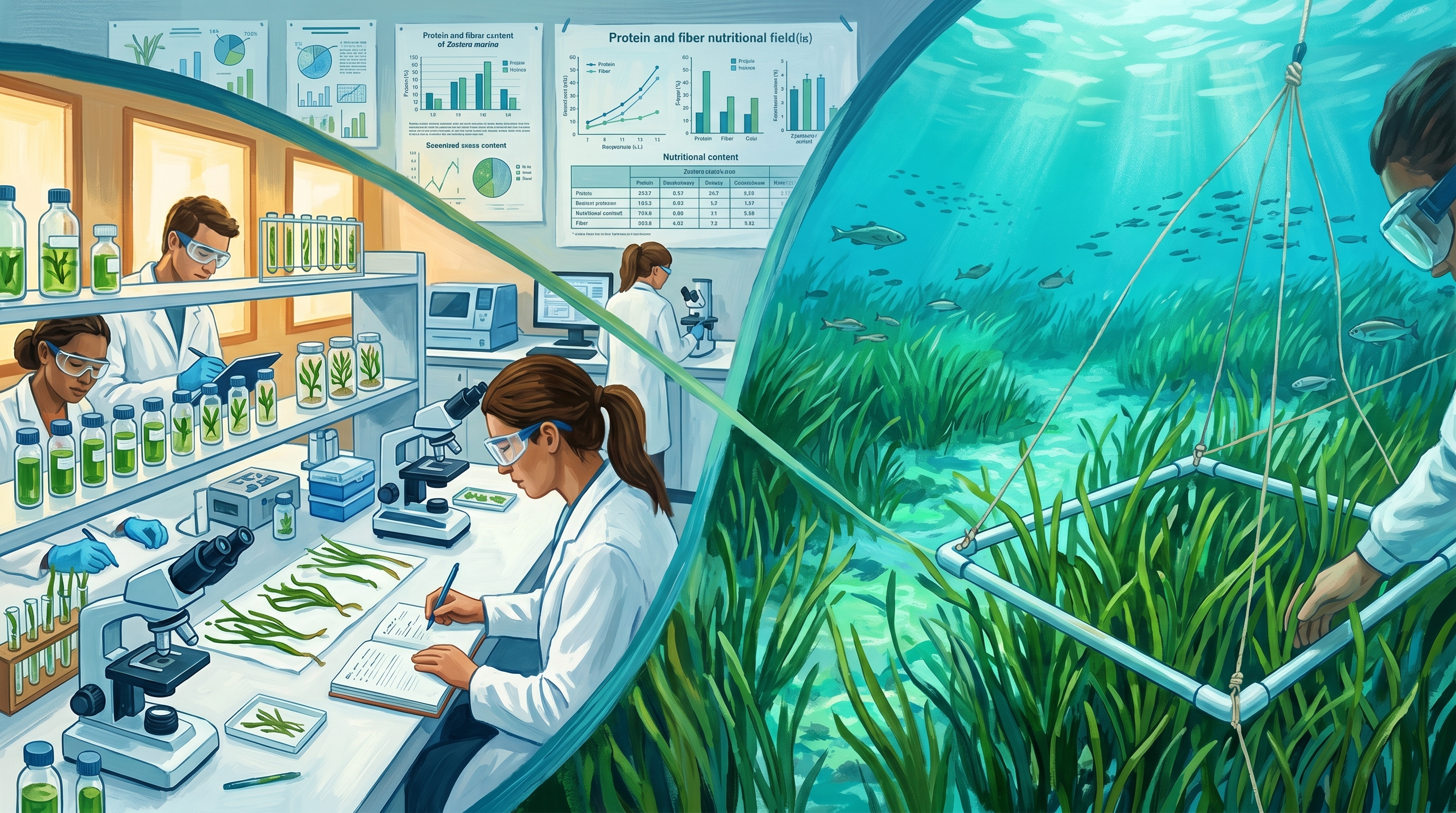
A research partnership begins. The meadows of the future are planted.
Ángel and Aponiente sign a research partnership with the University of Cádiz. He invests over €350,000 of his own money to test Zostera marina cultivation across multiple estuaries in the bay. The team learns how to plant, how to harvest, how to dry, how to mill, how to cook.
The numbers stay extraordinary as the data deepens. Underwater meadows of Zostera are also fish nurseries, water purifiers, coastline stabilizers, carbon sinks. A hectare of Zostera meadow does the ecological work of dozens of hectares of land farming, without using a single liter of fresh water or producing a gram of agricultural runoff.
If this scales, Zostera could help feed a planet that is running out of fresh water and arable land. The chef is now also a marine agronomist.
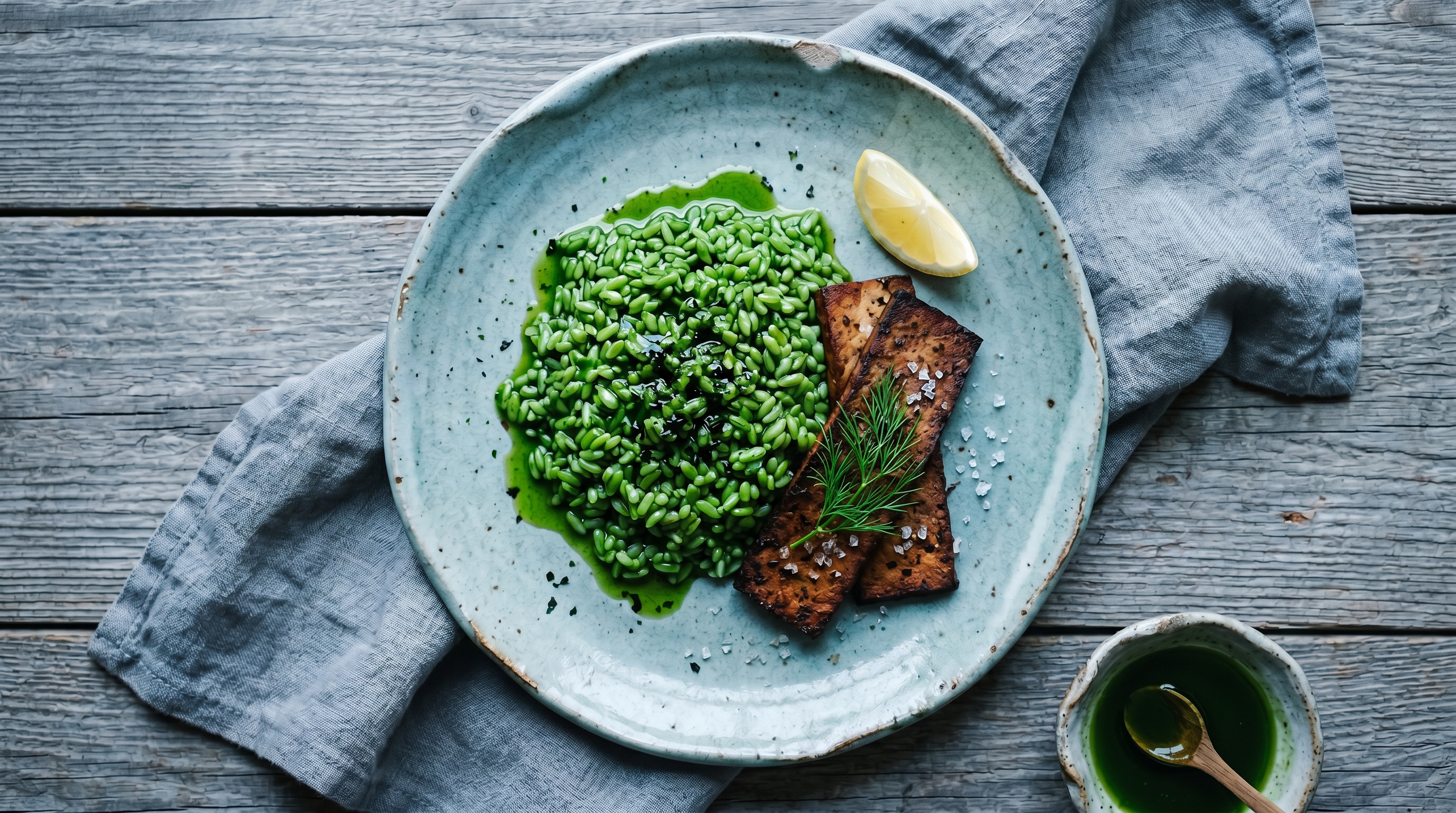
This is what the frontier of human cooking looks like.
Aponiente has three Michelin stars and a Michelin Green Star. It was named the World's Most Sustainable Restaurant by 50 Best in 2022. The marine rice appears on the menu. Phytoplankton appears in dozens of restaurants around the world. The marine charcuterie has spread to chefs across Spain, France, the UK.
The wider lesson is the one we keep coming back to at Maison Teulade: for ten thousand years, humans built cuisine on the assumption that animal protein sat at the center of every meal. The technique stack — reductions, braises, charcuterie, croûtes, demi-glace — assumed it. And then, in the last two decades, chefs like Ángel began to ask what cuisine looks like outside that assumption.
The answer is that we have barely started. Phytoplankton. Sea-rice. Koji-fermented proteins. Mycelium meats. Marine charcuterie. Algae oils. Every one of these existed in 2007 only as an idea, or not even that. We are not at the end of cooking. We are at the very beginning of a new chapter we have just discovered we can write.
Stop eating meat is not the loss of anything. It is the entry ticket to the most exciting frontier in human cooking — and the only people in the room are the ones who chose to look outside the meat-axis. Ángel chose. There is a place at the table for anyone else who wants to.
More on this frontier.
Ángel León is the most visible. He is not alone. The essay We Are Living Through the Most Exciting Frontier in Cooking traces what else is being invented right now — and why eating without meat is the most exciting place a cook can stand in 2026.