The Falafel. 1,646 years on the plate.
A 4th-century Coptic monk in Alexandria, faced with fifty-five days of Lent and no meat, crushes fava beans with herbs and fries them in olive oil. He calls the result ta'amia. Sixteen centuries later, that same fritter sells on the corner of every city on the Mediterranean — and most of the Western world.
The dish has been alive longer than every country that now claims it. Here is the journey, scene by scene.
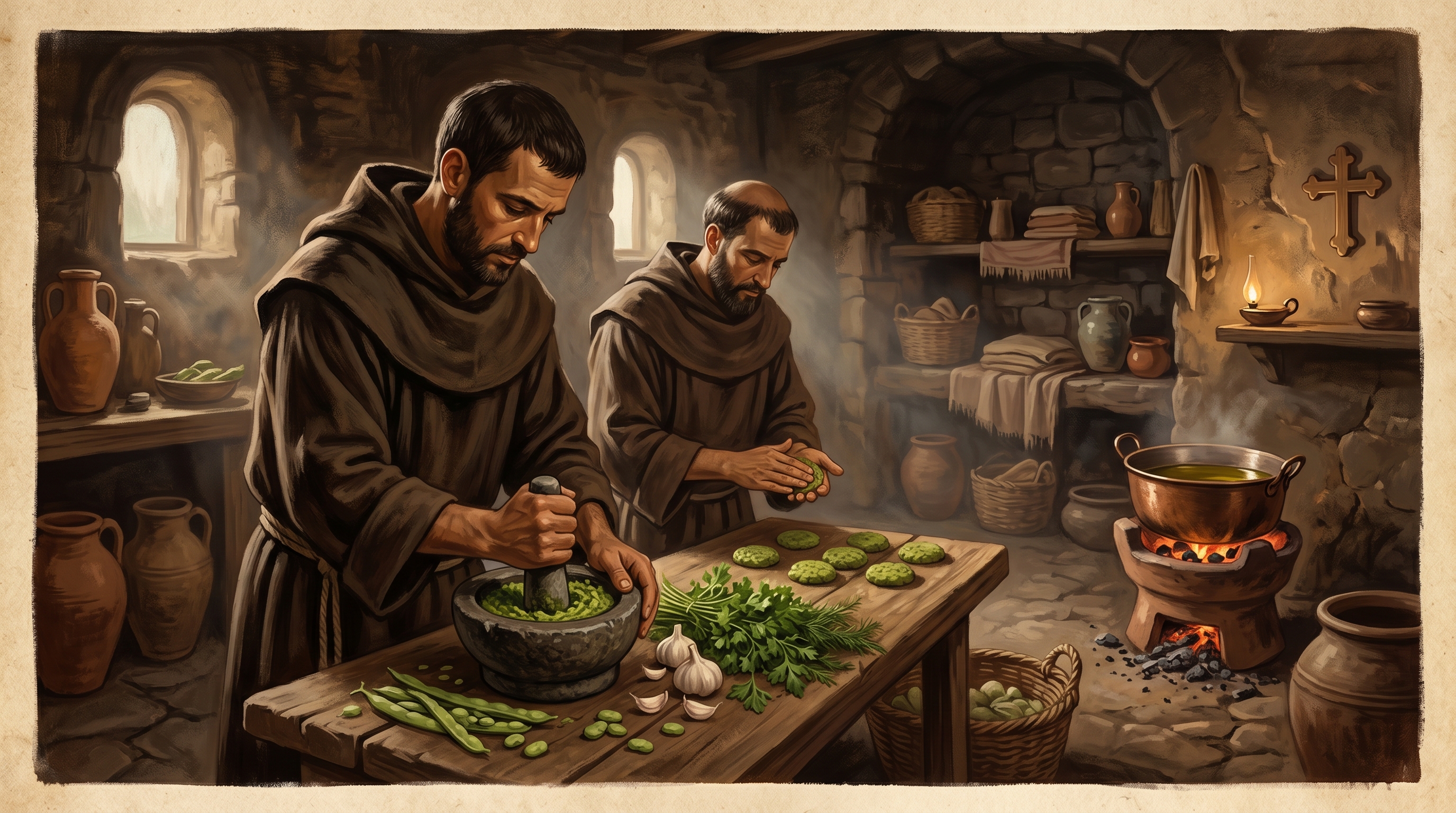
A fast-day fritter, in a Coptic kitchen.
The first version is a green ball of crushed fava beans, herbs, and onion, deep-fried in olive oil. Coptic Christian monks in 4th-century Alexandria invent it during the Great Lent — fifty-five days without animal anything.
They call it ta'amia. Tah-MEE-ya. The name comes from the Arabic root for food itself. Not 'fava fritter,' not 'lenten substitute.' Just food.
There is no chickpea here. There is no pita. There is no tahini. The dish, in this first form, is the fritter and nothing else.
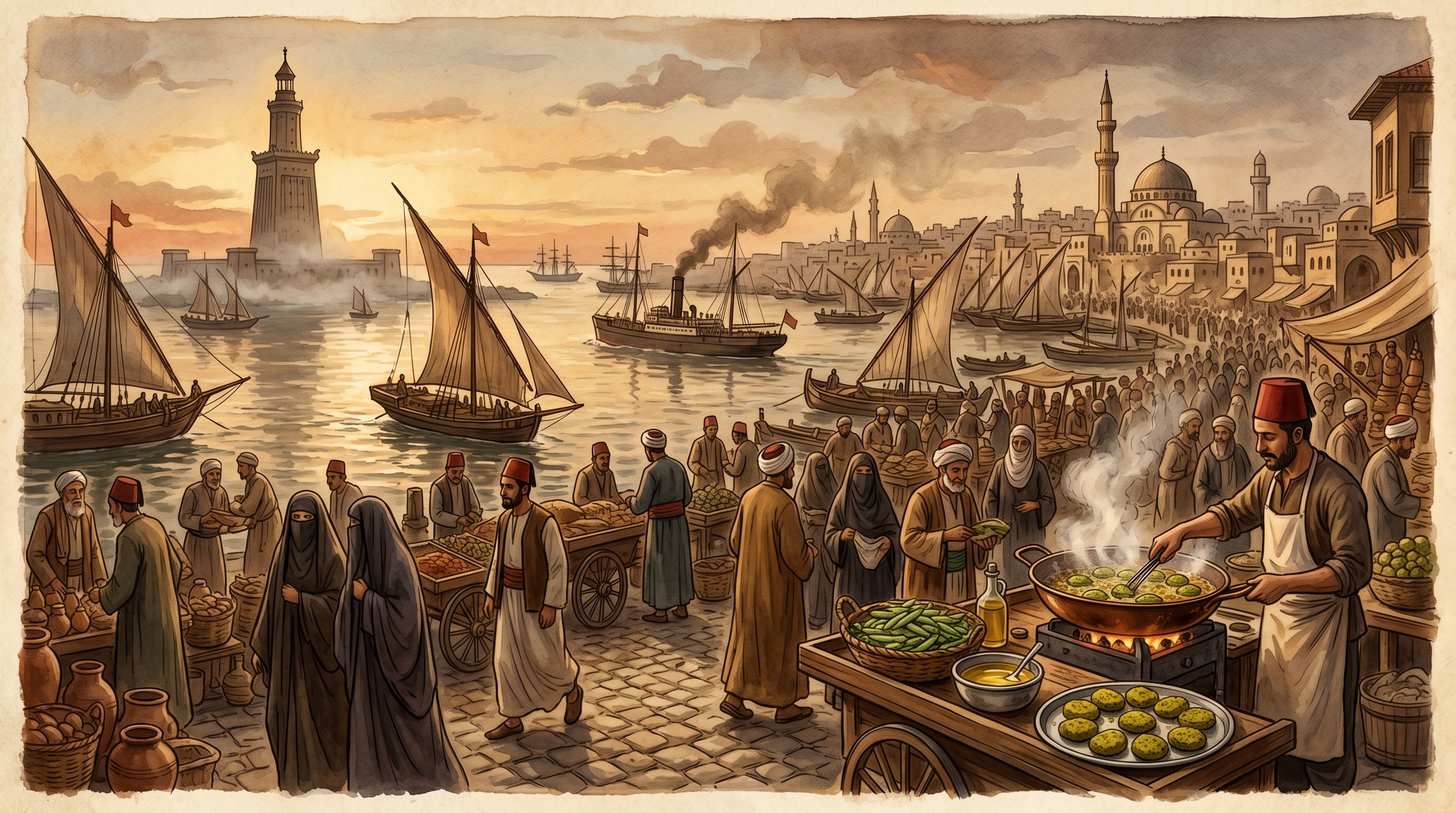
A ship leaves the harbor with the recipe in its hold.
For 1,400 years the dish is Egyptian. Then Alexandria, the great Mediterranean port, sends it elsewhere. Coptic merchants. Lebanese traders. Greek sailors. Each one carries the technique home in a kitchen apron.
In Cairo, they still call it ta'amia. In Alexandria itself, locals have started to call it falafel — a word that may come from the Coptic for 'of many beans,' or from the Arabic for small things, depending on which historian you ask. Both etymologies agree on one thing: the dish predates its newer name.
The fava bean stays Egyptian. The recipe begins to wander.
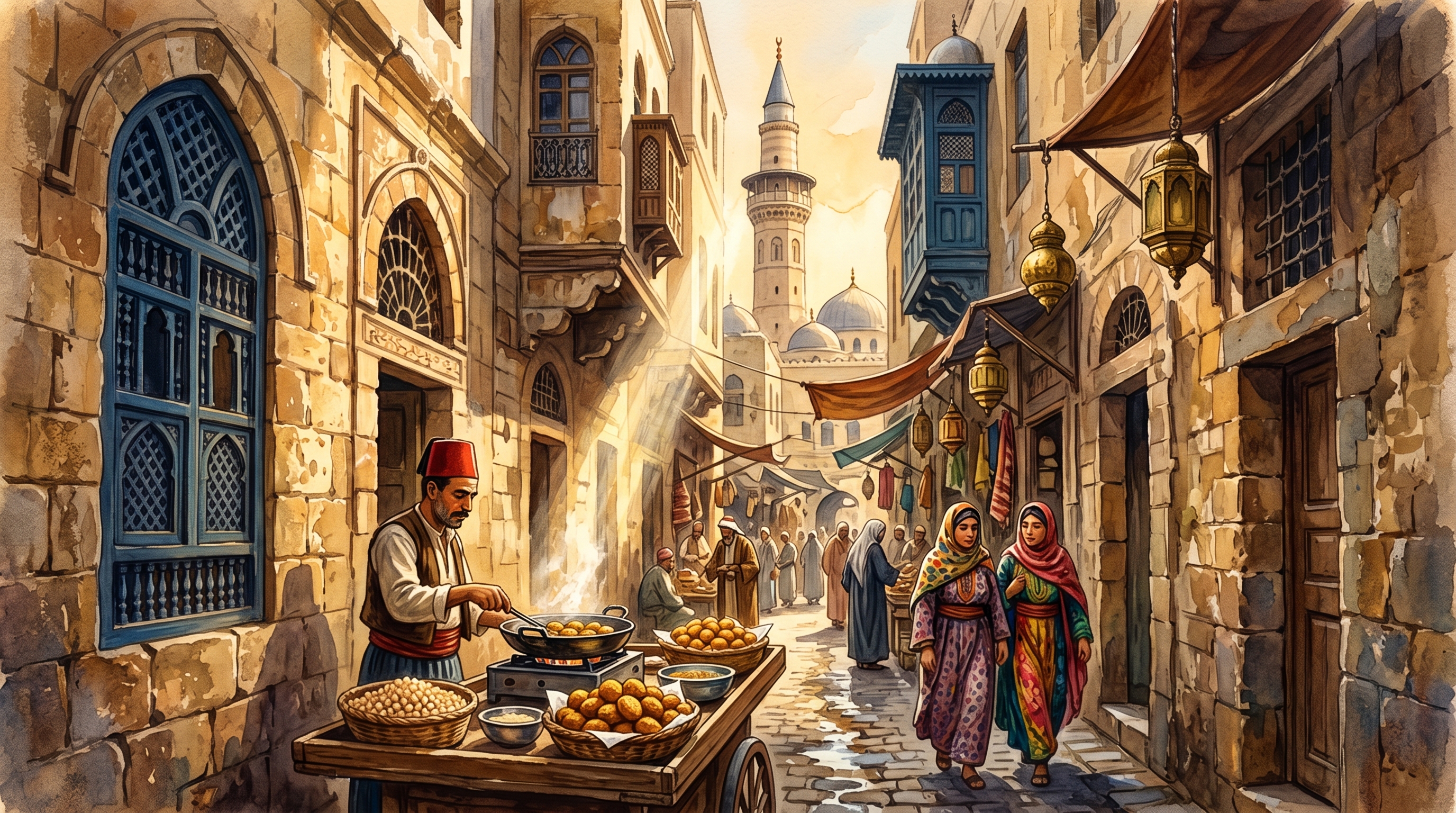
The fava bean becomes a chickpea.
By the time the recipe lands in Damascus and Aleppo, the fava bean has been replaced. The Levant has chickpeas in every kitchen — a different bean, a different texture, a different color. The fritter goes from green to gold.
The flavor profile shifts. Cumin and coriander join. Sesame seed makes a cameo. The interior becomes lighter, more open, almost lacy when fried.
This is the version most of the world today thinks of as "the original" falafel. It is not. It is the second original.
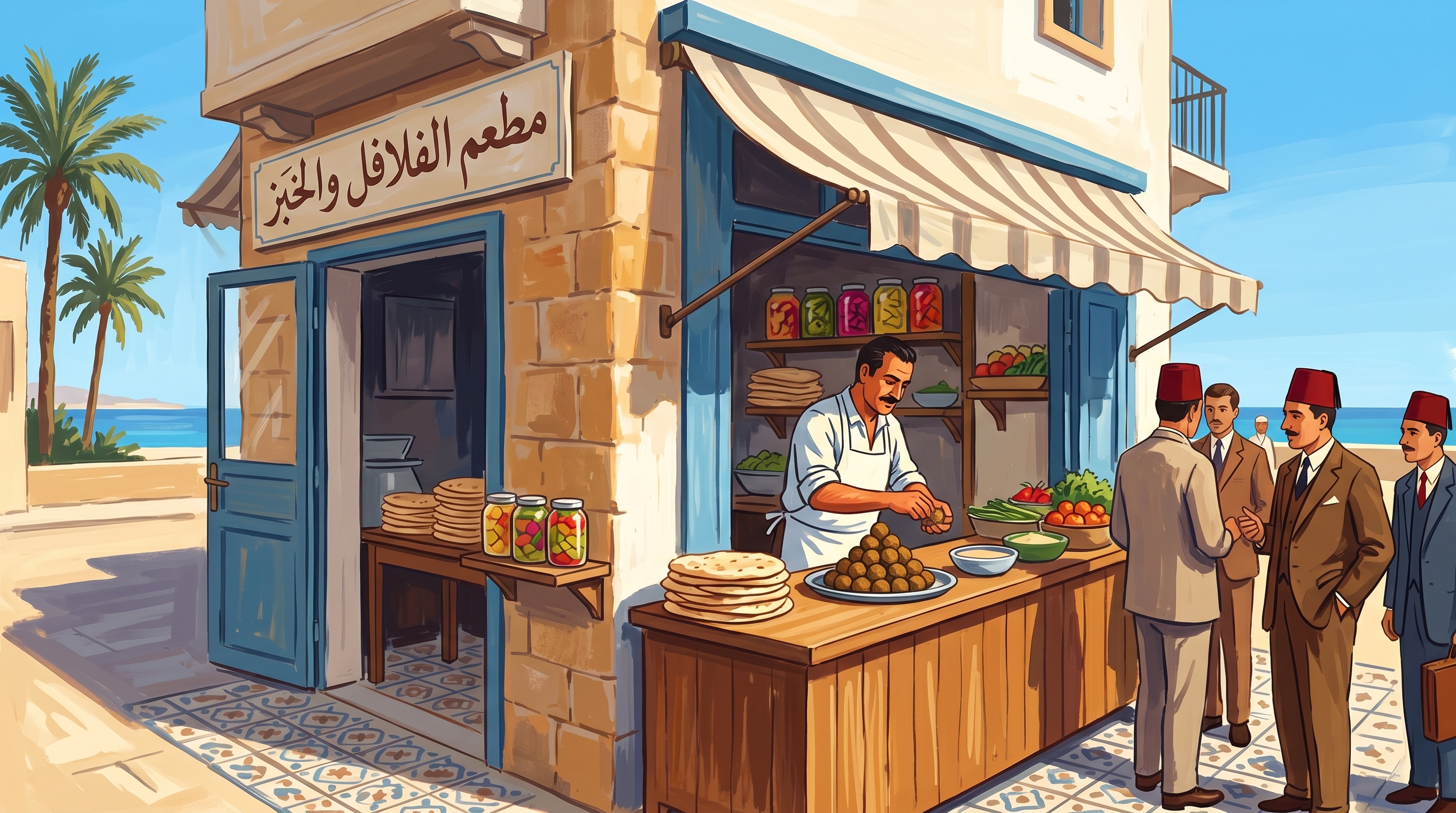
The first dedicated shop opens.
Until 1933, falafel is a market vendor's side hustle — fried at a cart, eaten standing, gone in 90 seconds. Then a Beirut shopkeeper opens the first permanent address. Walls. A countertop. A daily routine.
It works. Other shops follow. Within a decade, falafel is a category in its own right — a known noun in restaurant vocabulary, with the format that travels still: a flatbread, the fritters, tahini, pickled vegetables, fresh herbs.
The dish has now been alive for 1,553 years. It has its first dedicated address.
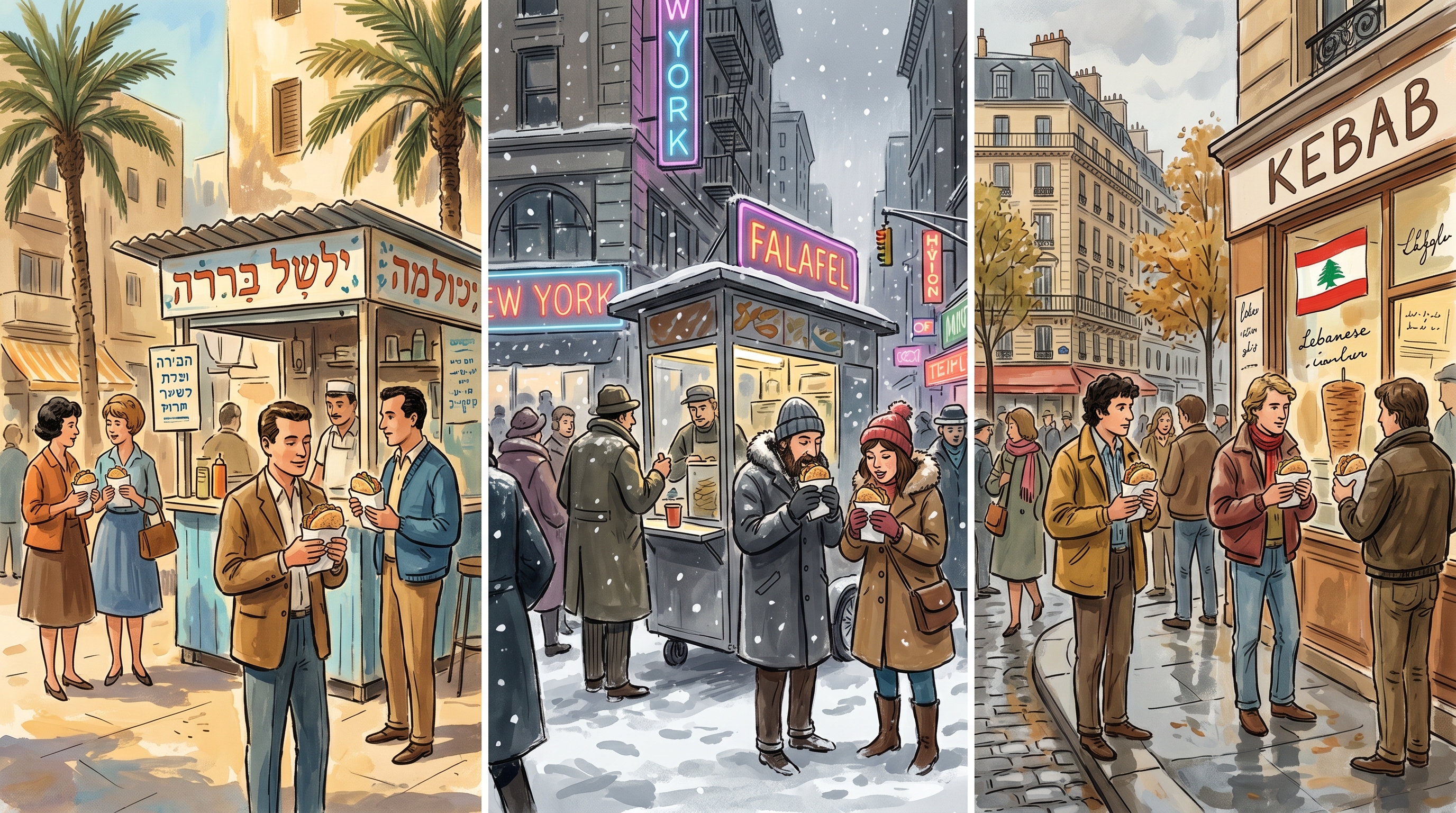
After the war, the dish travels everywhere at once.
Post-WWII migration takes the dish global. In Tel Aviv it becomes a national street food. In New York it becomes a 1970s health-food darling and then a 1990s late-night fix. In Paris it becomes the sandwich falafel of the Marais and the 9th arrondissement.
Each city claims a kind of ownership. Each city is partly right. The dish is bigger than any one of them — it predates every nation that now sells it.
Three corner shops, three languages, one fritter that traces back to a monastery older than any of the borders the dish has crossed.
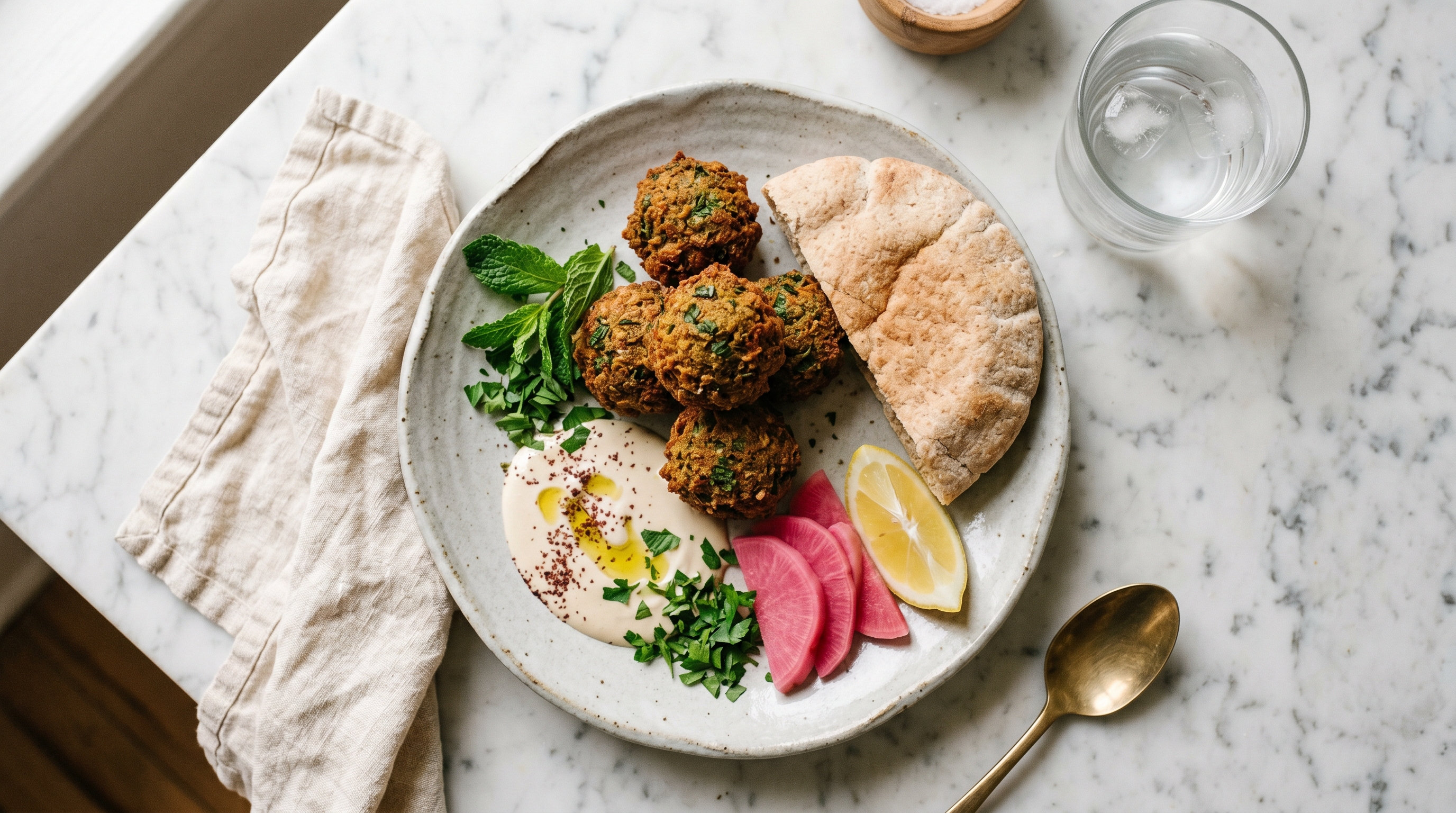
On the plate, still.
Seventeen hundred years after the monks of Alexandria invented it, the dish on the plate is recognizably the same dish. Crushed beans (fava or chickpea — both are correct). Herbs. Onion. Coriander, cumin, sesame. Fried until the outside shatters and the inside stays tender and green.
It has always been a brand-pure plant dish — not a substitute for anything. It was invented in the absence of meat, not as a substitute for it. There is a difference, and the dish has carried that difference for 1,646 years.
We cook it the Levantine way at Maison Teulade — chickpea, fresh herbs, the lemon wedge that does not negotiate. Recipe below.
And here is how we cook it.
The Maison Teulade falafel — Levantine-style, chickpea-based, fresh herbs, a tahini sauce that holds the room. The recipe goes up next Tuesday.